

Everest Gokyo Lakes Trek
Everest Gokyo Lakes Trek – Essential Lukla Flight Information
Lukla flights play an essential role in the Everest Gokyo Lakes Trek, and their operation varies by season. During peak trekking months (March, April, May, September, October and November), most flights depart from Ramechhap/Manthali Airport, about 5–6 hours from Kathmandu. In the off-peak months, flights typically operate directly from Kathmandu Airport.
Because Himalayan weather can be unpredictable, delays and cancellations are common. To avoid disruptions to your international travel, adding 2–3 buffer days to your Everest Gokyo Lakes Trek itinerary is highly recommended for a smooth and flexible journey.
Destination:
Nepal
Trip Duration:
16 Days
Max Altitude:
Kala Patthar (5,555 m)
Activities:
Trekking
Start Point:
Kathmandu
Ending Point:
Kathmandu
Region:
Everest
Trip Grade:
Moderate
Group Size:
1-15
Accomodation:
Hotel/Normal Teahouses
Meals:
Breakfast, Lunch and Dinner during trek
Transportation:
Private Vehicle/Domestic Flight
Permits Required:
National Park Permit/Rural Municipality Permit
Best Season:
March, April, May and Sept, Oct, Nov
The Everest Gokyo Lakes Trek is the premier Himalayan circuit, combining Nepal’s two most iconic trails into one unforgettable 14-18 day adventure. This journey delivers the complete Khumbu experience: the iconic ascent to Everest Base Camp (5,364m), the challenging crossing of the Cho La Pass (5,420m), and the serene beauty of the sacred Gokyo Lakes.
Beginning with a scenic flight to Lukla, the trek follows the classic route through Sherpa villages like Namche Bazaar and Dingboche, with acclimatization days ensuring a safe ascent. The trail leads to the dramatic Khumbu Glacier, Everest Base Camp, and a sunrise climb to Kala Patthar (5,545m) for unparalleled close-up views of Mount Everest.
The adventure then diverges westward over the glacial Cho La Pass into the quieter Gokyo Valley. Here, the climb to Gokyo Ri (5,357m) offers a breathtaking 360-degree panorama of four 8,000-meter peaks—Everest, Cho Oyu, Lhotse, and Makalu—towering above the turquoise lakes and the vast Ngozumpa Glacier.
This trek is physically demanding and requires excellent fitness, prior trekking experience, and a strong emphasis on proper acclimatization. The best time to trek is during the stable, dry seasons of spring (March to May) and autumn (September to November).
More immersive than either route alone, the EBC & Gokyo Lakes Trek is the ultimate blend of high-altitude challenge, profound natural beauty, and deep cultural immersion in the heart of the Everest region.
Everest Gokyo Lakes Trek Highlights
- Experience the thrilling scenic Trans-Himalayan flight between Kathmandu and Lukla.
- Trek through the pristine Sagarmatha National Park, a UNESCO World Heritage Site.
- Immerse yourself in the unique culture and lifestyle of the high-altitude Sherpa people.
- Visit the iconic Tengboche Monastery, the largest and most important spiritual center in the Khumbu region.
- Achieve the legendary goal of standing at Everest Base Camp beside the immense Khumbu Glacier and Icefall.
- Complete the rewarding sunrise hike to Kala Patthar (5,545m) for a breathtaking 360-degree Himalayan panorama.
- Cross the challenging and scenic Cho La Pass (5,420m), a true adventure highlight.
- Discover the serene beauty of the sacred turquoise Gokyo Lakes, a chain of stunning glacial waters.
- Climb to the summit of Gokyo Ri (5,357m) for what is widely considered the best panoramic viewpoint in Nepal, featuring Everest, Lhotse, Makalu and Cho Oyu.
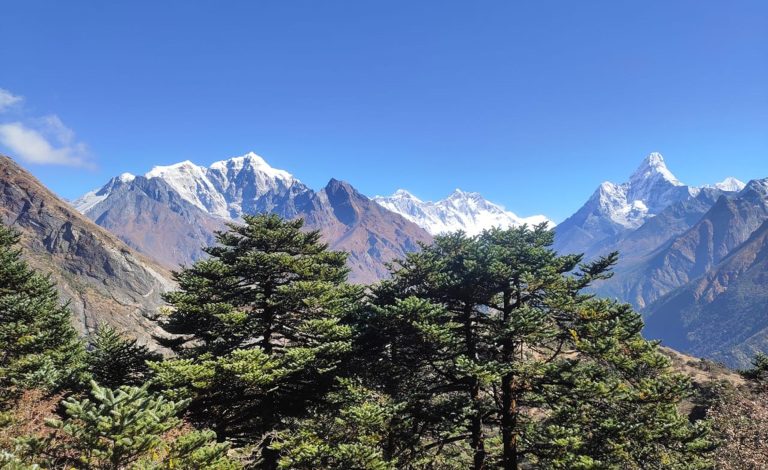
- Enjoy astonishing, close-up views of iconic peaks including Everest, Ama Dablam, Lhotse, Nuptse, Pumori and Lobuche throughout the journey.
- Walk alongside the vast Ngozumpa Glacier, the longest glacier in the Himalayas.
- Complete a spectacular circuit trek that avoids backtracking, offering continuous new scenery.
Route Overview of the Everest Gokyo Lakes Trek
The Everest Base Gokyo Lakes Trek is a classic high-altitude circuit in Nepal’s Khumbu region, renowned for its diverse landscapes and logical, acclimatization-friendly routing. This 16-day adventure follows a strategic counter-clockwise loop that seamlessly connects two iconic valleys via the challenging Cho La Pass, minimizing backtracking and maximizing scenic variety.
The journey begins with a flight to Lukla, ascending through the Dudh Koshi Valley to the Sherpa capital of Namche Bazaar for essential acclimatization. The route then follows the classic Everest Base Camp trail northeast through Tengboche and Dingboche, culminating at Gorak Shep for visits to Kala Patthar and Everest Base Camp itself. The critical westward turn occurs here, trekking to Dzongla before tackling the glaciated Cho La Pass (5,420m)—the key link into the Gokyo Valley.
After crossing, trekkers explore the stunning turquoise Gokyo Lakes and summit Gokyo Ri for a legendary panoramic view. The circuit completes with a descent through the Gokyo Valley back to Namche Bazaar and finally Lukla.
This masterful routing ensures a gradual ascent profile, excellent acclimatization opportunities, and an unparalleled variety of experiences, from cultural monasteries and bustling trails to serene lakes and high mountain passes.
Include
What is Included in the Everest Gokyo Lakes Trek Package?
This all-inclusive package is designed to provide a seamless and supported adventure from arrival to departure. The following services and costs are covered:
- Arrival & Departure: Complimentary airport pick-up and drop services in a private vehicle.
- Kathmandu Accommodation: Two nights' hotel accommodation in Kathmandu at a 3-star category hotel, including breakfast (pre- and post-trek).
- Domestic Flights: Round-trip flight tickets between Kathmandu and Lukla for you and the guide.
- Trek Permits & Fees: All necessary trekking permits, including Sagarmatha National Park Entry Permit and Khumbu Pasang Lhamu Rural Municipality Permit, plus all government taxes.
- Guide & Porter Services: An experienced, government-licensed English-speaking trekking guide, and porters (1 porter for every 2 clients) to carry duffel bags. Their salary, food, accommodation, equipment and insurance are covered.
- Lodge Accommodation: Teahouse/lodge accommodation during the trek on a twin-sharing basis.
- Meals on Trek: Three daily meals (breakfast, lunch and dinner) with tea/coffee during the trekking days.
- Support & Safety: A comprehensive first-aid medical kit carried by the guide. All administrative expenses and company service charges are included.
Exclude
What is not included in the Everest Gokyo Lakes Trek Package?
The following expenses are not covered in the package cost and are the client’s responsibility:
- International Flights: Airfare to and from Nepal.
- Nepal Entry Visa: Visa fee (USD 30 for 15 days, USD 50 for 30 days) obtained upon arrival at Kathmandu's airport.
- Meals in Kathmandu: Lunch and dinner during your stay in Kathmandu.
- Personal Expenses: All personal expenses such as bottled/boiled water, hot showers, battery charging, laundry, phone calls, Wi-Fi, and bar bills (alcoholic & cold beverages).
- Personal Gear & Insurance: Personal travel insurance (mandatory, must include emergency high-altitude medical evacuation and trip cancellation). Personal trekking gear and clothing.
- Tips: Tips for the guide and porter(s). Tipping is customary and appreciated for good service.
- Unforeseen Costs: Additional costs or delays caused by events beyond our control (e.g., severe weather, flight delays, political unrest, illness).
Everest Gokyo Lakes Trek Itinerary
Upon arrival at Tribhuvan International Airport (KTM), you’ll be greeted by a Best of Nepal Trek representative and transferred to your hotel. After checking in, the day is yours to recover from your journey or begin exploring. You might wander the vibrant, bustling streets of Thamel, a hub for trekkers, or visit nearby cultural landmarks such as the ancient Swayambhunath Stupa (Monkey Temple).
In the evening, you will attend a comprehensive pre-trek briefing with your guide. This session is crucial for reviewing the detailed itinerary, checking your gear, discussing altitude sickness prevention, and answering any final questions.
Accomodation:
3-Star hotel/Resort
An early start takes you to the domestic airport for a legendary 35-minute mountain flight to Lukla. This journey offers jaw-dropping, close-up views of the Himalayan range. After landing at the renowned Tenzing-Hillary Airport, you’ll meet your trekking crew, organize gear with the porters, and begin your adventure.
The trail initially descends, offering a gentle start as you pass through small Sherpa settlements, alongside mani walls and prayer wheels, and follow the course of the Dudh Koshi River. The sound of the river and the sight of hanging bridges become familiar. You’ll reach the charming village of Phakding by early afternoon, allowing ample time to rest, explore the local shops, and begin the vital process of acclimatization at a comfortable, lower altitude. This short first day is key for letting your body adjust to the trail’s rhythm.
Trip Duration:
3-4 Hours
Accomodation:
Normal Teahouse
Meals:
Breakfast, Lunch & Dinner
Today’s trek is both iconic and challenging, as you make the significant ascent to the bustling heart of the Khumbu. The trail weaves along the Dudh Koshi River, crossing several high suspension bridges draped in colorful prayer flags. After passing through villages like Benkar and Monjo, you’ll stop to check in at the Sagarmatha National Park entrance gate.
The most sustained climb begins after crossing the Hillary Bridge at Larja Dobhan. Here, with good weather, you may catch your first breathtaking glimpse of Mount Everest peering over the Nuptse-Lhotse wall. The steep, switchbacking path leads you up to Namche Bazaar, the vibrant “Sherpa capital” and a crucial acclimatization stop. Explore its narrow lanes filled with gear shops, bakeries, cafes, and the famous Saturday market. Overnight in a cozy teahouse, where your body begins adjusting to the higher elevation.
Key Notes: This is your first significant altitude gain. Trek slowly, hydrate constantly, and enjoy the rewarding views. The Everest view point is approximately halfway up the final climb.
Trip Duration:
5-6 Hours
Accomodation:
Normal Teahouse
Meals:
Breakfast, Lunch & Dinner
This is an active rest day, essential for safe altitude adaptation. The key is to “climb high, sleep low.” A morning hike ascends to the Everest View Hotel, one of the world’s highest hotels, offering a spectacular, unobstructed panorama of Everest, Lhotse, Nuptse, and Ama Dablam across the valley.
You can extend the hike to the traditional Sherpa village of Khumjung, home to the historic Khumjung Monastery (which houses a purported “Yeti scalp”) and Sir Edmund Hillary’s school. Alternatively, visit the Sagarmatha National Park Museum for insights into local geology and culture. Return to Namche Bazaar for lunch. Use the afternoon to rest, rehydrate thoroughly, and explore the town’s lively atmosphere. Proper acclimatization here is your best preparation for the higher trails ahead.
Key Notes: This hike is not optional for proper acclimatization. Even if cloudy, the physical effort is beneficial. Use the afternoon to check any gear needs in Namche’s shops.
Trip Duration:
3-4 Hours
Accomodation:
Normal Teahouse
Meals:
Breakfast, Lunch & Dinner
A day of spiritual and scenic reward. The trail descends from Namche to the Dudh Koshi River at Phunki Tenga, followed by a steady, shaded climb through fragrant rhododendron and pine forests. Your destination is the serene hilltop of Tengboche, dominated by the iconic Tengboche Monastery—the largest and most important spiritual center in the Khumbu.
The panoramic view from the monastery courtyard is unforgettable, with Ama Dablam taking center stage, flanked by Everest, Lhotse, and Thamserku. If your timing aligns, attending the serene evening puja (prayer ceremony) with the resident monks is a profound cultural experience. Be prepared for a notable drop in temperature overnight at this exposed location.
Trip Duration:
5-6 Hours
Accomodation:
Normal Teahouse
Meals:
Breakfast, Lunch & Dinner
Today’s trek introduces the stark, high-altitude beauty of the inner Himalayan valley. The trail descends from Tengboche through fragrant forests before crossing the Imja Khola river. You’ll pass the historic village of Pangboche, home to the region’s oldest monastery, and continue as the landscape transforms.
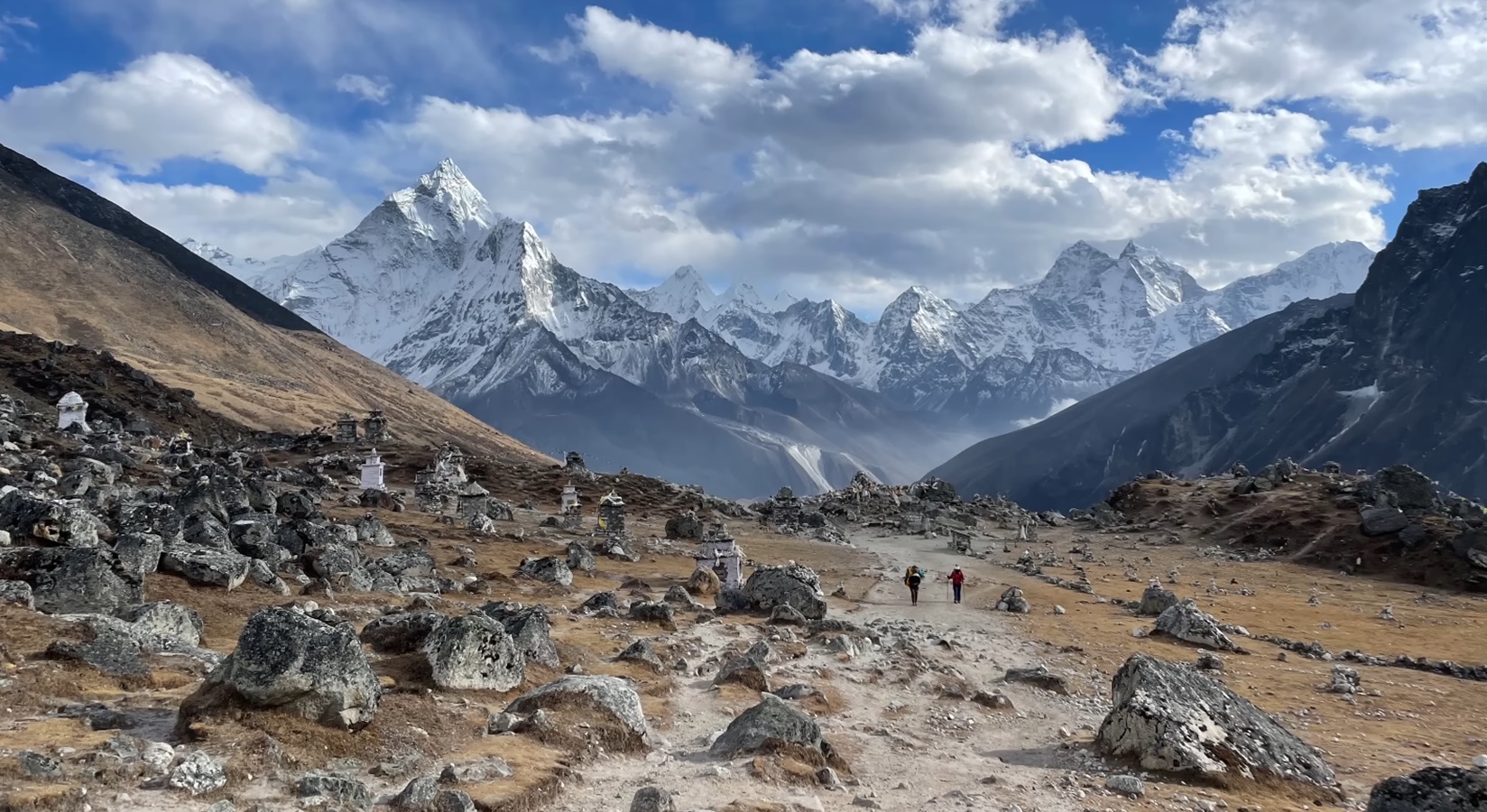
Leaving the tree line behind, the path climbs steadily into the dramatic, arid Imja Valley. The views are dominated by the immense south face of Lhotse and the distinctive peak of Island Peak. Your destination is Dingboche, a traditional farming village nestled in a picturesque, stone-walled patchwork of fields. This will be your home for two nights, allowing for a critical acclimatization stop at over 4,400 meters.
Trip Duration:
5-6 Hours
Accomodation:
Normal Teahouse
Meals:
Breakfast, Lunch & Dinner
This active acclimatization day is vital for preparing your body for higher altitudes. Following the “climb high, sleep low” principle, you’ll take a short, steep hike up the Imja Valley to the small settlement of Chhukung. The trail offers increasingly dramatic, close-up views of Island Peak (Imja Tse), the soaring Lhotse Wall, and the surrounding glacial moraines.
For the very fit and ambitious, an optional, strenuous climb partway up Chhukung Ri provides even more spectacular panoramic rewards. You’ll return to Dingboche by lunchtime. The afternoon is dedicated to rest and hydration, allowing your body to adapt while you enjoy the peaceful, high-mountain atmosphere of this stone-walled village.
Key Notes: This hike, while short, is steep and at significant altitude. Listen to your body. The optional Chhukung Ri climb is challenging; only attempt it if feeling strong. The primary goal is sensible acclimatization, not summit chasing. Overnight in Dingboche.
Trip Duration:
3-4 Hours
Accomodation:
Normal Teahouse
Meals:
Breakfast, Lunch & Dinner
Today’s trek is a powerful journey into the high, stark landscape that leads to Everest. The path ascends steadily from Dingboche along a stony trail, crossing glacial streams and offering vast open views. A significant climb brings you to Dughla (Thukla) at 4,620m, a solemn and moving site marked by a hillside of memorial chortens dedicated to climbers who have lost their lives on Everest.
From Dughla, a steep, switchbacking climb up a terminal moraine ridge leads to the windswept outpost of Lobuche. Perched at nearly 5,000 meters, this settlement offers dramatic, close-up views of Nuptse’s towering wall and your first awe-inspiring look at the frozen expanse of the Khumbu Glacier. Prepare for significantly colder temperatures and thinner air.
Trip Duration:
5-6 Hours
Accomodation:
Normal Teahouse
Meals:
Breakfast, Lunch & Dinner
This is one of the most demanding and rewarding days of the entire trek. The morning involves a rugged 2-3 hour trek across the rocky, uneven moraine of the Khumbu Glacier to reach Gorakshep, a small outpost nestled beside a frozen lake.
After a quick lunch, you’ll embark on the final 2-3 hour push to your major goal: Everest Base Camp (5,364m). The trail weaves through the dramatic icefall of the glacier. Upon arrival, you’ll stand amidst the monumental landscape where mountaineering history is made, with the Khumbu Icefall towering above. In the pre-monsoon season, the camp is often dotted with the colorful tents of expeditions. Soak in the immense achievement before returning to Gorakshep for a well-earned rest at this extreme altitude.
Key Notes: This is a long, strenuous day at very high altitude. The terrain to EBC is rocky and requires careful footing. Celebrate your accomplishment, but conserve energy for the return trek and the next day’s early hike. Nights in Gorakshep are the coldest yet.
Overnight in Gorakshep.
Trip Duration:
8-9 Hours
Accomodation:
Normal Teahouse
Meals:
Breakfast, Lunch & Dinner
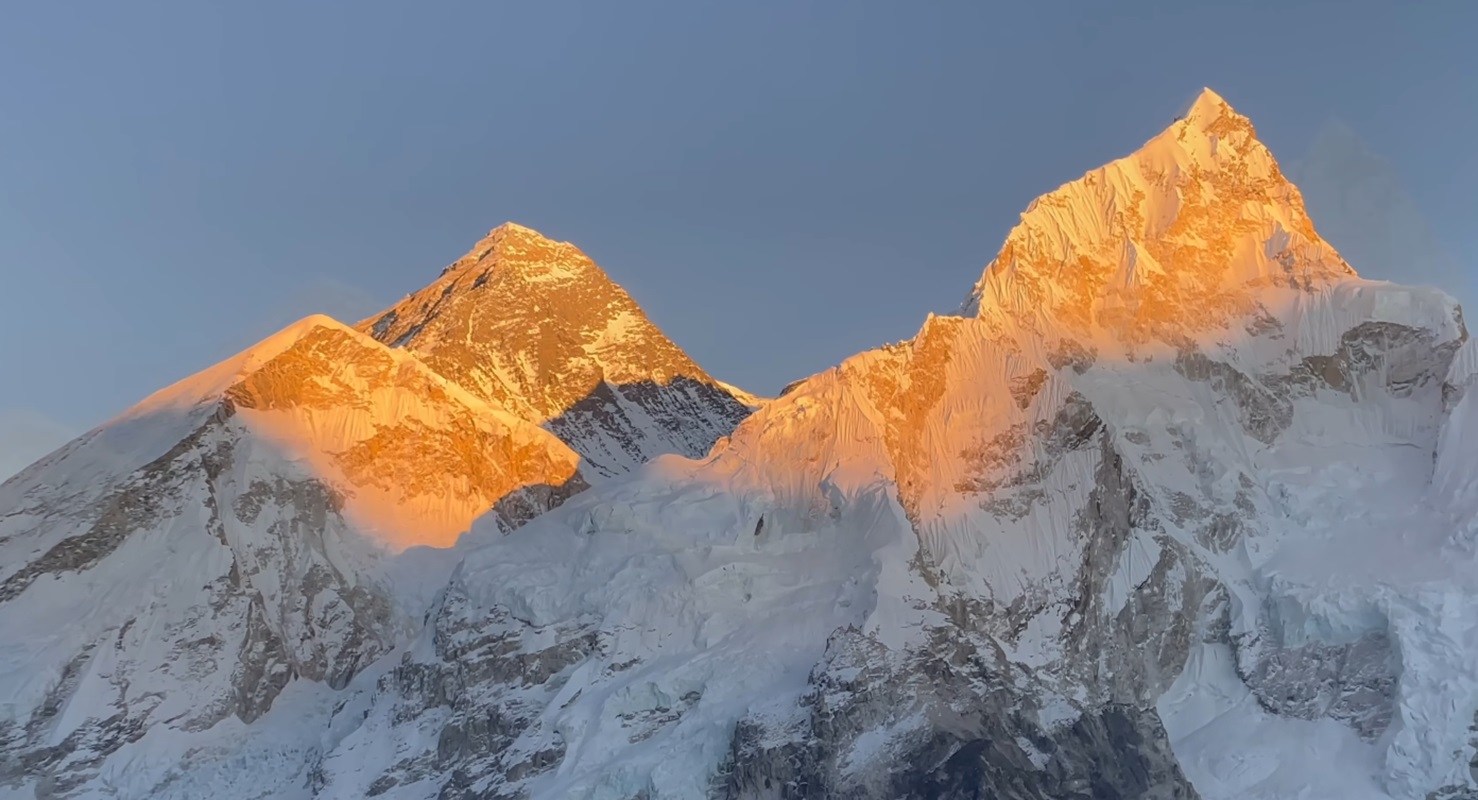
An early, cold start leads to the iconic climb of Kala Patthar (5,545m) for a breathtaking Himalayan sunrise. This short but steep hike rewards you with the closest and most complete view of Mount Everest, as the first light illuminates its summit pyramid and the entire surrounding panorama of giants like Nuptse and Pumori.
After descending to Gorak Shep for breakfast, you’ll retrace your steps to Lobuche and then branch off onto a quieter trail. This scenic path winds along the western side of the Khumbu Glacier, leading to the remote and peaceful hamlet of Dzongla, nestled directly beneath the formidable slopes of Cho La Pass. Use the afternoon to rest, hydrate thoroughly, and prepare mentally and physically for the challenging pass crossing tomorrow.
Key Notes: The Kala Patthar climb is steep and at extreme altitude, but worth every step. Dress in all your warm layers for the pre-dawn cold. The afternoon walk to Dzongla is less crowded and offers stunning glacial views. Prioritize rest and preparation for tomorrow.
Trip Duration:
6-7 Hours
Accomodation:
Normal Teahouse
Meals:
Breakfast, Lunch & Dinner
Today presents the trek’s most formidable technical and physical challenge: crossing the high Cho La Pass. An early start is essential. The day begins with a steep, rocky scramble up to the base of the pass. The final section traverses a glaciated section that can be icy; your guide will advise on using crampons or microspikes for safety. Reaching the prayer-flag-draped summit (5,420m) is a major triumph, offering dramatic views back towards Ama Dablam and ahead into the Gokyo Valley.
The descent is steep and rugged on the western side, passing stunning, milky turquoise glacial ponds as you navigate the rocky moraine. The trail eventually eases as you arrive at the small cluster of lodges in Thangnak (Dragnag), a welcome sight after a demanding day. Celebrate conquering the pass and rest well, as the beautiful Gokyo Lakes await tomorrow.
Key Notes: This is a long, serious day requiring good stamina and steady footing. Weather conditions on the pass can change rapidly. Success depends on an early start, following your guide’s instructions precisely, and being properly equipped.
Trip Duration:
7-8 Hours
Accomodation:
Normal Teahouse
Meals:
Breakfast, Lunch & Dinner
Following the demanding pass crossing today is a shorter, visually spectacular journey into the heart of the Gokyo Valley. The trail contours alongside the massive, crevassed Ngozumpa Glacier—the longest in the Himalayas—before a final rise reveals the breathtaking sight of the turquoise Third Gokyo Lake and the village of Gokyo on its shore.
After settling into your lodge, you have time to explore the lakeshore, visit the small stupas, and absorb the magnificent panorama featuring peaks like Cho Oyu and Gyachung Kang. For those with energy to spare, an optional hike to the Fourth Lake offers even greater solitude and stunning views deeper into the valley. Use this afternoon to truly rest and appreciate this serene, high-altitude sanctuary.
Trip Duration:
3-4 Hours
Accomodation:
Normal Teahouse
Meals:
Breakfast, Lunch & Dinner
This morning holds a grand finale: a pre-dawn hike to the summit of Gokyo Ri for a sunrise spectacle. The steep, hour-long climb is rewarded with arguably the finest 360-degree panorama in the Himalayas, encompassing Everest, Lhotse, Makalu, Cho Oyu, and the sprawling Ngozumpa Glacier and turquoise lakes below.
After descending for breakfast in Gokyo, you’ll begin the long but scenic trek downward out of the high valley. Retracing the trail through Machermo, you’ll pass yak pastures, waterfalls, and dramatic cliffs, arriving back at the village of Dole. The lower altitude here brings noticeably thicker air and a milder climate, offering a welcome change.
Key Notes: The Gokyo Ri climb is steep and at high altitude but is a non-technical hike. Start early with headlamps for the sunrise. The descent to Dole is long, so good trekking poles are helpful. Enjoy the feeling of easier breathing at lower elevation.
Trip Duration:
7-8 Hours
Accomodation:
Normal Teahouse
Meals:
Breakfast, Lunch & Dinner
Today’s trek is a beautiful and steady descent back to the familiar comforts of Namche Bazaar. The trail winds down through the Gokyo Valley, offering a final, sweeping view from the scenic ridge-top settlement of Mong La, home to a classic teahouse with panoramic vistas.
From here, you re-enter the welcome shade of pine and juniper forests as the path follows the Dudh Koshi River downstream. The air grows thicker, the temperatures milder, and the landscape noticeably greener with each hour.
Arriving back in the bustling Namche Bazaar by afternoon feels like a return to civilization. Celebrate the completion of your high-altitude circuit with a hot shower, a well-earned pastry from a bakery, and perhaps a celebratory drink.
Trip Duration:
5-6 Hours
Accomodation:
Normal Teahouse
Meals:
Breakfast, Lunch & Dinner
The final day of trekking retraces the familiar path along the Dudh Koshi River. You’ll descend through charming villages to Phakding for a lunch break, followed by the last sustained ascent of the journey—the steady climb back up to Lukla.
Arriving in Lukla marks the official end of your Himalayan trek. The evening is for celebration and gratitude. Enjoy a heartfelt farewell dinner with your guide and porter team, reflecting on the incredible landscapes and personal achievements of the past two weeks. It’s a time to exchange contact details, distribute well-earned tips, and savor the camaraderie.
Key Notes: Though mostly downhill, the final climb to Lukla is a reminder of the region’s terrain. This is a day of mixed emotions—accomplishment and farewell. Ensure your packed luggage is ready for tomorrow’s early flight.
Trip Duration:
6-7 Hours
Accomodation:
Normal Teahouse
Meals:
Breakfast, Lunch & Dinner
An early morning takes you back to Tenzing-Hillary Airport for your return flight to Kathmandu. This scenic 35-minute journey offers a final, bird’s-eye view of the mountains you’ve just traversed. Note: Flights are highly weather-dependent, and delays are possible.
Upon arrival at Kathmandu’s domestic terminal, you’ll be transferred to your hotel. The rest of the day is free for well-deserved rest and reflection. You might explore the bustling streets of Thamel for last-minute souvenir shopping, visit the serene Boudhanath Stupa, or simply relax and celebrate the completion of your monumental adventure.
Key Notes: Keep your passport and flight ticket handy. Use the free afternoon for any personal explorations or much-needed relaxation. A final group dinner is often arranged to celebrate the successful trek.
Trip Duration:
45 minutes
Meals:
Breakfast
Trek Packing List for Everest Gokyo Lakes Trek
A well-planned, functional packing list is critical for comfort, safety, and success on this demanding high-altitude trek. The key is layering for extreme temperature swings and prioritizing quality over quantity. This is a tried-and-tested list for the classic 16-day Everest Gokyo Lakes Trek route.
Essential Clothing (The Layering System):
- Base Layers (Wicking): Synthetic or merino wool tops and bottoms (2 sets).
- Mid Layers (Insulating): Fleece jacket or pullover. Insulated down or synthetic jacket (crucial for cold mornings/evenings).
- Outer Shell (Protection): Waterproof and windproof hard shell jacket (Gore-Tex recommended). Waterproof over-pants.
- Trekking Bottoms: Lightweight, quick-dry hiking pants (2 pairs). Thermal leggings for sleep/cold days.
- Head & Hands: Warm beanie, sun hat/bandana, neck gaiter or buff, lightweight gloves, insulated winter gloves.
- Footwear: Well-broken-in waterproof hiking boots (most important item!). Camp shoes/sandals, moisture-wicking socks (4-5 pairs), warm thermal socks.
Essential Gear & Equipment:
- Backpack: A comfortable, supportive 30-40L daypack for daily essentials. A 60-70L duffel bag (for porter, max 15kg weight limit).
- Sleeping: A high-quality sleeping bag rated to -15°C to -20°C (can be rented in Kathmandu). Sleeping bag liner (optional for warmth/cleanliness).
- Trekking & Hydration: Trekking poles (highly recommended), reusable water bottles or hydration bladder (3L total capacity), water purification tablets/filter.
- Health & Safety: Personal first-aid kit (blister care, diamox, painkillers, antibiotics), high-SPF sunscreen, lip balm with SPF, sunglasses with UV protection, headlamp with extra batteries.
Personal Items & Documents:
- Documents: Passport, extra passport photos, Nepali visa, travel insurance documents (must cover emergency helicopter evacuation up to 6,000m), printed itinerary, cash (USD/NPR).
- Miscellaneous: Quick-dry towel, toiletries, biodegradable soap, wet wipes, hand sanitizer, power bank, spare camera batteries, lightweight lock for duffel bag.
Pro-Tip & What to Rent: You can easily and affordably rent excellent quality down jackets, sleeping bags, and duffel bags in Kathmandu’s Thamel district, saving packing space and weight. Test all gear, especially boots and backpacks, before departure. The mantra is “pack light, pack right.” Every extra gram is felt at altitude.
Everest Gokyo Lakes Trek FAQs
This is a challenging to strenuous trek due to its high altitude (reaching 5,545m at Kala Patthar), long duration (14-18 days), and the technical crossing of the Cho La Pass (5,420m). It requires excellent fitness, prior trekking experience, and a disciplined approach to acclimatization.
While not legally required, a licensed guide is highly recommended for safety, navigation on the Cho La Pass, acclimatization management, and cultural interaction. Permits are mandatory: the Sagarmatha National Park Permit and the Khumbu Pasang Lhamu Rural Municipality Permit.
The optimal seasons are autumn (late September to November) for stable weather and clear skies, and spring (March to May) for warmer temperatures and blooming rhododendrons. Winter is extremely cold, and the monsoon (June-August) is not recommended due to rain and poor visibility.
Costs vary but typically range from $1,800 to $2,800 USD for a guided package. This usually includes permits, domestic flights, guide/porter services, teahouse accommodation, and meals on the trek. International flights, travel insurance, tips, and personal expenses are extra.
Altitude sickness is a serious risk on this trek. Prevention is key: follow a gradual ascent profile, take acclimatization days (in Namche and Dingboche), stay hydrated (3-4 liters daily), and consider Diamox after consulting a doctor. Recognize symptoms early; the only cure for worsening AMS is immediate descent.
You will stay in basic teahouses (lodges) with twin-share rooms, shared toilets, and a communal dining area. Food is predominantly Nepali and Tibetan cuisine like Dal Bhat, noodles, soups, and potatoes. Menus are extensive at lower elevations but become simpler and more expensive higher up.
Yes, but it’s limited and unreliable. A local Ncell SIM card provides data signal in villages like Namche and Dingboche. Most teahouses sell paid Wi-Fi cards, but the connection is slow and expensive, especially at higher altitudes. Assume you will be offline for long stretches.
Essentials include: broken-in hiking boots, a -15°C to -20°C sleeping bag, layered clothing (moisture-wicking base layers, insulating mid-layers, a down jacket, and a waterproof shell), a 30-40L daypack, trekking poles, a high-capacity power bank, and a comprehensive personal first-aid kit.
The standard route is a 35-minute scenic flight from Kathmandu to Lukla. During peak seasons, flights may depart from Ramechhap/Manthali Airport (a 4-5 hour drive from Kathmandu). Alternative overland routes start from Jiri or Salleri, adding several days of trekking.
Reputable trekking agencies include emergency helicopter evacuation in their safety protocol. This is why travel insurance that covers high-altitude trekking and evacuation up to 6,000m is mandatory. Your guide will coordinate any necessary rescue via satellite communication.
Everest Gokyo Lakes Trek Good To Know
The Everest region, known as Khumbu, is far more than a dramatic landscape; it is the ancient homeland of the Sherpa people, whose rich culture and history are inextricably linked to the mountains. Understanding this context transforms a trek from a physical challenge into a profound cultural journey.
Historical Roots: Everest Gokyo Lakes Trek
The Sherpas are descendants of Tibetan nomads who migrated over the Nangpa La pass from eastern Tibet some 500 years ago, seeking refuge and new pastures. They brought with them their language, a dialect of Tibetan, and their Tibetan Buddhism. For centuries, they lived in relative isolation, developing a unique culture adapted to the extreme high-altitude environment, centered on agriculture, trade, and Tibetan Buddhism. The region remained largely unknown to the outside world until the early 20th-century mountaineering expeditions, which forever changed its trajectory.
Cultural & Spiritual Life: Everest Gokyo Lakes Trek
- Tibetan Buddhism permeates daily life in Khumbu. This is visibly expressed through:
- Mani Walls & Prayer Wheels: Inscribed stones and wheels containing mantras; one circumambulates them clockwise.
- Prayer Flags: Colorful flags strung across passes and monasteries, sending prayers of compassion on the wind.
- Monasteries (Gompas): Spiritual and social centers like Tengboche Monastery, where ceremonies (pujas) are held. The rhythmic chanting of monks is a hauntingly beautiful sound of the Himalayas.
- Festivals: Vibrant festivals like Mani Rimdu (celebrated at Tengboche) feature masked dances, rituals, and community gatherings.
The Sherpa Ethos & Mountaineering Legacy:
The word “Sherpa” has become synonymous with high-altitude expertise, but it is first and foremost an ethnic identity. Their intimate knowledge of the mountains, incredible strength, and Buddhist values of hospitality and respect made them indispensable partners on historic climbs. The success of Sir Edmund Hillary and Tenzing Norgay Sherpa in 1953 placed the Sherpa people and Everest at the center of world attention. Today, while trekking and mountaineering form the economic backbone, Sherpa communities continue to balance modern opportunities with the preservation of their traditions, language, and deep spiritual connection to the mountains they call home.
Trekkers’ Cultural Insight:
As a visitor, you walk through a living cultural landscape. You’ll stay in family-run teahouses, pass through villages with ancient chortens, and witness a way of life shaped by Buddhism and the rugged environment. Respecting local customs—such as walking clockwise around religious objects, dressing modestly, and asking permission before taking portraits—is essential. The history of Khumbu is not just in books; it is etched in the stone walls of its monasteries and carried in the resilient spirit of its people.
The Everest Gokyo Lakes Trek is situated in the heart of the iconic Khumbu region of northeastern Nepal. This premier high-altitude route is entirely contained within the protected area of Sagarmatha National Park, a designated UNESCO World Heritage Site renowned for its dramatic mountains, glaciers, and unique Sherpa culture.
Key Geographical Details: Everest Gokyo Lakes Trek
- Country & Region: Nepal, specifically the Solu-Khumbu District of Province No. 1.
- Mountain Range: The trek traverses the Mahalangur Himal, the sub-range of the Himalayas that is home to Mount Everest.
- Proximity to Everest: The circuit explores the western and southern flanks of Mount Everest (8,848m), with Gokyo Ri providing one of the world’s most famous panoramic views of the peak.
- Primary Valley: The trek’s highlight is the Gokyo Valley, a serene system of glacial lakes located west of the main Everest Base Camp trail.
- Access Point: The standard gateway is a thrilling 35-minute flight from Kathmandu to Tenzing-Hillary Airport in Lukla. For those seeking a longer, classic approach, an alternative multi-day trek from Jiri or Salleri is possible.
In essence, this trek takes you deep into the heart of the Nepali Himalaya, offering an unforgettable journey through the world’s highest mountain landscape.
The Everest Gokyo Lakes Trek is not only a journey through breathtaking landscapes but also a profound cultural immersion into the heart of Sherpa country. You will walk through historic villages, stay in family-run teahouses, and interact with the resilient and hospitable people who call the high Himalayas home.
Key Villages and Cultural Encounters:
- Namche Bazaar (3,440m): The bustling Sherpa capital and trading hub. This vibrant town offers a blend of traditional culture and modern amenities, with shops, bakeries, and the weekly Saturday market. It’s a central place to observe daily Sherpa life and interact with locals and trekkers from around the world.
- Khumjung & Khunde (3,780-3,840m): Often visited during an acclimatization hike from Namche, these traditional villages offer an authentic glimpse into Sherpa life. You can visit the Khumjung Monastery (home to the purported Yeti scalp) and the Hillary School, witnessing the community’s strong ties to education and preservation of culture.
- Tengboche (3,860m): The spiritual center of the Khumbu. The famous Tengboche Monastery is home to Buddhist monks, and attending a morning prayer ceremony (puja) is a highlight. The village offers stunning views and a deep sense of tranquility.
- Pangboche (3,985m): One of the oldest Sherpa villages in the region, home to the oldest monastery in Khumbu. It provides a quieter, more traditional atmosphere compared to the busier trails closer to Namche.
- Dingboche (4,410m): A picturesque farming village in the Imja Valley, known for its stone-walled potato and barley fields. The lifestyle here is adapted to high-altitude agriculture, and you’ll notice a shift to a more rugged, mountainous way of life.
- Gokyo (4,800m): A remote settlement on the shore of the Third Gokyo Lake. The families here live in one of the most stunning and extreme environments, their lives intimately connected to the lakes, the Ngozumpa Glacier, and the seasonal trekking economy.
The Sherpa People:
You will primarily meet the Sherpa people, an ethnic group of Tibetan origin renowned for their mountaineering prowess, deep-rooted Tibetan Buddhism, and exceptional hospitality.
Their culture is visible everywhere—in the mani walls, prayer flags, and chortens that line the trails; in the warm welcome of teahouse hosts; and in the resilience of porters and guides. Respect for their customs, a friendly “Tashi Delek” (greeting), and mindful observation are key to a meaningful connection.
Traveler’s Tip: Always walk clockwise around religious structures like stupas and mani walls. Ask for permission before taking portraits of locals, and support the community by purchasing local teas and snacks directly from village shops. Your journey is a guest experience in their ancient homeland.
Trekking through Sagarmatha National Park, a UNESCO World Heritage Site, offers a unique opportunity to witness a fragile and fascinating high-altitude ecosystem. The flora and fauna of the Everest Gokyo Lakes Trek have adapted to survive in extreme conditions, with biodiversity changing dramatically as you ascend.
Flora: From Lush Forests to Alpine Deserts
- Lower Reaches (Lukla to Namche): The trail passes through relatively lush forests of blue pine, fir, juniper, and rhododendron. In spring (April-May), the rhododendron blooms paint the hillsides in spectacular shades of red and pink.
- High Altitude Zones (Above Namche): As you climb, vegetation becomes stunted and sparse. You’ll encounter hardy dwarf shrubs, alpine grasses, and mosses. The highest usable land is used for growing potatoes, barley, and buckwheat in terraced fields.
- Alpine Desert (Near EBC & Gokyo): Above 4,500m, the landscape becomes a rocky, glacial alpine desert. Plant life is minimal, limited to lichens and rare, hardy wildflowers clinging to rocky crevices.
Fauna: Elusive and Adapted Wildlife
While often shy and rarely seen, the park is home to several remarkable species:
- Mammals: The most commonly spotted are the Himalayan Tahr (a wild goat relative) and the musk deer. Very lucky trekkers might catch a glimpse of the elusive snow leopard (an apex predator), Himalayan black bear, red panda, or gray wolf—though these are exceptionally rare.
- Birds: The park is a birdwatcher’s delight. Look for the colorful Danphe (Himalayan Monal), Nepal’s national bird, as well as snow pigeons, yellow-billed choughs, Himalayan griffons, and various species of pheasants and finches.
- Domestic Animals: Yaks and dzopkyos (yak-cow hybrids) are vital to Sherpa life, serving as beasts of burden. You will frequently share the trail with these sturdy animals.
Everest Gokyo Lakes Trek: Conservation & Trekker Responsibility
- The ecosystem is extremely vulnerable. As a trekker, you play a role in its protection:
- Stay on Designated Trails to prevent erosion and protect fragile plant life.
- Dispose of All Waste Properly (carry out non-biodegradable trash).
- Observe Wildlife from a Distance; do not feed or approach animals.
- Use a Reusable Water Bottle and purification methods to minimize plastic waste.
The journey from fertile valley to glacial desert showcases nature’s incredible adaptability. While the iconic mountains are the main draw, the resilient flora and fauna of Sagarmatha National Park add a profound layer of wonder to the trekking experience. Hiring a knowledgeable guide enhances the chances of spotting and learning about this unique biodiversity.
Acclimatization is the single most critical factor for a safe and successful Everest Gokyo Lakes Trek. This process allows your body to adapt to decreasing oxygen levels at high altitude, preventing Acute Mountain Sickness (AMS), which can be serious. The itinerary is specifically designed with this in mind.
Why It’s Non-Negotiable: Above 2,500 meters, the air contains significantly less oxygen. Without proper acclimatization, you risk headaches, nausea, dizziness, and in severe cases, life-threatening HAPE (High-Altitude Pulmonary Edema) or HACE (High-Altitude Cerebral Edema).
How the Trek Itinerary Builds in Acclimatization:
- Gradual Ascent: The schedule follows the golden rule: do not increase your sleeping elevation by more than 400-500 meters per day once above 3,000m.
- Acclimatization Days: These are active rest days, not lazy ones. The principle is “climb high, sleep low.”
- Namche Bazaar (Day 4): You hike to the Everest View Hotel (~3,880m) but return to sleep at Namche (3,440m).
- Dingboche (Day 7): You hike to Chhukung (~4,730m) but return to sleep at Dingboche (4,410m).
- Hydration & Pace: Drink 3-4 liters of water daily and maintain a slow, steady pace (“pole pole”). Avoid alcohol and sleeping pills.
Recognizing AMS Symptoms (Listen to Your Body):
- Mild Symptoms: Headache, loss of appetite, nausea, dizziness, fatigue.
- Serious Symptoms (Require IMMEDIATE DESCEND): Severe headache unrelieved by medication, vomiting, loss of coordination, confusion, shortness of breath at rest.
Key Acclimatization Points on Everest Gokyo Lakes Trek:
- Namche Bazaar (3,440m): Your first major acclimatization stop.
- Dingboche (4,410m): A critical second stop before pushing above 5,000m.
- Gokyo (4,800m): The altitude before ascending Gokyo Ri is similar to Gorak Shep, making the prior acclimatization vital.
Pro-Tip: Consider discussing Diamox (Acetazolamide) with your doctor before travel as a preventive aid. It is not a substitute for proper acclimatization but can help. Never ignore symptoms.
The only cure for advanced AMS is immediate descent. A reputable guide will monitor your condition closely and make safety the top priority.
Absolutely yes. The Everest Gokyo Lakes Trek is widely considered a premier high-altitude adventure trekking trip in Nepal, offering a more challenging and remote experience than the classic Everest Base Camp route alone.
Here’s what qualifies it as a true adventure:
- High-Altitude Challenge: The trek reaches extreme elevations, sleeping above 5,000m at Gorak Shep and summiting viewpoints over 5,300m (Kala Patthar & Gokyo Ri). This demands respect for altitude, careful acclimatization, and physical resilience.
- Technical Terrain & Pass Crossing: The route includes crossing the Cho La Pass (5,420m), a glaciated mountain pass. This involves a steep, rocky ascent and a glacier traverse that may require microspikes/crampons, adding a mountaineering-like element not found on standard treks.
- Remote & Rugged Environment: The Gokyo Valley is less crowded and feels more isolated than the main EBC trail. The landscape is dominated by the massive Ngozumpa Glacier and pristine lakes, offering a sense of true wilderness exploration.
- Demanding Physical Undertaking: This is not a casual hike. It involves 14-18 consecutive days of trekking with significant daily ascents and descents, often for 5-8 hours a day, requiring very good fitness and mental stamina.
- Unpredictable Elements: As with any high-mountain adventure, you must be prepared for rapidly changing weather, potential flight delays to/from Lukla, and the need for self-sufficiency between teahouses.
Who is it for?
This adventure is ideal for experienced trekkers seeking a challenging circuit that combines iconic goals (EBC) with spectacular, off-the-beaten-path scenery (Gokyo Lakes). It is not recommended for first-time trekkers or those without excellent physical conditioning.
The Everest Gokyo Lakes Trek is a complete adventure package—blimbing physical endurance, technical terrain, high-altitude exposure, and immersive cultural travel into one of the world’s most dramatic landscapes. It is a rewarding challenge for those well-prepared to embrace it.
Reaching the start of the Everest Gokyo Lakes Trek is an adventure in itself, centered around a dramatic flight into the heart of the Himalayas. Here’s a clear overview of the standard route and essential alternatives.
Primary Route: Fly to Lukla
The standard and most time-efficient method is a scenic 35-minute flight from Kathmandu to Tenzing-Hillary Airport in Lukla. This iconic flight offers breathtaking mountain views but is notoriously weather-dependent. Delays are common, making it crucial to include buffer days in your travel schedule. During peak seasons, flights often operate from Ramechhap/Manthali Airport (a 4-5 hour drive from Kathmandu) to ensure reliability.
Alternative Overland Routes
- For travelers seeking a longer, more gradual approach or wishing to avoid flights, two road-to-trail options exist:
- From Jiri: The historic “Original Everest Trail,” adding 5-7 days of trekking through scenic mid-hills.
- From Salleri/Phaplu: A more direct road-head reachable by jeep, adding 2-3 days of trekking to join the main route.
Return Journey: Everest Gokyo Lakes Trek
- The return typically mirrors the arrival:
- After completing the circuit, you will trek back to Lukla.
- Catch the return flight to Kathmandu (or Ramechhap).
- Transfer for your international departure.
Crucial Advice: Always book international flights home after allowing for at least one extra buffer day in Kathmandu post-trek to accommodate potential flight delays from Lukla. All logistics, including airport transfers and domestic flights, are typically arranged by your trekking agency.
To trek legally in the Everest region, you must obtain two essential permits. These are checked at official entry points, and your trekking agency will typically handle the paperwork for you.
- Sagarmatha National Park Entry Permit
- Cost: NPR 3,000 (approximately USD 25) per person.
- Where to Get It: This can be obtained at the National Park entry counter in Monjo on the trail itself, or in advance at the Nepal Tourism Board in Kathmandu.
- Purpose: This permit funds the conservation of the UNESCO World Heritage Site.
- Khumbu Pasang Lhamu Rural Municipality Entry Permit
- Cost: NPR 2,000 (approximately USD 17) per person.
- Where to Get It: This is obtained at the checkpoint in Lukla or at the municipality office in Namche Bazaar.
- Purpose: A local tax that supports community development in the Khumbu region.
Important Notes:
- You will need two passport-sized photos for the permits.
- Carry photocopies of your passport and keep the original document secure.
- These permits are non-refundable.
If you are traveling with a reputable agency, they will arrange these permits as part of your package. Independent trekkers must procure them themselves at the designated offices.
The optimal seasons for the Everest Gokyo Lakes Trek are the post-monsoon autumn and the pre-monsoon spring, when stable weather, clear skies, and moderate temperatures create ideal trekking conditions.
Autumn (Late September to November)
- Pros: This is the most popular and highly recommended season. You’ll experience stable weather, crystal-clear mountain views, moderate daytime temperatures, and minimal rainfall. The trails are dry, and post-harvest landscapes are vibrant.
- Considerations: Trails and teahouses can be quite busy, especially in October. Nights become progressively colder into November.
Spring (March to May)
- Pros: The second-best window, famous for mild days, blooming rhododendron forests, and excellent visibility before the monsoon haze builds. Warmer temperatures make crossing the Cho La Pass more comfortable.
- Considerations: Evenings and mornings are still cold at high altitude. There is a higher chance of afternoon cloud build-up or brief snow flurries. Popular in April and May.
Seasons to Avoid:
- Winter (December to February): Extremely cold, especially at night (down to -20°C at Gorak Shep/Gokyo). Many high passes like Cho La may be blocked by snow, and some teahouses close. Only for experienced, well-equipped trekkers.
- Monsoon (June to mid-September): Heavy rainfall, cloudy skies obscuring views, leech-infested trails, and high risk of landslides and flight cancellations. Treks during this time are generally not advised.
Verdict: For the best balance of safety, scenery, and comfort, aim for October-November or late March-April.
Avoiding altitude sickness (Acute Mountain Sickness – AMS) is the most critical aspect of a safe and successful trek. It requires a disciplined, proactive strategy centered on gradual ascent, proper hydration, and listening to your body.
- Follow a Gradual Ascent Profile (The Golden Rule)
- “Climb High, Sleep Low”: This is the core principle. On acclimatization days (e.g., in Namche and Dingboche), hike to a higher elevation during the day but return to sleep at a lower altitude.
- Respect Altitude Limits: Once above 3,000m, do not increase your sleeping elevation by more than 400-500 meters per day. The standard itinerary is specifically designed for this.
- Prioritize Hydration and Diet
- Drink 3-4 Liters Daily: Consistent hydration is non-negotiable. Drink water, herbal tea, or electrolyte solutions. Avoid alcohol and sedatives, as they depress breathing and worsen symptoms.
- Eat Carbohydrate-Rich Meals: Your body uses more energy at altitude. Maintain calorie intake even if your appetite decreases.
- Use Pharmacological Aids (Consult Your Doctor)
- Diamox (Acetazolamide): A proven prophylactic that can help speed acclimatization. Discuss a prescription and dosage (typically 125mg twice daily starting one day before ascent) with a physician familiar with high-altitude medicine. It is an aid, not a substitute for proper ascent.
- Recognize Symptoms and Act Immediately
Know the signs and have a zero-tolerance policy for progression:
- Mild Symptoms (Okay to rest at same altitude): Headache, mild nausea, dizziness, fatigue.
- Serious Symptoms (Require IMMEDIATE DESCENT):
- Severe, persistent headache unrelieved by medication.
- Loss of coordination (ataxia – difficulty walking heel-to-toe in a straight line).
- Confusion, vomiting, extreme shortness of breath at rest.
- These indicate potentially life-threatening HAPE (lung fluid) or HACE (brain swelling).
- Trust Your Guide and Use Oxygen Monitoring
- Pulse Oximeter: Many guides carry one. It measures blood oxygen saturation. A low reading (e.g., below 85%) is a data point to consider alongside symptoms.
- Guide’s Authority: Your guide’s decision regarding your fitness to proceed or need to descend is final. Their experience saves lives.
The Bottom Line: Altitude sickness is unpredictable and can affect anyone, regardless of fitness. Success is not about toughness but about smart, conservative choices. If symptoms develop, never continue ascending. The only cure for worsening AMS is immediate descent. Prioritizing health over summit goals ensures you live to trek another day.
Securing comprehensive travel insurance is not optional—it is an absolute necessity for the Everest Gokyo Lakes Trek. Given the remote location, extreme altitudes, and associated risks, a specialized policy is your most critical safety net.
Mandatory Coverage Requirements:
Your policy must include:
- Emergency Helicopter Evacuation: Covers the exorbitant cost of a rescue from remote trails or high altitude (up to 6,000 meters).
- Medical Expenses: Covers hospital treatment in Nepal and repatriation to your home country.
- Trip Cancellation & Interruption: Protects your investment if you must cancel due to injury, illness, or family emergency before or during the trek.
- Coverage for Adventure Activities: Explicitly lists “trekking up to 6,000m” or “high-altitude trekking” as a covered activity. Standard policies often exclude this.
Highly Recommended Additional Coverage:
- Lost, Stolen, or Delayed Baggage.
- Trip Delay: Crucial for covering extra hotel and meal costs due to frequent Lukla flight cancellations.
- Personal Liability.
Key Tips for Choosing a Policy: Everest Gokyo Lakes Trek
- Declare Pre-existing Medical Conditions honestly to avoid voided coverage.
- Verify the Altitude Limit. Ensure it covers up to 6,000m (Kala Patthar is 5,545m).
- Choose a Global Provider with a 24/7 emergency assistance line and a history of operating in Nepal.
- Carry Proof: Have a printed copy of your policy document and the emergency contact number accessible during the trek.
Important: Many standard or budget travel insurance policies do not cover high-altitude trekking. You must purchase a specialized mountaineering or adventure travel policy. Read the fine print carefully.
The weather in the high Himalayas is dynamic and unpredictable, varying drastically with season and altitude. Understanding the general climate patterns is essential for planning and packing.
Everest Gokyo Lakes Trek: Seasonal Breakdown
- Autumn (Late September – November) – Prime Season
- Conditions: Stable, dry weather with clear skies, excellent visibility, and minimal precipitation. Days are sunny and mild; nights become crisp and cold, especially from late October onward.
- Daytime Temp (Namche): 10-15°C (50-59°F)
- Nighttime Temp (Gorak Shep/Gokyo): -5 to -15°C (14 to 5°F)
Spring (March – May) – Second Best Season
- Conditions: Warmer days with increasingly clear views. The mountains are stunning, and rhododendrons bloom at lower elevations. Evenings remain cold. Afternoon cloud build-up and occasional brief snow showers are possible.
- Daytime Temp (Namche): 10-20°C (50-68°F)
- Nighttime Temp (Gorak Shep/Gokyo): -5 to -10°C (14 to 23°F)
Winter (December – February) – For the Hardy
- Conditions: Extremely cold, especially at night and in the mornings. Days can be sunny and clear but short. Trails and the Cho La Pass may be icy or snow-blocked, requiring extra gear and experience. Many teahouses above Namche may close.
- Daytime Temp (Namche): 5-10°C (41-50°F)
- Nighttime Temp (Gorak Shep/Gokyo): -10 to -25°C (14 to -13°F)
Monsoon (June – Early September) – Not Recommended
- Conditions: Heavy rainfall, cloudy skies, obscured views, leeches on trails, and high risk of landslides and flight cancellations. Trekking is generally unpleasant and less safe.
General Climate Characteristics
- Microclimates: Weather can change rapidly within a single valley. Sunshine at your lodge does not guarantee clear conditions on the pass ahead.
- Altitude Effect: Temperature drops roughly 6°C per 1,000m gained. Wind-chill on exposed ridges and passes (like Cho La or Gokyo Ri) can make it feel much colder.
- Sun Intensity: At high altitude, UV radiation is extreme. Sunburn and snow blindness are genuine risks even on cold, cloudy days.
The post-monsoon (autumn) and pre-monsoon (spring) seasons offer the most reliable weather windows. Regardless of season, you must pack for all conditions—blazing sun, freezing cold, wind, and potential snow. Layering is essential, and a flexible attitude is your best asset.
Staying connected and powering your devices is possible but comes with significant challenges and costs due to the remote, off-grid nature of the trek. Here’s what you need to know.
Availability and Cost of Charging
- Teahouse Charging:Most lodges offer charging outlets in common dining areas for a fee. This is a pay-per-device, per-charge service.
- Pricing Structure: The cost increases dramatically with altitude.
- Lower villages (Phakding, Namche): NPR 200-400 (≈ $1.50-3 USD) per full charge.
- Higher villages (Dingboche, Lobuche, Gorak Shep, Gokyo): NPR 400-700 (≈ $3-5 USD) per full charge.
- Power Source:Electricity is primarily from solar panels or, in some lower villages, micro-hydro. Supply is limited and unreliable. Outages are common, and charging is slow.
Essential Strategy & Gear
To manage power needs effectively, you must be self-sufficient:
- High-Capacity Power Bank (Anker-style): Your most important item. Bring a 20,000mAh (or larger) power bank to recharge devices 4-5 times. This is your primary power source.
- Universal Travel Adapter: Nepal uses Type C, D, and M sockets (230V). A universal adapter ensures you can plug in.
- Multi-Port USB Charger: Allows you to charge multiple devices at once when you do have access to an outlet.
- Voltage Regulator/Surge Protector (Optional but Recommended): Power surges can occur. A small, portable regulator protects expensive camera batteries and phones.
Practical Tips to Conserve Power
- Use Airplane Mode: This is the single biggest battery saver. Turn on only when needed for photos or in areas with cell service.
- Download Offline Maps & Media: Download Google Maps areas, music, books, etc., beforehand to avoid using data/battery to stream.
- Keep Batteries Warm: Cold drains battery life. Sleep with your power bank, phone, and camera batteries in your sleeping bag.
- Prioritize Charging: Charge your power bank first when you pay for an outlet, then use it to charge devices.
Internet & SIM Cards
- Ncell SIM: You can buy a local Ncell SIM in Kathmandu. Service is available (but slow) in Namche, Tengboche, and Dingboche. It is unreliable or nonexistent at Gorak Shep, EBC, and in much of the Gokyo Valley.
- Teahouse Wi-Fi: Many lodges sell Wi-Fi cards (EverestLink, NCell). Speeds are very slow and suited only for messaging. Cards cost NPR 500-1000 for a limited data/time block.
Bottom Line: Assume you will be off the grid for most of the trek, especially at high altitudes. A large power bank is non-negotiable. Budget for charging costs, but prioritize self-sufficiency to avoid frustration. The mountains are best experienced by looking up from your screen, so embrace the digital detox.
Meals are provided in the teahouses (lodges) along the route. The menus are extensive but become more limited and expensive as you gain altitude due to transportation costs.
Staple Dishes & Cuisine:
- Dal Bhat: The classic trekker’s fuel—steamed rice, lentil soup, vegetable curry, and sometimes meat. It’s nutritious, filling, and often comes with free refills.
- Noodles & Pasta: Fried noodles, chow mein, spaghetti, and macaroni.
- Soup: A wide variety of hot, nourishing soups (garlic soup is popular for altitude).
- Breakfast: Porridge, toast, pancakes, and eggs (fried, scrambled, omelets).
- Snacks & Drinks: Tibetan bread, popcorn, biscuits, and a range of hot drinks (tea, coffee, hot lemon, ginger).
Important Considerations: Everest Gokyo Lakes Trek
- Dietary Needs: Vegetarian options are plentiful. Vegan, gluten-free, or other specific diets are very challenging to accommodate; bring supplemental snacks.
- Hygiene: Stick to cooked foods and avoid uncooked vegetables/salads to prevent illness. Drink only treated or boiled water.
- Cost: Prices rise with altitude (e.g., Dal Bhat may cost $3-4 in Namche but $7-10 in Gorak Shep). Budget accordingly.
Accommodation is in traditional teahouses or lodges—basic mountain guesthouses that provide a vital place to eat, sleep, and socialize.
What to Expect:
- Rooms: Very basic, twin-share rooms with two single beds, a thin mattress, pillow, and blanket. Bring a high-quality sleeping bag.
- Bathrooms: Shared, squat-style toilets (often Asian-style). Hot showers are available for an extra fee ($3-6) and usually involve a bucket of hot water or a limited gas-heated shower.
- Common Area: The heart of the teahouse is the dining room, warmed by a central stove (often burning yak dung). This is where meals are served, stories are shared, and you can charge devices (for a fee).
Key Points:
- Booking: During peak seasons, your guide will phone ahead to secure rooms. Solo trekkers may need to share.
- Facilities: Lower altitude teahouses (Namche, Phakding) have more amenities. Higher altitude ones (Gorak Shep, Gokyo) are very basic, with no heating in rooms.
- Energy: Lighting is solar-powered and dim. There are no electrical outlets in rooms; charging is only in the dining room for a fee.
- Water: Never drink from the tap. Bottled water is available but expensive and environmentally taxing. Use purification tablets/filters and refill with boiled water (for a small fee).
Teahouses offer a unique, communal and culturally rich experience. Approach it with an adventurous spirit, realistic expectations, and a focus on warmth and practicality over luxury. The camaraderie and stunning views are the true rewards.
Yes, it is legally permitted to trek the Everest Gokyo Lakes circuit without a guide. The Khumbu region (where this trek is located) is not a restricted area, unlike some other trekking regions in Nepal. Independent trekkers can obtain the necessary permits (Sagarmatha National Park Permit and Khumbu Pasang Lhamu Rural Municipality Permit) on their own.
However, deciding to go without a guide is a significant choice that involves weighing major challenges and risks against the desire for total independence.
Key Challenges of Trekking Without a Guide:
- Navigation & Route-Finding: While the main trails are well-trodden, the circuit involves critical junctions (like the turnoff to Gokyo Valley or the approach to the Cho La Pass) where mistakes can lead to dangerous situations, especially in poor weather or snow.
- Altitude Sickness Management: A guide’s experience in monitoring symptoms, pacing, and making critical “go/no-go” decisions is invaluable. Without this, you are solely responsible for recognizing and reacting to potentially life-threatening AMS, HAPE, or HACE.
- Logistics & Communication: A guide handles teahouse bookings (crucial in peak season), manages porters if used, translates, and solves on-the-ground problems. Without one, you manage all logistics, which can be difficult in remote areas with language barriers.
- Safety on the Cho La Pass: This glaciated pass is the trek’s most technical section. It can be icy, require careful route-finding over moraine and glacier, and conditions change rapidly. A guide assesses safety and knows the optimal crossing strategy.
- Emergency Response: In case of an accident or severe illness, a guide can coordinate a rescue, communicate with authorities, and provide initial assistance. Being alone or with only a partner in a remote area significantly increases risk and delay.
Who Might Consider It?
Only extremely experienced, self-sufficient high-altitude trekkers with prior Nepal/Himalayan experience, excellent navigation skills, and a fluent understanding of altitude illness should consider this. You must be prepared to carry all your gear or independently hire and manage a porter.
Strong Recommendation: Hire a Guide
- For over 95% of trekkers, hiring a licensed guide is strongly advised. The benefits are profound:
- Safety: Expert management of altitude and hazards.
- Cultural Bridge: Deeper interaction with local communities.
- Convenience: Hassle-free logistics and problem-solving.
- Support: Contributes directly to the local economy.
Verdict: While possible to trek independently, the Everest Gokyo Lakes circuit is a serious, remote, high-altitude adventure. The complexity of the Cho La Pass and the need for vigilant acclimatization make a professional guide a wise investment in safety, enjoyment and a successful journey.
The Everest Gokyo Lakes Trek is rated as Challenging to Strenuous. It is a serious high-altitude trek suitable for experienced hikers or very determined beginners with excellent fitness.
Key Factors Contributing to the Difficulty:
- High Altitude: The trek reaches extremes, sleeping at Gorak Shep (5,140m) and summiting Kala Patthar (5,545m) and Gokyo Ri (5,357m). Proper acclimatization is non-negotiable to avoid Acute Mountain Sickness (AMS).
- Long Duration & Sustained Effort: This is a 14-18 day continuous trek, involving 5-7 hours of walking per day, with significant ascents and descents.
- Technical Terrain – Cho La Pass: Crossing the Cho La Pass (5,420m) is the most demanding section. It involves a steep, rocky climb and a traverse over a glacier that can be icy, requiring careful footing and sometimes microspikes.
- Variable Conditions: Trekkers must be prepared for rapidly changing weather, cold temperatures (down to -15°C at night), and basic teahouse accommodations.
Who is this trek for?
Ideal for trekkers with prior multi-day hiking experience, very high cardio fitness, and a disciplined approach to pacing and acclimatization. It is not recommended for absolute beginners.
Internet and Wi-Fi are available but unreliable, slow, and increasingly expensive with altitude. Expect a significant digital disconnect, especially at higher elevations.
How to Get Connected: Everest Gokyo Lakes Trek
- Local SIM Card (Ncell): Purchase in Kathmandu. Offers the best chance of mobile data. Signal is available in Namche, Tengboche, and Dingboche, but is weak or absent in Gorak Shep, Everest Base Camp, and most of the Gokyo Valley.
- Teahouse Wi-Fi: Most lodges sell prepaid Wi-Fi cards (e.g., Everest Link). Speeds are very slow, suitable only for messaging apps (WhatsApp, Messenger) and basic email. Cannot support streaming, video calls, or large uploads.
Cost & Reality Check: Everest Gokyo Lakes Trek
- Cost increases with altitude: A Wi-Fi card may cost $3-5 for 100-500 MB of data (lasting ~1 hour) at higher villages.
- Power-dependent: Wi-Fi routers run on solar power. If it’s cloudy or batteries are low, there is no service.
- Mental Preparation: Treat any connectivity as a bonus. Assume you will be offline for days at a time in the upper valleys. Inform family of this possibility.
Pro-Tip: Download offline maps, entertainment, and books before you go. Use connectivity in lower villages (like Namche) to check in, then embrace the digital detox.
A dedicated 2-3 month training regimen is essential to enjoy this trek safely and successfully. Focus on building cardiovascular endurance, leg strength and hiking-specific stamina.
- Cardiovascular Training (Most Important):
- Aim: Build a base where you can comfortably perform 4-6 hours of moderate aerobic activity.
- How: Run, cycle, swim, or use the stair climber 4-5 times per week. Incorporate long weekend sessions (90+ minutes) at a steady, conversational pace.
- Strength & Stability Training:
- Focus: Legs, core, and stabilizing muscles.
- Key Exercises: Squats, lunges, step-ups (with a weighted pack), calf raises, and planks. Train with the downhill motion in mind to prepare knees for long descents.
- Frequency: 2-3 strength sessions per week.
- Hike-Specific Training (Non-Negotiable):
- The Golden Rule: The best training for trekking is trekking.
- Weekend Practice: Do consecutive full-day hikes with a loaded daypack (6-8 kg) on hilly or mountainous terrain. This simulates trekking conditions and tests your gear.
- Mental Preparation & Pacing:
- Mindset: Train yourself for a slow, steady “Trekker’s Pace.” Speed is irrelevant; sustainable endurance is key.
- Breathing: Practice rhythmic breathing during training to prepare for thinner air.
On-Trek Strategy: Everest Gokyo Lakes Trek
- Hydrate: Drink 3-4 liters of water daily.
- Pole, Pole (Slowly, Slowly): Never rush. Let your guide set the pace.
- Listen to Your Body: Rest when needed and prioritize acclimatization over ambition.
Starting Point: If you can complete a 6-hour hike with a 10kg pack and 1,000m of elevation gain on consecutive days without being exhausted, you are on the right track.
Tipping is a customary and valued practice in Nepal’s trekking industry. It is not obligatory but is a meaningful way to thank your guide and porters for their hard work and dedication. A good tip directly supports their livelihood.
Quick Reference Guide: Everest Gokyo Lakes Trek
- Trekking Guide: $10-15 per day, from the group.
- Porter: $5-8 per day, from the group.
- Assistant Guide: $6-10 per day, from the group.
How & When to Tip:
Give a lump sum in Nepali Rupees or USD at the end of the trek. Present it discreetly in an envelope with a sincere thank you (“Dhanyabad”).
Tip for good service based on the trek’s length and difficulty. Budgeting for this gesture completes your adventure respectfully and supports the local team who made it possible.
Reviews
A Memorable Kailash Mansarovar Yatra with Excellent Support
My Kailash Mansarovar Yatra with Best Of Nepal Trek was an unforgettable experience. From the very beginning, everything was well planned and the team made sure our journey was comfortable, safe and enjoyable.
Our guide and the entire staff were friendly, experienced and always ready to help. They took great care of the group, answered all our questions and ensured that every part of the pilgrimage went smoothly.
Visiting the sacred Mount Kailash and Lake Mansarovar was a dream come true. The stunning Himalayan scenery and the peaceful spiritual atmosphere made this journey truly special.
I would like to thank Best Of Nepal Trek for their outstanding hospitality and professional service. I highly recommend them to anyone planning the Kailash Mansarovar Yatra. It was a wonderful experience that I will always remember.
Raada J
,USA
Excellent Kailash Mansarovar Yatra with Best Of Nepal Trek
Everything was well organized from start to finish, and the communication before the trek was smooth and clear. Our guide, Mr. Arjun, was excellent—friendly, knowledgeable and always making sure everyone was safe and comfortable. The entire team at Best Of Nepal Trek was professional, helpful and made us feel welcome throughout the journey.
The Kailash Mansarovar Yatra was a truly unforgettable spiritual experience. From the breathtaking Himalayan landscapes to the peaceful atmosphere around Mount Kailash and Lake Mansarovar, every moment was memorable. I felt well supported throughout the journey, and the team's attention to detail made the pilgrimage comfortable and stress-free.
I highly recommend Best Of Nepal Trek to anyone planning the Kailash Mansarovar Yatra. Thank you to Mr. Arjun and the entire team for making this once-in-a-lifetime journey so special.
Anupam M
,USA

Outstanding Everest Base Camp Trek Experience
Our Everest Base Camp Trek with Best of Nepal Trek was an unforgettable experience from beginning to end. Every detail of the trip was professionally organized and our guide, Shyange Sherpa, was knowledgeable, friendly and always willing to help. His experience and encouragement made the trek enjoyable and safe.
We also enjoyed the Kathmandu city tour, which was a wonderful introduction to Nepal's rich culture and history before the trek. The breathtaking Himalayan scenery and outstanding service made this journey truly special.
We highly recommend Best of Nepal Trek to anyone planning an Everest Base Camp Trek or a Kathmandu city tour in Nepal. Thank you for creating such an incredible and memorable adventure.Gotti M
,Norway
Annapurna Base Camp Trek with Friendly Guide
The Annapurna Base Camp Trek was an unforgettable adventure. Nepal is truly a beautiful country, famous for its warm hospitality, rich culture and unique traditions. The mountain views were absolutely breathtaking throughout the journey. A special thanks to our guide, Suman Tamang, who was friendly, knowledgeable and always ready to help. His support and care made the trek safe, enjoyable and memorable. I highly recommend Best Of Nepal Trek to anyone planning the Annapurna Base Camp Trek in Nepal.
Andrea Stern
,Sweden
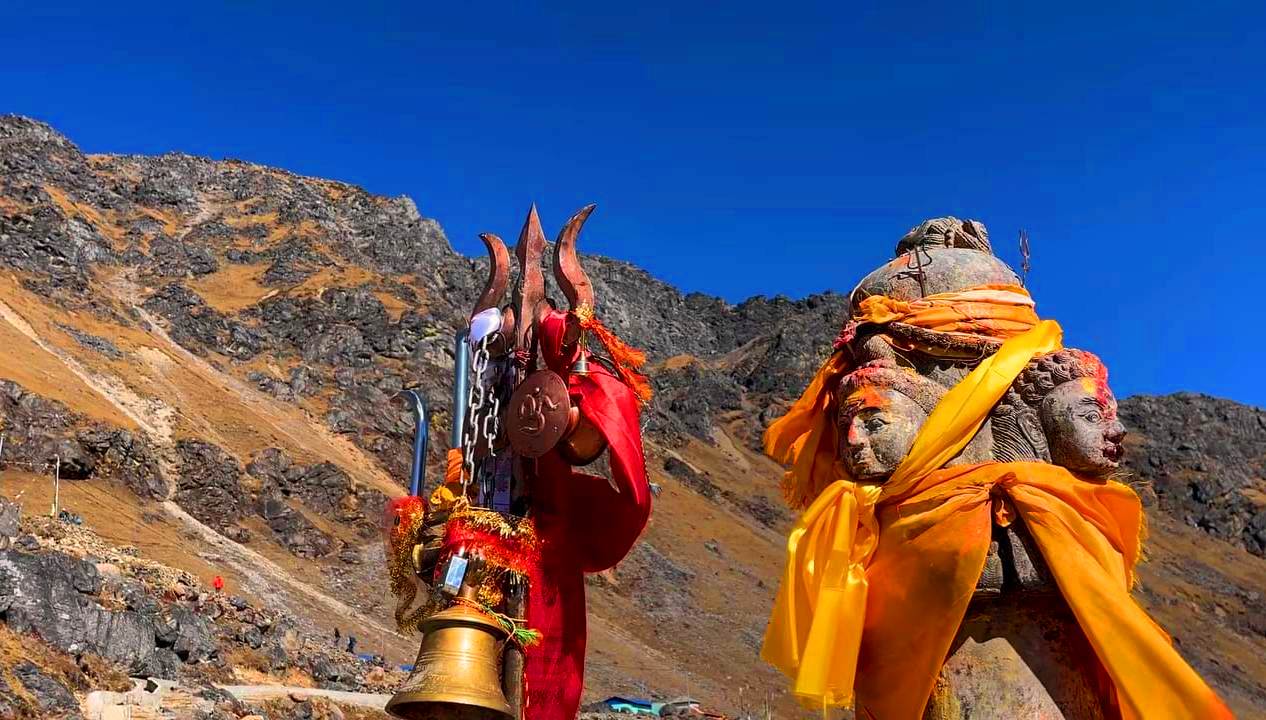
Well-Organized Gosaikunda Trekking with Stunning Himalayan Views
Our Gosaikunda Trekking adventure with Best of Nepal Trek was exceptionally well organized from beginning to end. The guide and porters were friendly, professional and always ready to help. Visiting the sacred Gosaikunda Lake was the highlight of our journey and the breathtaking panoramic mountain views made every step worthwhile. We had a fantastic trip and highly recommend Best of Nepal Trek to anyone planning the Gosaikunda Trek in Nepal.
Anna
,Australia
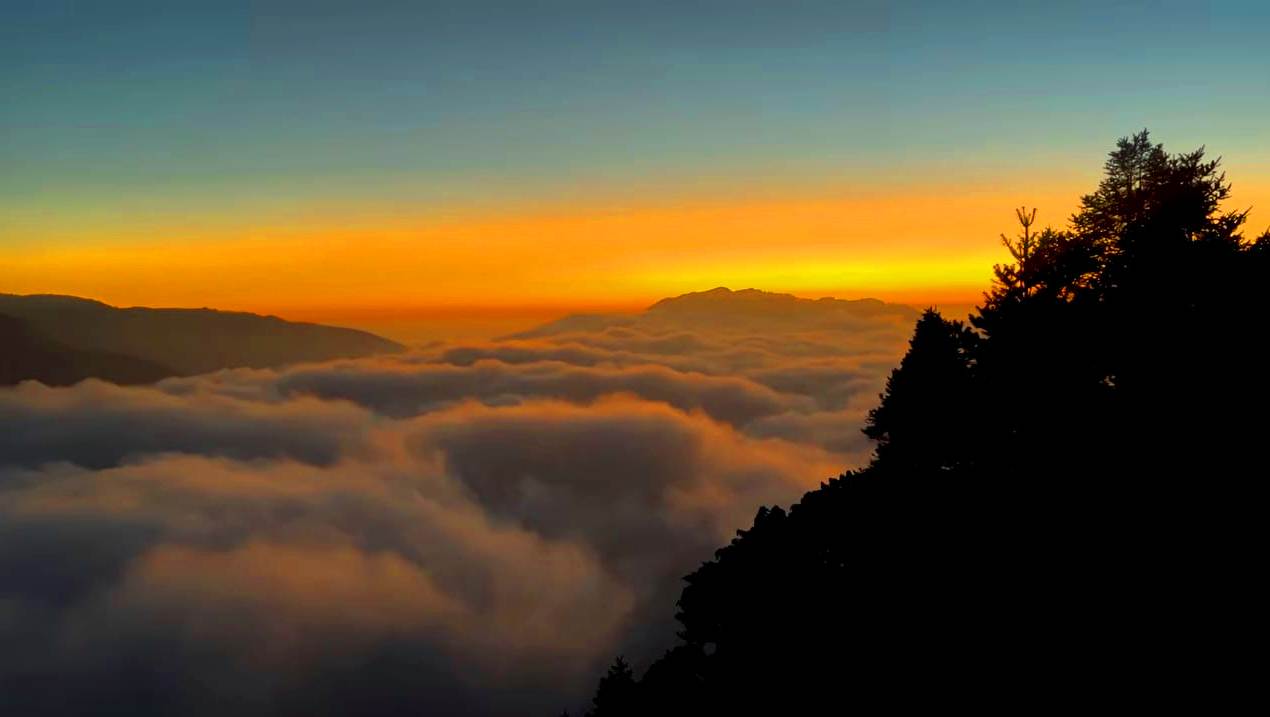
Amazing Gosaikunda Trek Experience
Our Gosaikunda Trek with Best of Nepal Trek was challenging but incredibly rewarding. The stunning Himalayan scenery, peaceful trails and warm hospitality made every moment unforgettable. Our guide, Dipak Sapkota, was knowledgeable, friendly and supportive throughout the trek. Everything was professionally organized, making our adventure safe, enjoyable and truly memorable. We highly recommend Best of Nepal Trek for anyone planning the Gosaikunda Trek in Nepal.
Jennifer,
,Canada
Excellent Kailash Mansarovar Yatra Experience
Our Kailash Mansarovar Yatra with Best of Nepal Trek was exceptionally well organized from start to finish. Communication was smooth and our Guide, Arjun, was friendly, knowledgeable and supportive throughout the journey. We felt safe, well cared for and truly enjoyed this once-in-a-lifetime pilgrimage. I highly recommend Best of Nepal Trek to anyone planning the Kailash Mansarovar Yatra.
Nini
,US
Jungle Safari on Foot in Chitwan
The jungle safari on foot was a really amazing experience. We were lucky to see a mother rhino with her calf, which was truly unforgettable. We also spotted deer and other wildlife along the way.
It was a great adventure in nature and a wonderful way to experience the beauty of the jungle up close.Nina N.
,Australia
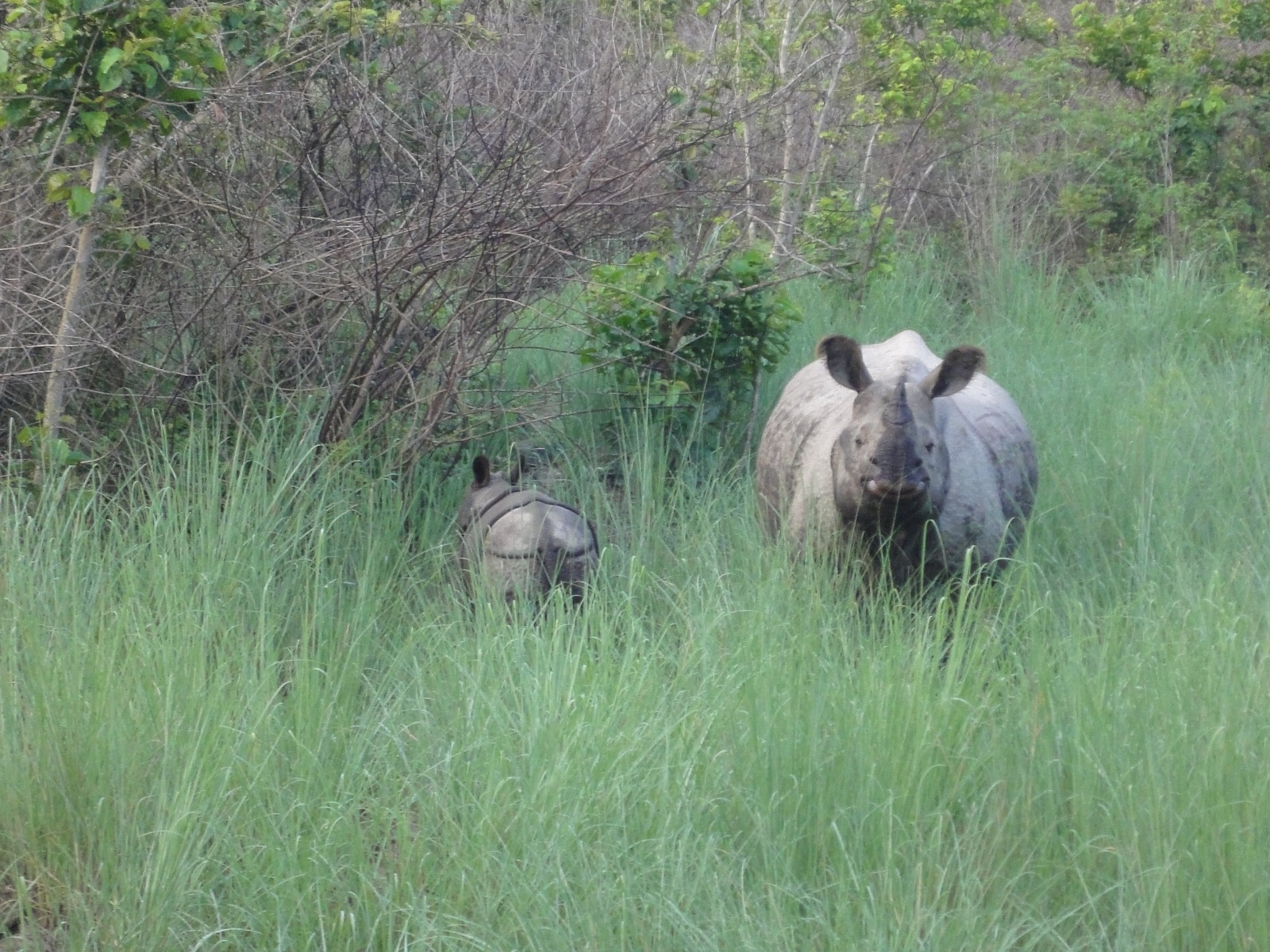
Wonderful Jungle Safari Experience
Our Chitwan Jungle Safari Tour with Best Of Nepal Trek was an unforgettable experience. We enjoyed incredible wildlife sightings, including the famous one-horned rhinoceros and had the opportunity to explore the natural beauty of Chitwan National Park.
The guides were knowledgeable and helpful throughout the tour, while the resort staff provided excellent hospitality. The food was delicious and plentiful, making our stay even more enjoyable. Everything was well organized and we highly recommend this tour to anyone looking for a memorable wildlife adventure in Nepal.janet
,US
Chitwan Jungle Safari Tour with Best Of Nepal Trek
My Chitwan Jungle Safari Tour with Best Of Nepal Trek was a fantastic experience. The wildlife sightings, jungle activities and cultural experiences made the trip both exciting and memorable.
Everything was well organized and the team ensured a comfortable and enjoyable journey throughout the tour. I highly recommend Best Of Nepal Trek to anyone looking to explore the natural beauty and wildlife of Chitwan. Thank you for making this adventure so special.Kristen
,United States