Everest Base Camp Trek
Important Lukla Flight Information
Please Note: Lukla flights are an essential part of the Everest Base Camp Trek and operate differently depending on the season. During the peak trekking seasons (March to May and September to November), most flights operate from Ramechhap (Manthali) Airport, approximately 4–5 hours’ drive from Kathmandu, due to air traffic management.
During the off-season, flights generally operate directly from Kathmandu, subject to weather conditions. As Himalayan weather is unpredictable, flight delays or cancellations are possible. We strongly recommend allowing 2–3 extra buffer days in your itinerary and purchasing comprehensive travel insurance to ensure a safe, flexible, and worry-free Everest trekking experience.
Destination:
Nepal
Trip Duration:
15 Days
Max Altitude:
Kala Patthar (5,555 m)
Activities:
Trekking
Start Point:
Kathmandu
Ending Point:
Kathmandu
Region:
Everest
Trip Grade:
Moderate
Group Size:
1-10 Pax
Accomodation:
Hotel/Normal Teahouses
Meals:
Breakfast, Lunch and Dinner during trekking
Transportation:
private vehicle/Domestic Flight
Permits Required:
National Park Permit/Rural Municipality Permit
Best Season:
March, April, May and Sept, Oct, Nov
The Everest Base Camp Trek is one of the world’s most iconic and rewarding trekking adventures, offering an unforgettable journey to the base of Mount Everest (8,848.86 m), the highest mountain on Earth. Perfect for adventure seekers, nature lovers, photographers, and trekking enthusiasts, this legendary Himalayan trek combines spectacular mountain scenery, authentic Sherpa culture, ancient Buddhist monasteries, and thrilling high-altitude trails. Located in the breathtaking Khumbu region of Solukhumbu District, the Everest Base Camp Trek is a once-in-a-lifetime experience that attracts travelers from across the globe who dream of standing beneath the world’s tallest peak.
The adventure begins with a spectacular 30 to 40-minute mountain flight from Kathmandu (KTM) to Lukla (LUA), one of the world’s most thrilling flights and the gateway to the Everest region. From Lukla, the trail follows the beautiful Dudh Koshi River, winding through picturesque Sherpa villages, lush pine and rhododendron forests, suspension bridges, glacial rivers and breathtaking alpine landscapes. Along the way, trekkers pass through famous settlements including Phakding, Namche Bazaar, Tengboche, Dingboche, Lobuche and Gorakshep before reaching the legendary Everest Base Camp (5,364 m). Throughout the journey, colorful prayer flags, ancient mani walls, chortens and centuries-old Buddhist monasteries showcase the region’s rich spiritual heritage, while the warm hospitality and unique traditions of the Sherpa people make the experience even more memorable.
One of the greatest highlights of the trek is the breathtaking Himalayan panorama. Trekkers enjoy magnificent views of Mount Everest, Lhotse, Nuptse, Ama Dablam, Pumori, Thamserku, Cho Oyu and many other snow-covered peaks. An early morning hike to Kala Patthar (5,545 m), the highest point of the trek, rewards trekkers with one of the closest and most spectacular panoramic views of Mount Everest, especially during sunrise when the Himalayan peaks glow with golden light.
Accommodation throughout the trek is provided in comfortable family-run teahouses and mountain lodges, where warm Sherpa hospitality is complemented by freshly prepared local meals such as Dal Bhat, Tibetan bread, momos, noodles, soups, potatoes, seasonal vegetables, porridge, pancakes, eggs and hot drinks. Although the trek is considered moderate to challenging due to the high altitude, no technical climbing experience is required.
Most itineraries are completed in 12 to 14 days, including important acclimatization days to ensure a safe and enjoyable trekking experience. With spectacular Himalayan landscapes, authentic mountain culture, comfortable teahouse accommodation, and the unforgettable achievement of reaching the base of the world’s highest mountain, the EBC Trek remains one of Nepal’s finest trekking adventures.
Explore our detailed itinerary, trip cost, departure dates, and book your Everest Base Camp Trek with Best Of Nepal Trek for the adventure of a lifetime in the heart of the Himalayas.
Everest Base Camp Trek Highlights
- Flight to Lukla: Start with an exciting flight into the Himalayas, landing at Tenzing-Hillary Airport, your gateway to Everest.
- Namche Bazaar Acclimatization: Adapt to altitude in this vibrant Sherpa town, exploring markets and catching your first views of Everest.
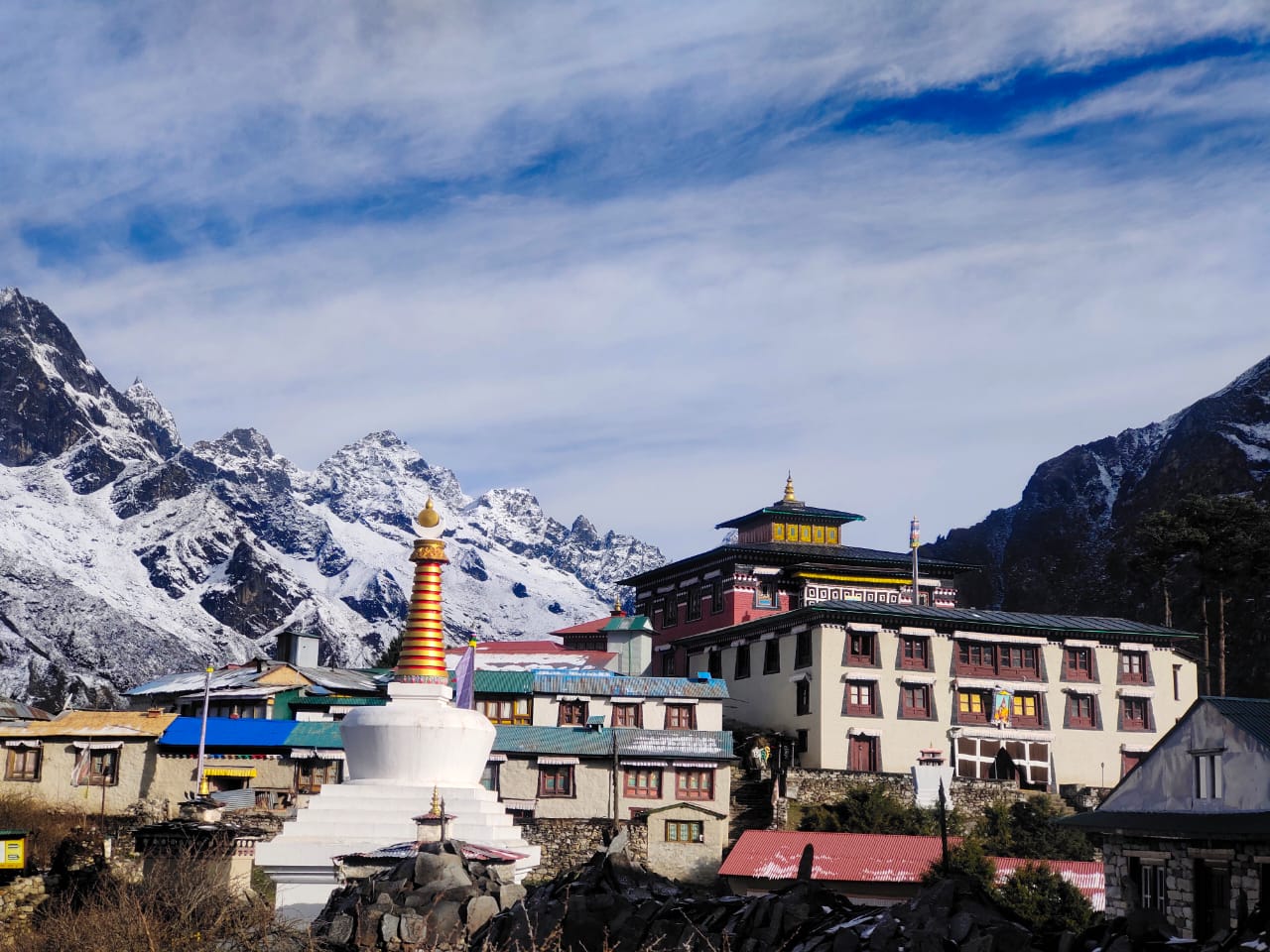
- Tengboche Monastery: Find peace at the region's largest monastery, with stunning views of Ama Dablam and the chance to witness morning prayers.
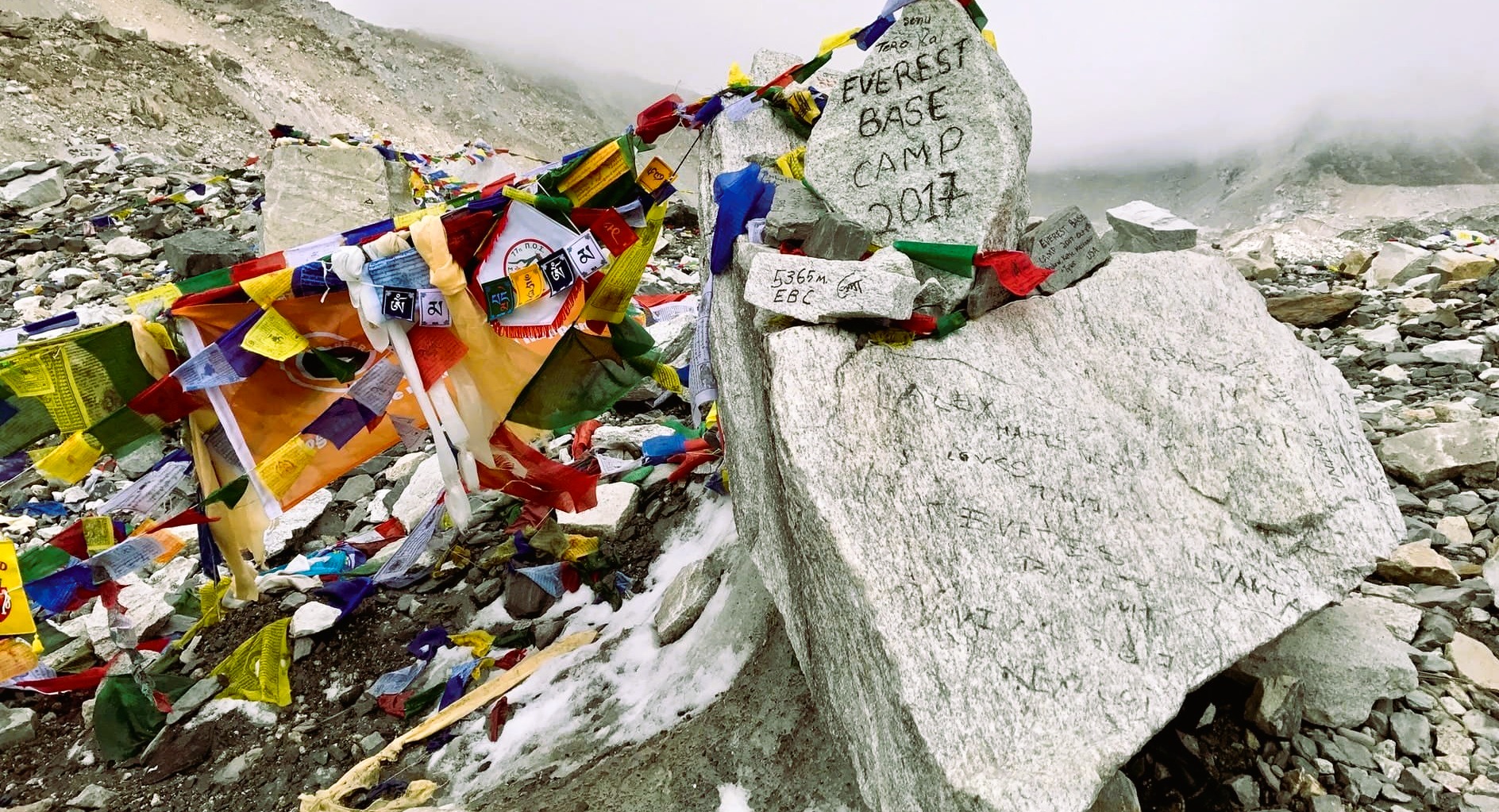
- Stand at Everest Base Camp (5,364m): Achieve your goal at the foot of the world's highest peak, amidst the dramatic Khumbu Glacier.
- Sunrise from Kala Patthar (5,545m): Hike pre-dawn for a breathtaking, close-up sunrise view over Mount Everest and neighboring giants.
- Teahouse Experience: Enjoy the warmth of classic, family-run lodges, sharing stories with trekkers from around the world.
- Sherpa Culture: Walk through living heritage, past prayer wheels, Mani stones and chortens in traditional villages.
- Panoramic Mountain Vistas: Witness continuous, awe-inspiring views of Himalayan giants like Lhotse, Cho Oyu and Ama Dablam.
Route Details of the Everest Base Camp Trek
Everest Base Camp Trek route is one of the world’s most famous Himalayan trekking journeys, leading trekkers through the stunning Khumbu region of Nepal to the base of Mount Everest (8,848.86 m).
The adventure begins with a scenic flight from Kathmandu to Lukla, followed by trekking through beautiful Sherpa villages including Phakding, Namche Bazaar, Tengboche, Dingboche, Lobuche and Gorakshep. Along the trail, trekkers enjoy spectacular views of Everest, Ama Dablam, Lhotse, Nuptse and other Himalayan peaks.
The route passes through suspension bridges, pine forests, Buddhist monasteries, glacial valleys and traditional mountain settlements rich in Sherpa culture and hospitality.
The main highlight is reaching Everest Base Camp (5,364 m) and hiking to Kala Patthar (5,545 m), one of the best viewpoints for panoramic sunrise views of Mount Everest.
With breathtaking scenery, rich Himalayan culture, comfortable teahouse accommodation, and unforgettable mountain experiences, the Everest Base Camp Trek route offers one of the greatest trekking adventures in Nepal.
Include
The Everest Base Camp (EBC) Trek package includes all essential services and logistics to ensure a safe, comfortable, and well-organized Himalayan adventure. From transportation and accommodation to meals, permits, and professional guides, everything is carefully arranged for a hassle-free trekking experience in the Everest region.
Package Includes:
- All international and domestic airport transfers in Kathmandu via comfortable tourist vehicles
- Round-trip domestic flights between Kathmandu/Manthali and Lukla for a scenic start to your trek
- Kathmandu–Manthali–Kathmandu ground transportation by shared tourist vehicle (depending on flight season)
- Twin-sharing or double rooms in a 3-star standard service hotel in Kathmandu for 2 nights, including daily breakfast. (Private room upgrades are available at an additional cost.)
- Twin-sharing teahouse/guesthouse accommodation for 11 nights during the trek. Rooms with attached bathrooms are provided in Lukla, Phakding and Namche Bazaar
- Three wholesome meals per day (breakfast, lunch and dinner) throughout the trek, featuring a variety of Nepali, Tibetan and international dishes.
- A licensed and experienced English-speaking trekking guide certified by the Nepal government
- Supportive porters to carry luggage (1 porter for every 2 trekkers)
- All wages, meals, accommodation, insurance and necessary gear for the trekking staff are fully covered
- Permits: Sagarmatha National Park Entry Permit/Khumbu Pasang Lhamu Rural Municipality Permit and TIMS (Trekkers’ Information Management System) Card
- A comprehensive first-aid kit, including an oximeter to monitor oxygen levels and pulse rate daily
- Trip completion certificate recognizing your successful journey to Everest Base Camp
- All government taxes, service charges and administrative fees are included in the package.
Exclude
While the Everest Base Camp Trek package covers most essential services, certain personal and optional expenses are not included in the cost. Below is a detailed list of items not covered in the package price.
Package Excludes:
- Lunch and dinner in Kathmandu are not included in the package. You can explore a variety of local and international dining options in the city
- Beverages such as alcohol, soft drinks, bottled water and snacks purchased during the trek are not part of the package cost
- International airfare to and from Nepal, as well as the airport departure tax are excluded
- Nepal Entry Visa fees are not included. You can easily obtain a visa upon arrival at Tribhuvan International Airport, Kathmandu or at Nepalese embassies abroad
- Comprehensive travel insurance with high-altitude trekking and emergency evacuation coverage is mandatory but not included in the trek price
- Tips and gratuities for trekking staff, porters, and drivers are not covered. Though optional, tipping is customary as a gesture of appreciation
- Personal trekking gear and equipment, such as down jackets, sleeping bags, hiking poles, or boots, must be arranged by each participant
- Any other expenses not mentioned under “Price Includes” are the responsibility of the trekkers
Everest Base Camp Trek Itinerary

Welcome to Kathmandu, the capital city of Nepal and the starting point of the Everest Base Camp Trek. Upon arrival at Tribhuvan International Airport, our representative from Best Of Nepal Trek will warmly welcome you and transfer you to your hotel in a private tourist vehicle.
After hotel check-in and some rest, you will meet your trekking guide for a detailed Everest Base Camp Trek briefing. The guide will explain the itinerary, trekking preparations, altitude awareness, and important travel information about the Khumbu region.
In the evening, enjoy a traditional Nepali welcome dinner and experience Nepalese culture before beginning your Himalayan adventure.
Day Highlights:
- Airport pickup and hotel transfer
- Everest Base Camp Trek briefing
- Meet trekking guide and fellow trekkers
- Traditional Nepali welcome dinner
- Overnight stay in Kathmandu
Trip Duration:
30 minutes
Accomodation:
3-Star hotel/Resort
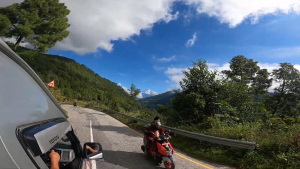
After breakfast in Kathmandu, begin a scenic drive to Ramechhap via the famous B.P. Highway, one of Nepal’s most beautiful mountain roads. The journey offers impressive views of rolling hills, terraced farmlands, rivers, forests and traditional hillside villages.
As you travel through the countryside, you will experience the peaceful rural landscapes and local culture of Nepal before entering the gateway region for the Everest Base Camp Trek. The drive also provides an excellent opportunity to observe everyday village life in the Himalayan foothills.
Ramechhap is a quiet town that serves as an important transit point for early morning flights to Lukla, the starting point of the Everest Base Camp Trek in Nepal’s Khumbu region. Overnight stay in Ramechhap helps ensure a smooth and comfortable connection for the mountain flight the following morning.
Day Highlights:
- Scenic drive along the B.P. Highway
- Views of hills, rivers, forests, and terraced farms
- Experience traditional Nepalese countryside life
- Preparation for Lukla mountain flight
- Overnight stay in Ramechhap
Trip Duration:
Approximately 5 hours
Accomodation:
Basic hotel or guesthouse
Meals:
Breakfast

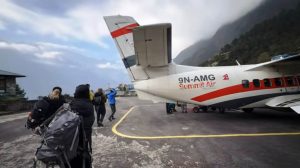
Today marks the official beginning of your unforgettable Everest Base Camp Trek in Nepal. Early in the morning, we take a scenic mountain flight from Ramechhap to Lukla, one of the most exciting and spectacular flights in the Himalayas. The short flight offers breathtaking aerial views of snow-capped mountains, deep valleys, rivers, and remote Himalayan landscapes before landing at the famous Tenzing-Hillary Airport in Lukla (2,800 m).
Lukla is known as the main gateway to the Everest region and the starting point of most Everest trekking adventures. After meeting our trekking crew and completing final preparations, we begin trekking through beautiful Sherpa settlements and peaceful mountain trails.
The trail gradually descends toward the Dudh Koshi River, passing prayer wheels, mani stones, colorful prayer flags, and traditional villages surrounded by pine forests and Himalayan scenery. Along the way, we cross several suspension bridges and experience the unique culture and hospitality of the local Sherpa community.
After a comfortable and relatively easy first trekking day, we arrive at Phakding (2,650 m), a peaceful riverside village located in the heart of the Khumbu region. This beautiful village offers stunning mountain surroundings and a relaxing atmosphere perfect for the first overnight stay on the Everest Base Camp Trek.
Day Highlights:
- Scenic mountain flight from Ramechhap to Lukla
- Experience the famous Tenzing-Hillary Airport
- First day trekking in the Everest region
- Walk through traditional Sherpa villages
- Cross suspension bridges over the Dudh Koshi River
- Overnight stay in the peaceful village of Phakding
Trip Duration:
Flight Duration: 20 minutes/Trek : 3–4 hours
Accomodation:
Tea house
Meals:
Breakfast, Lunch and Dinner

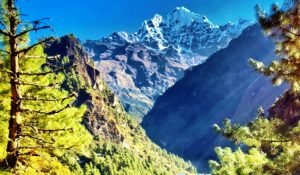
Today’s journey is one of the most exciting and rewarding days of the Everest Base Camp Trek, as we continue deeper into Nepal’s beautiful Khumbu region. After breakfast in Phakding, the trail follows the glacial waters of the Dudh Koshi River, passing through peaceful pine forests, traditional Sherpa villages, prayer flag, and scenic mountain landscapes.
The route includes several thrilling suspension bridge crossings, including the famous Hillary Suspension Bridge, one of the most iconic landmarks on the Everest trekking trail. Along the way, trekkers pass charming settlements such as Benkar, Monjo, and Jorsalle, where local teahouses and Himalayan scenery create a memorable trekking atmosphere.
At Monjo, we officially enter Sagarmatha National Park, a UNESCO World Heritage Site famous for its rich biodiversity, Himalayan wildlife, and spectacular mountain landscapes. After permit checks, the trail gradually becomes steeper as we begin the challenging ascent toward Namche Bazaar.
The uphill climb through dense forests and winding mountain trails is physically demanding but highly rewarding. On clear weather days, trekkers are rewarded with their first breathtaking view of Mount Everest, along with views of Lhotse and surrounding Himalayan peaks.
Finally, we arrive at Namche Bazaar (3,440 m), the vibrant Sherpa capital and the main trading hub of the Everest region. Surrounded by towering mountains, Namche offers a lively atmosphere with teahouses, cafes, bakeries, trekking shops, and stunning mountain scenery.
Day Highlights:
- Trek along the Dudh Koshi River
- Cross the famous Hillary Suspension Bridge
- Enter Sagarmatha National Park
- Walk through traditional Sherpa villages
- First possible view of Mount Everest
- Arrival at Namche Bazaar, the gateway to Everest
Trip Duration:
Trek Duration: 6–7 hours
Accomodation:
Tea House
Meals:
Breakfast, Lunch and Dinner
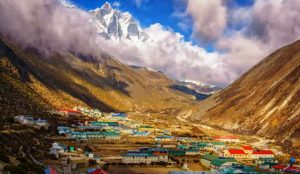
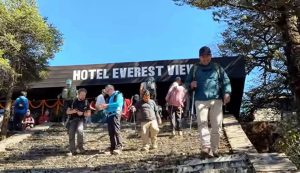
Today is an important acclimatization day on the Everest Base Camp Trek, designed to help your body gradually adjust to the increasing altitude in Nepal’s beautiful Khumbu region. Proper acclimatization is essential for reducing the risk of altitude sickness and ensuring a safe and enjoyable trekking experience.
Instead of taking a complete rest day, we follow the recommended trekking principle of “climb high, sleep low” by hiking to Syangboche (3,860 m), one of the best viewpoints near Namche Bazaar. The trail gradually ascends above Namche through scenic mountain paths surrounded by alpine landscapes and traditional Sherpa settlements.
From Syangboche, trekkers are rewarded with breathtaking panoramic views of some of the world’s most famous Himalayan peaks, including Mount Everest (8,848.86 m), Lhotse, Ama Dablam, Thamserku, and Kongde Ri. On clear days, the mountain scenery is truly unforgettable and offers excellent photography opportunities.
During the hike, we may also visit the famous Everest View Hotel, recognized as one of the highest-altitude hotels in the world. The hotel provides incredible views of Everest and the surrounding mountains while offering a peaceful place to rest and enjoy tea or coffee.
After enjoying the spectacular Himalayan scenery, we descend back to Namche Bazaar, the vibrant Sherpa town and trading center of the Everest region. In the afternoon, trekkers can explore local shops, bakeries, cafes, monasteries, and experience the unique Sherpa culture and mountain lifestyle.
Day Highlights:
- Important acclimatization day on the Everest Base Camp Trek
- Scenic hike to Syangboche viewpoint
- Panoramic views of Everest, Lhotse, and Ama Dablam
- Visit the famous Everest View Hotel
- Explore Namche Bazaar and Sherpa culture
- Excellent mountain photography opportunities
Trip Duration:
Hike Duration: 2–3 hours (round trip)
Accomodation:
Normal Tea House
Meals:
Breakfast, Lunch and Dinner


Today’s journey on the Everest Base Camp Trek in Nepal offers one of the most scenic and culturally rewarding sections of the entire trek. After breakfast in Namche Bazaar, we continue along a beautiful mountain trail high above the Dudh Koshi Valley, surrounded by breathtaking Himalayan scenery.
The trail gradually winds along the hillside, providing spectacular panoramic views of Mount Everest, Lhotse, Nuptse, Ama Dablam and Thamserku. This section of the Everest trekking route is famous for its dramatic landscapes and excellent photography opportunities.
After enjoying the mountain views, the trail descends toward the Dudh Koshi River, crossing suspension bridges before beginning a steady uphill climb through dense rhododendron, pine, and fir forests. During spring, the forests become especially colorful with blooming rhododendron flowers, Nepal’s national flower.
As we continue ascending through peaceful forest trails and traditional Sherpa settlements, we eventually reach Tengboche (3,860 m), one of the most important spiritual and cultural centers in the Khumbu region.
Tengboche is best known for the famous Tengboche Monastery, the largest and most significant Buddhist monastery in the Everest region. Surrounded by towering Himalayan peaks, the monastery offers a peaceful atmosphere and unforgettable mountain scenery. Trekkers often have the opportunity to observe Buddhist prayer ceremonies and experience the spiritual traditions of the Sherpa community.
The sunset views over Ama Dablam and Everest from Tengboche are considered some of the most beautiful sights on the Everest Base Camp Trek.
Day Highlights:
- Scenic mountain trail from Namche Bazaar
- Panoramic views of Everest, Lhotse, and Ama Dablam
- Walk through rhododendron and pine forests
- Cross suspension bridges over the Dudh Koshi River
- Visit the famous Tengboche Monastery
- Experience Sherpa culture and Buddhist traditions
Trip Duration:
5–6 hours
Accomodation:
Normal Tea house
Meals:
Breakfast, Lunch and Dinner

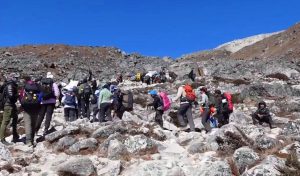
Today’s section of the Everest Base Camp Trek in Nepal takes us deeper into the high Himalayas as we leave the spiritual village of Tengboche and gradually enter a more alpine and rugged landscape of the Khumbu region.
The day begins with a descent through peaceful rhododendron and pine forests, following scenic trails with occasional views of distant Himalayan peaks. The route then leads us down to the Imja Khola River, where we cross a suspension bridge surrounded by dramatic mountain scenery.
After crossing the river, the trail begins a steady and challenging ascent. Along the way, we pass traditional mani walls, prayer stones, and chortens, reflecting the deep Buddhist culture of the Everest region. The landscape gradually transforms from green forests into open alpine terrain, with fewer trees and wider mountain valleys.
As we climb higher, trekkers are rewarded with stunning close-up views of Ama Dablam, Lhotse, and Island Peak, three of the most iconic peaks in the Everest region. The surrounding scenery becomes increasingly dramatic, showcasing the raw beauty of high-altitude Himalayan wilderness.
By the afternoon, we reach Dingboche (4,410 m), a beautiful high-altitude village known for its stone-walled fields, yak pastures, and breathtaking mountain views. Dingboche is an important acclimatization stop on the Everest Base Camp route and offers a peaceful environment surrounded by towering Himalayan peaks.
Day Highlights:
- Descent through rhododendron and alpine forests
- Cross the Imja Khola suspension bridge
- Walk past mani walls, chortens, and Buddhist landmarks
- Scenic views of Ama Dablam, Lhotse, and Island Peak
- Arrival at Dingboche village (4,410 m)
- Experience high-altitude Himalayan landscape
Trip Duration:
5–6 hours
Accomodation:
Normal Tea house
Meals:
Breakfast, Lunch and Dinner
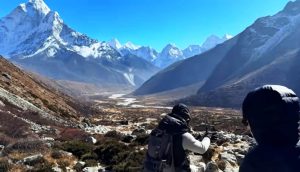
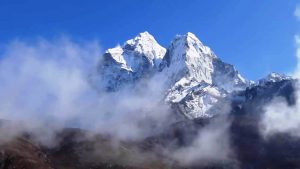
Today is another important acclimatization day on the Everest Base Camp Trek in Nepal, designed to help your body safely adjust to higher altitude in the Khumbu region. Following the principle of “climb high, sleep low,” we take a rewarding day hike to Chhukung (4,730 m) and return to Dingboche for overnight rest.
The trail gradually ascends through the wide and scenic Imja Valley, offering peaceful alpine landscapes surrounded by towering Himalayan peaks. As we gain elevation, the scenery becomes more dramatic with glaciers, rocky terrain, and expansive mountain views.
From Chhukung, trekkers are rewarded with breathtaking panoramic views of iconic peaks such as Island Peak (Imja Tse), Lhotse, Ama Dablam, and Nuptse. The close-up view of Island Peak is especially impressive, making this hike a highlight for photography and mountain lovers.
This short but effective acclimatization hike plays a key role in preparing the body for higher elevations ahead on the Everest Base Camp route. It helps improve oxygen adaptation while reducing the risk of altitude-related issues.
After spending time enjoying the serene Himalayan surroundings and stunning views in Chhukung, we descend back to Dingboche, where we rest and prepare for the next stage of the journey.
Day Highlights:
- Important acclimatization hike for altitude adaptation
- Scenic trek through the Imja Valley
- Panoramic views of Island Peak, Lhotse, and Ama Dablam
- Experience high-altitude Himalayan landscapes
- Return to Dingboche for overnight rest
- Improved preparation for higher sections of EBC Trek
Route Overview:
Dingboche → Bibre → Chhukung → Dingboche
This acclimatization day is an essential part of the Everest Base Camp Trek, ensuring a safer ascent while offering some of the most impressive views of the entire Khumbu region.
Trip Duration:
3–4 hours (round trip)
Accomodation:
Normal Tea house
Meals:
Breakfast, Lunch and Dinner
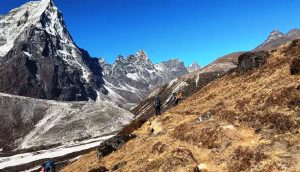
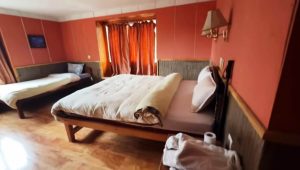
Today’s section of the Everest Base Camp Trek in Nepal takes us deeper into the high-altitude wilderness of the Khumbu region, where the landscape becomes more rugged, dramatic and closer to the mighty Himalayan giants.
After leaving Dingboche, the trail gradually ascends through open alpine terrain with stunning views of surrounding peaks. The air becomes thinner, and vegetation becomes sparse as we enter a more remote mountain environment.
We continue trekking along the scenic route toward Thukla Pass, a significant and emotional section of the journey. Here, trekkers will find memorials dedicated to climbers who lost their lives on Mount Everest and other Himalayan peaks. This place offers a moment of reflection and respect, surrounded by breathtaking mountain scenery.
From Thukla Pass, the trail becomes steeper and more challenging as we climb alongside the Khumbu Glacier moraine, one of the most iconic glacier systems in the world. The landscape is dominated by rocky terrain, icy formations and powerful Himalayan views.
As we continue, the majestic peaks of Nuptse, Pumori and Lobuche East come into clear view, guiding us toward our destination. By late afternoon, we arrive at Lobuche (4,900 m), a small and remote settlement nestled beneath towering snow-covered peaks.
Lobuche is a crucial stop before reaching Everest Base Camp, offering trekkers rest and preparation for the final push toward Gorakshep and EBC.
Day Highlights:
- Trek into high alpine Himalayan terrain
- Scenic views along the Khumbu Glacier moraine
- Visit Thukla Pass memorials for Everest climbers
- Steady ascent through rugged mountain landscapes
- Close views of Nuptse, Pumori and Lobuche East
- Arrival at Lobuche (4,900 m)
Route Overview:
Dingboche → Dusa → Thukla → Thukla Pass → Lobuche
This challenging yet rewarding day brings trekkers into the heart of the high Himalayas, marking a major milestone on the journey toward EBC.
Trip Duration:
5–6 hours
Accomodation:
Normal Tea house
Meals:
Breakfast, Lunch and Dinner
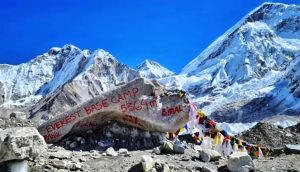
Today is the most anticipated and unforgettable day of the Everest Base Camp Trek in Nepal, as we finally reach the legendary Everest Base Camp (5,364 m) in the heart of the Khumbu region.
After an early breakfast in Lobuche, we begin trekking toward Gorakshep (5,164 m), the last settlement before Everest Base Camp. The trail follows the rugged and dramatic landscape alongside the Khumbu Glacier, passing through rocky moraine fields, icy terrain, and high-altitude desert-like scenery. This section is challenging but incredibly rewarding due to its raw Himalayan beauty.
Upon reaching Gorakshep, we take a short rest before continuing toward the main highlight of the day — Everest Base Camp. The trail from Gorakshep to EBC is demanding, walking over uneven glacier moraine and rocky paths, but every step brings us closer to one of the most iconic destinations in the world.
Finally, we arrive at Everest Base Camp (5,364 m), standing at the base of the world’s highest mountain, Mount Everest (8,848.86 m). Although Everest’s summit is not visible from base camp, the surrounding views of the Khumbu Icefall, glaciers, and towering peaks create a truly powerful and unforgettable atmosphere. This is a moment of achievement, pride, and deep satisfaction for every trekker.
After spending time at Everest Base Camp for photos, exploration, and celebration, we carefully retrace our steps back to Gorakshep, where we stay overnight in a simple teahouse surrounded by high Himalayan peaks.
Day Highlights:
- Trek through Khumbu Glacier moraine
- Arrival at Gorakshep (last settlement before EBC)
- Continue trek to Everest Base Camp (5,364 m)
- Experience Khumbu Icefall and glacier landscapes
- Stand at the base of Mount Everest
- Return to Gorakshep for overnight stay
Route Overview:
Lobuche → Thukla → Lobuche Pass → Gorakshep → Everest Base Camp → Gorakshep
Trip Duration:
7–8 hours
Accomodation:
Normal Tea house
Meals:
Breakfast, Lunch and Dinner

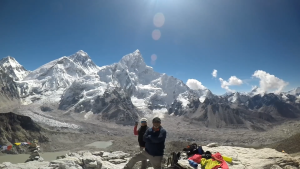
Today is one of the most unforgettable highlights of the EBC Trek in Nepal, as we ascend to Kala Patthar (5,545 m), the highest point of the journey in the Khumbu region. This early morning adventure offers the most spectacular panoramic views of Mount Everest and surrounding Himalayan giants.
We begin before sunrise with a steady uphill hike from Gorakshep, walking in the cold, thin air under a star-filled sky. The trail is steep and challenging, but every step brings us closer to one of the best viewpoints in the Himalayas.
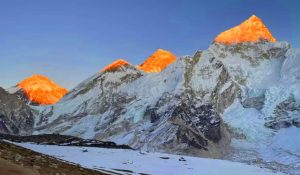
From the summit of Kala Patthar, trekkers are rewarded with a breathtaking sunrise over Mount Everest (8,848.86 m) along with panoramic views of Nuptse, Lhotse, Changtse, Pumori and surrounding peaks. The golden light hitting Everest’s summit creates a once-in-a-lifetime Himalayan experience and one of the most iconic moments of the entire trek.
After spending time at the viewpoint for photography and enjoying the scenery, we carefully descend back to Gorakshep for breakfast and rest. Later, we begin our long descent through the Khumbu Valley, retracing part of the trekking route while leaving behind the high-altitude wilderness.
The trail gradually becomes easier as we descend through rocky terrain, glacial valleys and alpine landscapes before reaching the peaceful village of Pheriche (4,270 m). Known for its open valley and stunning mountain surroundings, Pheriche offers a comfortable stop after a challenging high-altitude day.
Day Highlights:
- Early morning hike to Kala Patthar
- Spectacular sunrise view of Mount Everest
- Panoramic Himalayan views including Nuptse and Lhotse
- Return trek to Gorakshep for breakfast
Route Overview:
Gorakshep → Kala Patthar → Gorakshep → Lobuche → Thukla → Pheriche
This day delivers the most iconic Himalayan sunrise experience of the Everest Base Camp Trek, followed by a rewarding descent into the calmer valley of Pheriche.
Trip Duration:
7–8 hours
Accomodation:
Normal Tea house
Meals:
Breakfast, Lunch and Dinner


Today marks the beginning of our gradual descent on the Everest Base Camp Trek in Nepal, as we leave the high alpine environment of Pheriche (4,270 m) and retrace our steps back through the beautiful landscapes of the Khumbu region.
The trail initially follows a gentle downhill route with wide views of surrounding Himalayan peaks and open valleys. As we descend, the air becomes richer in oxygen, and the landscape slowly transforms from stark alpine terrain into greener hills and scattered vegetation.
We pass through peaceful trails dotted with yak grazing fields, stone-walled settlements, and traditional Sherpa herding areas. The route offers a relaxing walking experience compared to previous high-altitude sections, allowing trekkers to fully enjoy the scenery and reflect on the journey to Everest Base Camp.
Along the way, we retrace familiar sections near Dingboche, Pangboche, and Tengboche, gradually making our way down toward the lower Everest region. The descent provides excellent opportunities to enjoy final views of Ama Dablam, Thamserku, and surrounding peaks from different angles.
By late afternoon, we arrive at Kyangjuma (3,550 m), a quiet and scenic village located between Tengboche and Namche Bazaar. Surrounded by lush hills and panoramic mountain views, Kyangjuma offers a peaceful resting point before reaching Namche again.
Day Highlights:
- Gradual descent from high altitude to lower terrain
- Scenic views of Ama Dablam and surrounding peaks
- Walk through yak pastures and Sherpa settlements
- Comfortable trekking after high-altitude days
- Peaceful arrival at Kyangjuma village
- Enjoy changing Himalayan landscapes
Route Overview:
Pheriche → Pangboche → Tengboche → Phunki Tenga → Kyangjuma
This day offers a relaxing and scenic descent, allowing trekkers to recover while enjoying the final panoramic Himalayan views of the Everest Base Camp Trek.
Trip Duration:
6–7 hours
Accomodation:
Normal Tea house
Meals:
Breakfast, Lunch and Dinner
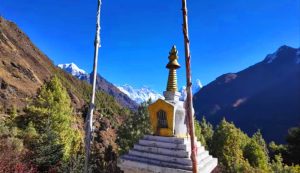

Today’s journey on the Everest Base Camp Trek in Nepal continues with a pleasant and gradual descent through the scenic landscapes of the Khumbu region. After breakfast in Kyangjuma (3,550 m), we follow the familiar trail back toward Namche Bazaar, enjoying the final views of the surrounding Himalayan peaks.
The descent offers a comfortable walking experience compared to the higher altitude days, as the air becomes richer and the terrain gradually turns greener. Along the way, trekkers can once again enjoy panoramic views of Ama Dablam, Thamserku, and other surrounding mountains, now seen from a different perspective.
Upon reaching Namche Bazaar (3,440 m), we take a short break in the vibrant Sherpa town before continuing our descent. From Namche, the trail drops steeply down toward the Dudh Koshi River valley, passing through forests, suspension bridges, and traditional villages.
At Monjo, we officially exit Sagarmatha National Park, a UNESCO World Heritage Site that protected our trekking route through the Everest region. The village is small, peaceful, and surrounded by natural beauty, making it an ideal resting point before the final trek back to Lukla.
Monjo offers a calm atmosphere with teahouses, riverside views, and a relaxing environment after several days in high-altitude terrain.
Day Highlights:
- Scenic descent from Kyangjuma to lower elevations
- Walk back through Namche Bazaar
- Exit Sagarmatha National Park (UNESCO World Heritage Site)
- Cross suspension bridges over the Dudh Koshi River
- Enjoy lush forests and Sherpa villages
- Overnight stay in Monjo
Route Overview:
Kyangjuma → Namche Bazaar → Jorsalle → Monjo
This day provides a relaxing and scenic descent, marking the transition from high mountains to lower valleys on the final stages of the Everest Base Camp Trek.
Trip Duration:
5–6 hours
Accomodation:
Normal Tea house
Meals:
Breakfast, Lunch and Dinner


Today marks the final day of your unforgettable Everest Base Camp Trek in Nepal, as we begin our journey back from the Khumbu region to the capital city, Kathmandu.
Early in the morning, we take a scenic mountain flight from Lukla to Ramechhap, offering one last aerial view of the majestic Himalayas, deep valleys, and remote mountain landscapes. This short but thrilling flight is a memorable conclusion to your trekking adventure.
Upon arrival in Ramechhap, we continue with a comfortable drive back to Kathmandu via the B.P. Highway, passing through beautiful hills, rivers, terraced farmlands, and traditional rural settlements. The journey provides a relaxing transition from the peaceful mountains back to the vibrant energy of the capital city.
After reaching Kathmandu, you will be transferred to your hotel and have time to rest, refresh, and reflect on your incredible journey to Everest Base Camp (5,364 m) and Kala Patthar. In the evening, you can enjoy the lively atmosphere of Kathmandu or relax at your hotel.
Day Highlights:
- Scenic morning flight from Lukla to Ramechhap
- Final aerial views of the Himalayas
- Drive along the scenic B.P. Highway
- Return to Kathmandu city
- Rest and reflection after completing the trek
- Overnight stay in Kathmandu hotel
Route Overview:
Lukla → Ramechhap → B.P. Highway → Kathmandu
This final day concludes the Everest Base Camp Trek, bringing back lifelong memories of Himalayan landscapes, Sherpa culture, and the incredible achievement of reaching the base of the world’s highest mountain.
Trip Duration:
Flight Duration: 20 minutes/Drive: 5 hours
Accomodation:
3-Star hotel/Resort
Meals:
Breakfast
Packing List for Everest Base Camp Trek:
Preparing the right packing list for the Everest Base Camp Trek is essential for a safe, comfortable, and enjoyable journey to the Himalayas. The trek takes you through varying altitudes and temperatures, so having the appropriate clothing, gear, and equipment is crucial for success. Below is a comprehensive checklist of what to bring for your Everest Base Camp (EBC) Trek.
Clothing
- Base Layers: Moisture-wicking thermal tops and bottoms
- Insulating Layers: Fleece jacket or down jacket for warmth
- Outer Shell: Waterproof and windproof jacket and pants
- Trekking Pants: Lightweight, quick-drying pants
- T-shirts: Breathable, moisture-wicking shirts (long and short sleeves)
- Gloves: Inner thermal gloves and outer waterproof gloves
- Headwear: Warm hat, beanie, buff, and sun hat or cap
- Underwear and Socks: Multiple pairs of quick-dry socks and comfortable underwear
Footwear
Trekking Boots: Waterproof, well-broken-in boots with good ankle support
Camp Shoes or Sandals: For resting in the evenings at teahouses
Gaiters: To protect from snow, dust, or small rocks
Backpack and Gear
- Main Duffel Bag: Provided by most trekking agencies for porters
- Daypack (30–40L): To carry essentials like water, snacks, and camera
- Sleeping Bag: Rated for –15°C (can be rented in Kathmandu)
- Trekking Poles: Adjustable poles for stability on steep terrain
- Rain Cover: For both backpack and daypack
Hydration and Snacks
- Water Bottles or Hydration Bladder (2–3 liters)
- Water Purification Tablets or Filter
- Energy Bars, Dry Fruits, or Snacks for extra energy on the trail
Accessories and Essentials
- Sunglasses with UV protection
- Sunscreen and Lip Balm (SPF 30+)
- Headlamp or Flashlight with extra batteries
- Personal First Aid Kit and prescribed medications
- Trekking Towel, Toiletries, and Wet Wipes
- Reusable Bag for waste or dirty clothes
Electronics
- Camera or Smartphone for photos
- Power Bank or Solar Charger (electricity can be limited in higher areas)
- Travel Adapter (Type C/D/M for Nepal)
Documents and Money
- Valid Passport and Nepal Visa
- Trekking Permits (Sagarmatha National Park, Khumbu Rural Municipality, TIMS)
- Travel Insurance (with helicopter evacuation coverage)
- Cash (Nepali Rupees) for personal expenses and tips
Everest Base Camp Trek FAQs
Best Of Nepal Trek is a trusted trekking company offering safe, well-organized and memorable Himalayan adventures since 2018. With experienced local guides, personalized service and carefully designed trekking packages, we ensure a smooth and enjoyable journey for every traveler in Nepal.
Our team focuses on safety, comfort and authentic cultural experiences, helping trekkers explore the Himalayas with confidence. Every itinerary is carefully planned to include proper acclimatization, reliable logistics and quality service throughout the trek.
From short scenic treks to challenging high-altitude adventures like the Everest Base Camp Trek, we are committed to delivering professional support at every step of the journey.
What Makes Best Of Nepal Trek Special:
- Experienced and licensed local guides
- Safe and well-planned trekking itineraries
- Personalized service for all types of trekkers
- Strong focus on safety and acclimatization
- Authentic cultural and Himalayan experiences
- Responsible and eco-friendly trekking practices
With Best of Nepal Trek you don’t just go trekking—you experience the Himalayas with a reliable team that ensures safety, comfort and unforgettable memories from start to finish.
Most travelers joining the Everest Base Camp (EBC) Trek in Nepal’s Everest region can easily obtain a visa on arrival at Tribhuvan International Airport in Kathmandu. This process is simple, fast and commonly used by tourists visiting Nepal for trekking and tourism purposes.
Before traveling, ensure your passport is valid for at least 6 months beyond your intended stay. Without sufficient validity, entry may be restricted.
Visa on Arrival Process
Upon arrival in Kathmandu, you need to:
- Fill out the visa application form (available at the airport or online)
- Pay the required visa fee at the counter
- Collect your visa from the immigration desk
Visa Duration Options
Nepal tourist visas are generally available in:
- 15 days
- 30 days
- 90 days
Choose the duration based on your trekking itinerary and travel plans.
Important Notes
- Carry passport-size photos (recommended for faster processing)
- Keep cash (USD is commonly accepted for visa fees)
- Some nationalities may have specific entry requirements
It is always recommended to check the latest visa rules on the official Nepal Immigration website before traveling:
http://www.nepalimmigration.gov.np The Nepal arrival visa process is straightforward, making it easy for trekkers to begin their Everest Base Camp adventure without complications.
Upon your arrival at Tribhuvan International Airport in Kathmandu, our team will be there to warmly welcome you. A representative from our company will be waiting outside the airport terminal holding a Best Of Nepal Trek signboard with your name, making it easy for you to identify our staff.
After meeting you, we will assist with your luggage and transfer you comfortably to your hotel in Kathmandu by a private tourist vehicle. This ensures a smooth, safe and hassle-free start to your Everest Base Camp Trek in Nepal.
The Everest Base Camp (EBC) Trek in Nepal’s Khumbu region is one of the most iconic trekking adventures in the world, offering a perfect blend of natural beauty, cultural richness and high-altitude adventure.
One of the main reasons to choose this trek is the opportunity to experience close-up views of Mount Everest (8,848.86 m) along with legendary peaks like Lhotse, Nuptse, Ama Dablam and Thamserku. The dramatic Himalayan scenery changes every day, making the journey visually unforgettable.
The trek also provides a deep cultural experience as you pass through traditional Sherpa villages, monasteries, prayer flags, and ancient Buddhist traditions. Places like Namche Bazaar and Tengboche offer insight into the unique mountain lifestyle and spiritual heritage of the region.
Unlike technical climbing expeditions, the EBC Trek is a non-technical trekking route, meaning it does not require mountaineering skills. With proper acclimatization and basic fitness, most trekkers can complete it successfully.
Another major advantage is the well-developed teahouse trekking system, which provides accommodation, meals, and support throughout the route, making it more accessible compared to remote expeditions.
Key Reasons to Choose Everest EBC Trek:
- Stunning views of Mount Everest and surrounding peaks
- Rich Sherpa culture and Himalayan traditions
- No technical climbing required
- Well-established trekking route with teahouse accommodation
- A lifetime achievement and world-famous trekking experience
The Everest Base Camp Trek is not just a journey to the base of the world’s highest mountain—it is a once-in-a-lifetime experience combining adventure, culture, and breathtaking Himalayan landscapes.
The Everest Base Camp (EBC) Trek typically takes around 12 to 14 days to complete, depending on the itinerary, walking pace, and acclimatization schedule in the Khumbu region of Nepal.
Most standard trekking routes include extra rest days at key locations such as Namche Bazaar (3,440 m) and Dingboche (4,410 m) to help trekkers adjust safely to high altitude. These acclimatization days are an important part of the overall trekking duration.
If you include travel days to and from Kathmandu and Lukla, the total journey can extend to around 14 to 16 days in total.
Some trekkers with limited time may choose a shorter version, while others prefer longer itineraries for a more relaxed and comfortable experience.
Summary:
- Trek duration: 12–14 days (standard itinerary)
- Total trip including travel: 14–16 days
- Depends on: itinerary, fitness level, and acclimatization plan
The Everest Base Camp Trek duration is designed to balance adventure with safety, ensuring trekkers can reach base camp comfortably while enjoying the Himalayan scenery.
During the Everest Base Camp (EBC) Trek in Nepal’s Everest region, it is recommended to carry an extra budget of around USD 25–30 per person per day for personal expenses. This amount is usually enough to manage daily on-trail costs while trekking in the Khumbu region.
These additional expenses mainly include basic services and personal needs that are not covered in the trekking package.
What this budget covers:
- Drinking water (bottled or boiled water)
- Tea, coffee, and hot drinks
- Snacks and energy bars
- Wi-Fi usage in teahouses
- Hot showers (where available)
- Device charging fees
- Soft drinks and personal items
Prices increase gradually with altitude, so higher villages like Dingboche, Lobuche and Gorakshep tend to be more expensive. Carrying enough cash in Nepali currency before starting the trek is essential, as there are no ATMs on the trail.
On the Everest Base Camp (EBC) Trek in Nepal, the walking pace is generally slow, steady, and comfortable, usually around 2–3 km per hour on normal terrain. However, due to steep climbs, rocky paths, altitude effects, and regular rest breaks, the total trekking time averages 4–7 hours per day.
The pace is not fixed and may vary depending on the section of the trail, weather conditions, and individual fitness levels.
Why the pace is slow and steady:
- Helps with proper acclimatization to high altitude
- Reduces fatigue on uphill and downhill sections
- Allows time for rest, hydration, and recovery
- Gives trekkers time to enjoy scenery and villages
- Ensures a safe and comfortable trekking experience
The Everest Base Camp Trek is not about speed—it is about safe progression, endurance, and enjoying the Himalayan journey through the Khumbu region’s landscapes and culture.
The EBC trek offers more than just breathtaking scenery — it’s a journey through Sherpa culture, ancient monasteries like Tengboche, and the UNESCO-listed Sagarmatha National Park. Trekkers experience the Khumbu Glacier, suspension bridges, and the warm hospitality of Sherpa villages like Namche, Pangboche and Pheriche.
No previous trekking experience is required. However, a good fitness level, mental preparedness, and endurance are important. Regular cardio exercises such as hiking, cycling, or running a few weeks before the trek are highly recommended.
The best seasons for the Everest Base Camp Trek are:
- Spring (March to May) – Warm days, rhododendron blooms, and clear mountain views.
- Autumn (September to November) – Stable weather, crystal-clear skies, and moderate temperatures.
- While winter (December–February) offers solitude, temperatures drop below -15°C at night. The monsoon (June–August) season brings rain and reduced visibility.
The trek is rated moderate to challenging. Although no technical climbing is involved, trekkers must walk 5–7 hours daily on rugged and steep trails. The primary challenge is high altitude rather than the distance.
You need the following official permits:
- Sagarmatha National Park Entry Permit
- Khumbu Pasang Lhamu Rural Municipality Permit
TIMS Card (Trekkers’ Information Management System)
Yes, it’s possible to trek independently. However, hiring a licensed guide enhances safety, navigation, and cultural understanding. A porter is also helpful for carrying luggage, especially in high altitude conditions.
On the Everest Base Camp (EBC) Trek in Nepal’s Khumbu region, accommodation is mainly in teahouses and mountain lodges operated by local Sherpa families. These lodges are simple but comfortable enough to rest and recover after a full day of trekking.
Types of Accommodation
Most trekkers stay in:
- Teahouses (standard trekking lodges)
- Family-run guesthouses (Basic mountain lodges in higher regions)
Room Facilities
Rooms are generally simple and functional:
- Twin-sharing beds (most common)
- Mattress, pillow, and blankets provided
- Private rooms available in lower villages (limited in higher areas)
- Shared bathroom facilities in most locations
Common Facilities
Depending on altitude and location, lodges may offer:
- Hot showers (usually extra cost)
- Wi-Fi (slow and paid service in many places)
- Charging facilities for phones and cameras
- Warm dining halls with heating (especially in evenings)
Accommodation Changes with Altitude
- Lower villages (Lukla, Namche, Phakding): Better facilities, more comfort
- Mid-altitude (Tengboche, Dingboche): Simple but decent lodges
- Higher regions (Lobuche, Gorakshep): Very basic accommodation due to remote conditions
Accommodation on the Everest Base Camp Trek is basic but reliable. While luxury facilities are limited, the warm hospitality of Sherpa hosts and the unique Himalayan atmosphere make the experience memorable and authentic.
Teahouses serve a variety of Nepali and Western dishes. Common meals include dal bhat (rice, lentils, vegetables), soups, noodles, pasta and omelets. Vegetarian options are widely available. Avoid meat at high altitudes since it’s carried up without refrigeration.
The trek starts with a scenic flight from Kathmandu or Ramechhap (Manthali) to Lukla. From Lukla, the route passes through Phakding, Namche Bazaar, Tengboche, Dingboche, Lobuche and Gorak Shep, before reaching Everest Base Camp (5,364m).
Yes, Altitude Mountain Sickness (AMS) is common due to rapid altitude gain. Symptoms include headache, nausea, and fatigue. To prevent AMS:
- Ascend gradually and take rest days.
- Drink plenty of water.
- Avoid alcohol and smoking.
- Use medication like Diamox if necessary.
Guides are trained to recognize early signs and manage altitude-related symptoms.
A proper Everest Base Camp packing list includes:
- Warm clothing layers (base, fleece, down jacket, shell)
- Trekking boots and socks
- Sleeping bag (up to -20°C)
- Trekking poles, gloves, and headlamp
- Personal medications and water purification tablets
- Portable power bank and reusable water bottle
Packing smart helps reduce weight and ensures comfort during long hikes.
The trek is generally safe and well-managed, with thousands of trekkers completing it each year. Traveling with a registered agency ensures trained guides, proper acclimatization schedules and emergency backup in case of altitude sickness or bad weather.
You’ll need comprehensive travel insurance covering:
- High-altitude trekking (up to 6,000 meters)
- Emergency helicopter evacuation
- Medical treatment and trip cancellations
Always verify your policy includes trekking in Nepal’s remote regions.
Yes, most villages have NTC or Ncell network coverage. Many teahouses offer Wi-Fi for a small charge (USD 3–5 per hour). However, connections may be weak or unavailable in higher regions like Lobuche and Gorak Shep.
Lower-altitude teahouses offer western-style toilets and hot showers (for a small fee). Higher up, you’ll find squat toilets and limited hot water due to cold conditions. Carrying wet wipes and hand sanitizer is recommended.
ATMs are available in Lukla and Namche Bazaar, but not beyond. It’s best to carry enough Nepalese rupees in cash for your meals, Wi-Fi, charging and other expenses.
Weather in the Everest region changes quickly. Days are sunny and clear during spring and autumn, while nights are freezing. At higher elevations, temperatures can drop below -10°C even in peak seasons
Absolutely! The Everest Base Camp Trek is a once-in-a-lifetime journey combining natural beauty, cultural richness, and personal achievement. Standing at the base of the world’s highest peak — Mount Everest (8,848.86m) — is an unforgettable and deeply emotional experience.
Yes. Electricity is available in most teahouses, powered by solar or micro-hydropower. Charging costs between USD 2–5 per device, so carrying a solar charger or power bank is highly recommended.
The round-trip distance from Lukla to Everest Base Camp and back is approximately 130 kilometers (80 miles). Trekkers walk 10–15 km per day, depending on altitude and terrain.
Yes, it’s safe for solo female travelers, especially with a registered trekking agency. Guides and porters are professional and respectful, and the Everest trail is busy and well-patrolled, especially in peak seasons.
In case of altitude sickness or injury, helicopter evacuation can be arranged from nearby locations such as Gorak Shep, Pheriche, or Dingboche. This is why travel insurance covering helicopter rescue is mandatory.
The Everest Base Camp route is famous for combining adventure, natural beauty, and rich Sherpa culture. It allows trekkers to stand at the foot of Mount Everest (8,848.86 m) — a dream destination for adventure seekers around the world.
Cultural highlights include visits to Tengboche Monastery, interactions with Sherpa communities, and witnessing Buddhist traditions reflected in prayer flags, mani walls, and chortens along the trail.
Everest Base Camp Trek Good To Know
The Everest Base Camp (EBC) Trek is not only a world-famous Himalayan adventure but also a journey through the rich history, traditions, and culture of the Everest region. Located in Nepal’s beautiful Khumbu region, the trail has long been home to the legendary Sherpa community, known worldwide for their mountaineering skills, warm hospitality, and deep connection to the Himalayas.
The international popularity of the Everest region began after the historic first ascent of Mount Everest in 1953 by Sir Edmund Hillary and Tenzing Norgay Sherpa. Since then, the Everest Base Camp Trek has become one of the most iconic trekking routes in the world, attracting thousands of trekkers and climbers every year.
Along the trekking route, visitors pass through traditional Sherpa villages such as Namche Bazaar, Tengboche, Dingboche, and Pangboche, where ancient customs and Buddhist traditions remain an important part of daily life. Colorful prayer flags, mani walls, chortens, and spinning prayer wheels can be seen throughout the trail, creating a peaceful spiritual atmosphere.
One of the cultural highlights of the trek is the famous Tengboche Monastery, the largest and most important Buddhist monastery in the Everest region. Trekkers often witness monks performing traditional prayers and ceremonies against the backdrop of snow-covered Himalayan peaks.
The Sherpa people follow Tibetan Buddhist traditions and have preserved their unique language, dress, architecture, and cultural identity for generations. Their hospitality and mountain lifestyle add a meaningful cultural experience to the trekking journey.
Today, the Everest Base Camp Trek is not only an adventure to the base of the world’s highest mountain but also an opportunity to experience the fascinating history, spirituality, and culture of the Himalayas.
EBC Trek is not only about reaching the world’s highest mountain but also about experiencing the rich culture of the Khumbu region of Nepal. Along the trail, trekkers pass through traditional Himalayan villages and meet the warm and welcoming Sherpa people, who are known for their strong mountaineering heritage and deep Buddhist traditions.
The journey begins in Lukla, a small mountain town that serves as the gateway to the Everest region. From here, the trail leads to Phakding, a peaceful riverside village surrounded by pine forests, suspension bridges, and prayer flags fluttering in the mountain air.
One of the most important cultural stops is Namche Bazaar (3,440 m), the main trading hub of the Khumbu region. This vibrant town is filled with teahouses, bakeries, small shops, monasteries, and local markets where trekkers can experience both modern trekking culture and traditional Sherpa life. Namche also serves as a key acclimatization stop and offers the first clear views of Everest on a good day.
Further along the trail is Tengboche, home to the famous Tengboche Monastery, one of the most important spiritual centers in the Everest region. Monks perform daily prayers here, creating a peaceful atmosphere with stunning Himalayan views in the background.
Higher villages such as Dingboche, Lobuche, and Gorakshep offer a more remote and rugged lifestyle. Life in these settlements is simple and closely connected to nature, with locals relying on tourism, yak herding, and traditional mountain practices.
Throughout the journey, trekkers interact with the Sherpa community, known worldwide for their mountaineering skills, resilience and Buddhist culture. Prayer wheels, chortens, mani stones and colorful prayer flags along the trail reflect the deep spiritual traditions of the region.
The Everest Base Camp Trek offers not only breathtaking Himalayan landscapes but also a rich variety of flora and fauna, especially within Sagarmatha National Park, a UNESCO World Heritage Site. The region’s diverse ecosystem changes with altitude, providing trekkers with unique natural experiences.
At lower elevations (Lukla to Namche Bazaar), the trail passes through subtropical forests filled with rhododendron, pine, bamboo, and fir trees. As you ascend, the vegetation becomes alpine, featuring juniper, birch, mosses, and hardy shrubs adapted to cold, high-altitude conditions. Springtime brings colorful rhododendron blooms, adding vibrant splashes of red, pink, and white to the trails.
The Everest region is also home to a variety of wildlife. Trekkers may spot Himalayan tahr, musk deer, red panda, snow leopard (rare), Himalayan monal (national bird of Nepal), and various pheasants. Birds like Himalayan griffon vultures and snowcocks are frequently seen along higher trails.
Exploring the flora and fauna enriches the trek, allowing adventurers to experience the natural beauty, biodiversity, and ecological significance of the Khumbu region, alongside the towering Himalayan peaks.
The Everest Base Camp (EBC) Trek takes trekkers from Kathmandu at 1,350 meters (4,429 ft) to the legendary Everest Base Camp at 5,364 meters (17,598 ft). Along the way, trekkers pass through Namche Bazaar (3,440 m), Tengboche (3,860 m), Dingboche (4,410 m), and Lobuche (4,910 m), gradually acclimatizing to higher altitudes.
The trek’s highest viewpoint is Kala Patthar (5,545 m / 18,192 ft), which offers panoramic views of Mount Everest (8,848.86 m), Lhotse, Nuptse, Ama Dablam, and other Himalayan giants. The gradual ascent allows for proper acclimatization, minimizing the risk of altitude sickness while providing trekkers with unforgettable high-altitude experiences.
This trek is a perfect mix of adventure, stunning Himalayan landscapes, and cultural immersion, making it one of the most iconic high-altitude trekking journeys in the world.
Acclimatization is one of the most important parts of the Everest Base Camp (EBC) Trek, helping trekkers safely adjust to increasing altitude as they move deeper into the Khumbu region of Nepal. Since the trek reaches a maximum elevation of 5,364 meters at Everest Base Camp, proper acclimatization is essential to reduce the risk of altitude sickness.
The trekking route is designed with gradual altitude gain and planned rest days. The two main acclimatization stops are Namche Bazaar (3,440 m) and Dingboche (4,410 m). These rest days allow the body to adapt to lower oxygen levels while still staying active with short hikes to higher viewpoints.
During acclimatization days, trekkers usually follow the principle “climb high, sleep low,” which means hiking to a higher altitude during the day and returning to a lower elevation to sleep. Popular acclimatization hikes include Everest View Hotel, Khumjung village, Nagarjun Hill, or Nangkartshang Peak, depending on the itinerary.
Proper acclimatization also includes staying hydrated, walking at a steady pace, eating well and avoiding alcohol or overexertion. Listening to your body is very important, as early symptoms like headache, dizziness, or fatigue should not be ignored.
The Everest Base Camp Trek is achievable for many trekkers because of this well-planned acclimatization system. It ensures a safer and more comfortable journey while still allowing trekkers to enjoy breathtaking Himalayan views along the way.
With the right pacing and rest strategy, acclimatization becomes a key factor in successfully reaching Everest Base Camp and Kala Patthar, making the adventure both safe and rewarding.
Yes, the Everest Base Camp Trek is one of the most thrilling adventure trips in the world. It combines challenging high-altitude trekking, breathtaking Himalayan landscapes, and cultural immersion in Sherpa villages.
The trek involves walking along rugged trails, crossing suspension bridges, and navigating glaciers while gradually ascending to 5,364 meters at Everest Base Camp. It’s suitable for adventure enthusiasts with good fitness, offering a once-in-a-lifetime experience amid the world’s tallest mountains.
The Everest Base Camp (EBC) Trek is generally considered a safe trekking route when properly planned and completed with correct preparation, acclimatization, and guidance. Every year, thousands of trekkers successfully complete this journey in the Khumbu region of Nepal, making it one of the most popular high-altitude treks in the world.
The trail is well-established with clearly marked paths, regular teahouses, and local settlements, which makes navigation easier compared to remote trekking regions. Most trekkers also choose to go with licensed guides, which further improves safety and support throughout the journey.
The main safety concern on the EBC Trek is altitude sickness, as the route reaches elevations above 5,000 meters. However, this risk can be managed effectively through gradual ascent, proper acclimatization days, hydration, and a steady trekking pace.
Weather conditions can also change quickly in the Himalayas, especially at higher altitudes, so carrying appropriate gear and checking forecasts is important. In case of emergencies, helicopter evacuation is available, but having travel insurance with high-altitude coverage is essential.
Overall, the Everest Base Camp Trek is safe for most trekkers with good physical preparation, proper acclimatization, and responsible trekking practices. With the support of experienced guides and a well-organized itinerary, it becomes a secure and unforgettable Himalayan adventure.
The Everest Base Camp (EBC) Trek in the Khumbu region of Nepal offers some of the most breathtaking mountain viewpoints in the world. Throughout the journey, trekkers are rewarded with panoramic views of Mount Everest and surrounding Himalayan peaks, each viewpoint offering a unique perspective of the region’s natural beauty.
Kala Patthar (5,545 m) – The Best Everest Viewpoint
Kala Patthar is the most famous and best viewpoint on the entire trek. It offers the closest and clearest panoramic view of:
- Mount Everest
- Lhotse
- Nuptse
- Pumori
- Ama Dablam (in distance)
The sunrise view from Kala Patthar is especially stunning, with golden light hitting the Everest summit.
Everest Base Camp (5,364 m)
While EBC itself does not provide a full Everest summit view, it is a legendary viewpoint at the base of the world’s highest mountain. Here you can see:
- Khumbu Icefall
- Surrounding glaciers
- Expedition camps (during climbing seasons)
It is a powerful and iconic location for photos and experience.
Namche Bazaar Viewpoints (3,440 m)
Namche offers some of the earliest clear views of Everest on the trek. Short hikes to nearby viewpoints provide:
- First glimpse of Everest
- Views of Kongde Ri and Thamserku
- Beautiful valley landscapes
Tengboche Viewpoint (3,860 m)
Tengboche is known for its spiritual atmosphere and mountain scenery. From here you can enjoy:
- Ama Dablam up close
- Everest range in the distance
- Famous Tengboche Monastery backdrop
While the Everest Base Camp itself is a major highlight, the best overall viewpoint is Kala Patthar, offering the most dramatic and unforgettable Himalayan panorama. Every viewpoint along the trek adds a unique perspective, making the journey visually rewarding from start to finish.
Reaching the Everest Base Camp (EBC) Trek is an exciting part of the adventure and involves traveling to Nepal, followed by a scenic mountain flight and trekking through the beautiful Khumbu region.
Arrival in Nepal (Kathmandu):
Most international travelers arrive at Tribhuvan International Airport in Kathmandu, the capital city of Nepal. Kathmandu is the main hub for trek preparation, including permits, gear checks, and final briefing before starting the journey to Everest.
Flight from Kathmandu to Lukla:
The most popular and fastest way to begin the trek is a scenic mountain flight from Kathmandu to Lukla (2,860 m), the gateway to the Everest region. This short flight offers breathtaking Himalayan views and officially marks the start of the trekking adventure.
During peak trekking seasons, flights may operate from Ramechhap Airport, which requires a road transfer from Kathmandu of about 4–5 hours before the flight to Lukla.
Trekking Route:
From Lukla, the trekking journey continues through traditional Sherpa villages and mountain landscapes. Trekkers typically walk 4–7 hours per day, passing through key stops such as Phakding, Namche Bazaar, Tengboche, Dingboche, Lobuche, and Gorakshep before reaching Everest Base Camp (5,364 m).
Return Journey:
After completing the trek, travelers fly back from Lukla to Kathmandu (or Ramechhap, depending on flight operations). From Kathmandu, international flights or onward travel arrangements can be easily organized.
To complete the Everest Base Camp (EBC) Trek, trekkers must obtain official permits issued by the Government of Nepal and local authorities. These permits are required for entry into protected areas of the Khumbu region and are checked at several points along the trekking route.
- Sagarmatha National Park Entry Permit
This is the main permit for the Everest region as the trail passes through Sagarmatha National Park, a UNESCO World Heritage Site.
- Required for all trekkers
- Checked at Monjo (park entrance)
- Can be obtained in Kathmandu or at entry points
- Used for conservation and park maintenance
- Khumbu Pasang Lhamu Rural Municipality Permit
- This local permit is issued by the Khumbu region authorities.
- Mandatory for all trekkers entering the Everest region
- Helps support local infrastructure and communities
- Usually collected at Lukla or Monjo
- Required even if trekking with or without a guide
Important Notes
- The TIMS card is generally not required for the Everest Base Camp route in the Khumbu region
- Permits are checked multiple times during the trek
- Most trekking agencies arrange these permits for trekkers in advance
- Trekkers must carry original passport details and permits at all times
For the Everest Base Camp Trek, you mainly need:
- Sagarmatha National Park Permit
- Khumbu Local Area Permit
These permits ensure legal access, safety management, and support conservation efforts in one of the most famous trekking regions in the world.
Charging phones and electronic devices is possible during the Everest Base Camp (EBC) Trek, but it becomes more limited and expensive as you go higher into the Khumbu region of Nepal. Most teahouses along the trail provide charging facilities, especially in lower villages like Lukla, Phakding, Namche Bazaar and Tengboche.
As you ascend to higher altitude areas such as Dingboche, Lobuche and Gorakshep, charging may still be available but often comes with an additional fee due to limited electricity supply. The power is usually generated by solar panels or small hydro systems, so availability can depend on weather conditions.
Charging Cost and Availability:
- Lower regions (Lukla–Namche): Often free or low cost
- Mid regions (Tengboche–Dingboche): Small fee per device
- Higher regions (Lobuche–Gorakshep): Higher cost due to limited power
Important Tips for Charging on the Trek:
- Carry a power bank (10,000–20,000 mAh or more)
- Turn on battery saver mode on your phone
- Keep devices warm, as cold temperatures drain batteries faster
- Charge whenever you get the opportunity, especially in lower villages
- Carry extra charging cables and adapters
While charging facilities are available on the Everest Base Camp Trek, they are not always reliable at higher altitudes. Proper preparation with backup power sources ensures you stay connected, capture photos, and use essential apps throughout your Himalayan journey.
The best time for the Everest Base Camp Trek in Nepal is during the spring (March to May) and autumn (September to November) seasons. These months offer the most stable weather conditions, clear blue skies, and excellent visibility of the Himalayan peaks.
Spring Season (March–May)
Spring is one of the most beautiful times to trek in the Everest region. The weather is generally warm and stable, and the trails are decorated with blooming rhododendron forests. This season offers excellent mountain views and comfortable trekking conditions.
Autumn Season (September–November)
Autumn is considered the best overall trekking season in Nepal. After the monsoon, the skies become crystal clear, providing stunning views of Mount Everest, Lhotse, Nuptse, and Ama Dablam. Temperatures are also ideal for trekking at higher altitudes.
Winter & Monsoon (Less Recommended)
Winter (December–February) is very cold with heavy snowfall at higher elevations, while the monsoon season (June–August) brings rain, cloudy skies, and slippery trails, making trekking more difficult.
Final Recommendation
For the safest and most enjoyable experience, most trekkers choose spring or autumn, when weather, visibility, and trail conditions are at their best for the Everest Base Camp Trek
Altitude sickness (Acute Mountain Sickness – AMS) is one of the main challenges on the Everest Base Camp Trek, as the trail gradually rises above 5,000 meters. However, with proper preparation and smart trekking habits, it can be effectively prevented.
Ascend Slowly: The most important rule is to gain altitude gradually. Avoid rushing the trek and follow a well-planned itinerary that includes acclimatization days, especially at Namche Bazaar (3,440 m) and Dingboche (4,410 m).
Follow “Climb High, Sleep Low”: During acclimatization days, hike to a higher elevation during the day and return to a lower altitude to sleep. This helps your body adapt naturally to reduced oxygen levels.
Stay Hydrated: Drink plenty of water throughout the day. Dehydration can worsen altitude symptoms, so regular hydration is essential. Warm fluids like tea and soup are also helpful.
Eat Light but Energetic Meals: Consume high-energy foods such as carbohydrates while avoiding heavy, greasy meals. Proper nutrition helps your body adjust better to altitude stress.
Avoid Alcohol and Smoking: Alcohol and smoking reduce oxygen efficiency in the body and increase the risk of altitude sickness. It is best to avoid them during the trek.
Listen to Your Body: Do not ignore early symptoms such as headache, dizziness, nausea, or fatigue. If symptoms appear, stop ascending immediately and rest.
Descend if Necessary: If symptoms worsen, the safest and most effective treatment is to descend to a lower altitude without delay.
With proper acclimatization, a steady pace, and good hydration, most trekkers complete the Everest Base Camp Trek safely and enjoy a successful Himalayan adventure.
Having travel insurance for the Everest Base Camp (EBC) Trek is highly recommended and often considered essential for a safe and worry-free journey. Although the trek is non-technical, it takes you into remote high-altitude regions of the Khumbu Himalayas, where medical facilities are limited and emergency evacuation can be expensive.
Why Travel Insurance is Important
Travel insurance provides financial protection and emergency assistance in case of unexpected situations such as illness, injury, flight delays, or altitude-related emergencies. It ensures peace of mind while trekking in one of the most remote mountain regions in the world.
What Your Insurance Should Cover
When choosing travel insurance for the Everest Base Camp Trek, make sure it includes:
- Medical treatment and hospitalization expenses
- Emergency helicopter evacuation from high-altitude areas
- Coverage for trekking up to at least 5,545 m (Kala Patthar altitude)
- Trip cancellation, delay, or interruption coverage
- Loss, theft, or damage of personal baggage and belongings
A proper travel insurance policy is a key part of safe trekking preparation. It protects you financially and ensures quick emergency support if needed, allowing you to fully enjoy the Everest Base Camp Trek experience with confidence and security.
If you’re flying from Kathmandu to Lukla for the Everest Base Camp Trek, it’s essential to know the baggage restrictions in advance. Airlines that operate this route have strict weight limits due to the short runway and aircraft type used.
Lukla Flight Baggage Limit- Total Allowance: 15 kg (33 pounds) per person
- 10 kg for checked baggage and
- 5 kg for hand/carry-on luggage
Important Notes: If your baggage exceeds 15 kg, you may have to pay an extra fee per kilogram, and space is not always guaranteed for excess baggage.
Drones in Nepal – Important Guidelines
Drone Regulations: Drones are allowed in Nepal, but there are strict regulations that you must follow. The Civil Aviation Authority of Nepal (CAAN) controls drone operations to ensure safety and privacy. Here’s what you need to know:
Drone Use is Restricted in Some Areas: The use of drones is prohibited in many areas of Nepal without prior permission. Everest Base Camp and other high-altitude trekking zones are sensitive areas for environmental protection and the safety of trekkers.
Permission Requirements: To fly a drone in Nepal, you need to get approval from the CAAN. This includes submitting a detailed plan for your drone operations and complying with local regulations.
Drone Guidelines:
- Do not fly drones in restricted zones like national parks, trekking areas, or near military zones.
- Keep the drone within line of sight and avoid flying over crowds.
- Respect local privacy and ask for permission before taking aerial shots of villages or people.
By keeping these important notes in mind, you can have a safer and more enjoyable experience while trekking to Everest Base Camp.
The Everest Base Camp (EBC) Trek in Nepal offers a wide range of freshly prepared meals in teahouses and lodges along the route. While the menu becomes simpler at higher altitudes, trekkers can still enjoy nutritious and satisfying food throughout the journey in the Khumbu region.
Local Nepali Food
The most common and traditional meal on the trek is:
- Dal Bhat (rice, lentil soup, vegetables, and pickles) – the main energy source for trekkers and often served with unlimited refills
- Momos (dumplings) – steamed or fried, a popular snack along the trail
- Vegetable curry with rice or roti
- Thukpa (Tibetan-style noodle soup) – warm and ideal for cold weather
- Fried rice and simple vegetable dishes
International Food Options:
In lower and mid-altitude villages, especially around Lukla, Namche Bazaar, and Tengboche, you can also find:
- Pasta and noodles
- Pancakes and omelets
- Sandwiches and toast
- Pizza and burgers (limited availability in some lodges)
Drinks & Snacks:
- Tea varieties (milk tea, black tea, ginger tea)
- Coffee and hot chocolate
- Energy bars, biscuits, and chocolates
- Seasonal fruits and light local snacks
During the Everest Base Camp Trek, it is best to choose fresh, hot, and carbohydrate-rich meals to maintain energy levels and support acclimatization. Eating well is an important part of staying healthy and successfully completing the high-altitude journey.
Accommodation on the Everest Base Camp (EBC) Trek is mainly in teahouses and mountain lodges operated by local Sherpa families throughout the Khumbu region of Nepal. These lodges provide simple but comfortable shelter for trekkers along the route to Everest Base Camp.
In lower villages such as Lukla, Phakding, and Namche Bazaar, accommodation is relatively more developed. Trekkers can find private or twin-sharing rooms, attached or shared bathrooms, and better facilities such as Wi-Fi, bakeries and hot showers (often for an extra cost).
As the trek ascends to higher elevations like Tengboche, Dingboche, Lobuche, and Gorakshep, accommodation becomes more basic due to the remote mountain environment. Rooms are usually simple with twin beds, mattresses, blankets, and shared toilet facilities. Heating is generally available only in dining halls, especially in the evenings.
Electricity is available in most villages, often generated by solar power or small hydropower systems. Charging electronic devices is possible in most lodges, but it may come with an additional fee at higher altitudes.
Key Features of EBC Accommodation
- Teahouse and family-run mountain lodges
- Twin-sharing basic rooms (private rooms available in lower regions)
- Shared bathrooms in higher villages
- Limited hot showers (extra cost in most places)
- Wi-Fi available in many villages (slow and paid service)
- Warm dining areas with communal seating
Accommodation on the Everest Base Camp Trek is simple but adequate for high-altitude trekking. While facilities become more basic as you gain altitude, the warm hospitality of the Sherpa community and the unique Himalayan atmosphere make the experience truly memorable.
Yes, it is technically possible to trek to Everest Base Camp without a guide, but it is not always the best or most recommended option for most trekkers. The Everest Base Camp (EBC) Trek passes through the remote Khumbu region of Nepal, where conditions can change quickly and altitude can become a serious challenge.
In recent years, regulations in Nepal have also been updated, and in many trekking regions, hiring a licensed guide is strongly encouraged or required depending on current government rules and updates. Therefore, it is always important to check the latest trekking regulations before planning a solo trek.
Trekking Without a Guide (Pros)
- More independence and flexibility
- Lower overall cost
- Personal trekking pace and schedule
Challenges of Going without a Guide
- Risk of altitude sickness without professional monitoring
- Difficulty in navigation during bad weather or trail confusion
- Limited support in case of emergency
- No local assistance for permits, accommodation, or logistics
- Language barriers in remote villages
Benefits of Hiring a Guide
- Better safety and altitude management
- Help with permits and logistics
- Local cultural insights and communication support
- Emergency assistance if needed
- Easier and more comfortable trekking experience
While solo trekking is possible for experienced hikers, most trekkers choose to go with a licensed guide or trekking agency for safety, convenience, and a smoother experience. A guided trek significantly improves safety and allows you to fully enjoy the beauty of the Everest Base Camp journey.
The Everest Base Camp (EBC) Trek is generally classified as a moderate to challenging trek in Nepal. While it does not require technical climbing skills, it demands good physical fitness, mental endurance, and proper preparation due to its high altitude and long trekking days.
One of the main challenges of the EBC Trek is altitude. The route gradually ascends to a maximum elevation of 5,364 meters at Everest Base Camp, and even higher at Kala Patthar (5,545 meters). At these heights, oxygen levels are significantly lower, which increases the risk of altitude sickness if proper acclimatization is not followed.
The daily trekking duration usually ranges from 5 to 7 hours, with some longer days depending on the itinerary. The trail includes steep ascents, rocky paths, suspension bridges, and uneven terrain, especially in the higher sections of the Khumbu region.
Weather conditions can also add difficulty, as temperatures become colder with altitude and conditions may change quickly in the mountains. However, the well-established teahouse route makes the trek more accessible compared to remote expeditions.
Despite these challenges, the Everest Base Camp Trek is achievable for most trekkers with basic fitness, regular walking or hiking practice, and a positive mindset. No technical climbing experience is required, which makes it one of the most popular high-altitude treks in the world.
With proper acclimatization, steady pacing, and preparation, the EBC Trek becomes a safe and highly rewarding adventure offering unforgettable Himalayan scenery and a true sense of achievement.
Staying connected while trekking to Everest Base Camp (EBC) is possible, but the internet and Wi-Fi services are limited and vary depending on the location. In larger villages such as Lukla, Namche Bazaar, and Tengboche, most teahouses, lodges, and guesthouses offer Wi-Fi for a small fee, typically USD 3–5 per hour.
At higher altitudes, such as Dingboche, Lobuche, and Gorak Shep, internet connectivity is slower and less reliable. Mobile networks like Ncell and NTC provide coverage in major villages, but signal strength decreases as you ascend.
Tips for staying connected:
- Purchase a local SIM card with data in Kathmandu for better coverage along the trek.
- Use offline maps and GPS apps as a backup in remote areas.
- Keep power banks or solar chargers handy, as electricity is limited at higher elevations.
While high-speed internet is rare, limited connectivity allows trekkers to stay in touch, share updates, and access emergency services, all while immersing in the breathtaking Himalayan adventure.
The Everest Base Camp (EBC) Trek is a moderate to challenging high-altitude journey in the Khumbu region of Nepal, so good physical preparation is essential. You don’t need to be an athlete, but building stamina, strength, and endurance will make your trek safer and more enjoyable.
Build Cardio Endurance:
Cardiovascular fitness is the most important preparation for the trek. Aim to improve your stamina with regular activities such as:
- Walking or hiking (best training method)
- Jogging or running
- Cycling or swimming
Try to train at least 4–5 times per week for 30–60 minutes.
Practice Long Walks with a Backpack
Since you will walk 5–7 hours daily on the trek, practice long hikes on weekends:
- Walk on uphill and downhill terrain
- Carry a backpack (5–8 kg) to simulate trekking conditions
- Increase distance gradually over time
Strength Training
Strong legs and core muscles help reduce fatigue during steep climbs and descents:
- Squats and lunges
- Step-ups on stairs or benches
- Planks and core exercises
- Light weight training for legs and back
Improve Flexibility & Balance
Stretching helps prevent injuries and muscle stiffness:
- Yoga or basic stretching routines
- Focus on hamstrings, calves, and lower back
- Balance exercises for uneven trails
Mental Preparation:
The EBC Trek is not only physical but also mental:
- Prepare for long walking days
- Be ready for changing weather and altitude
- Stay positive and patient during slow climbs
With 8–12 weeks of consistent training, most healthy individuals can complete the Everest Base Camp Trek comfortably. The key is not speed, but endurance, consistency, and gradual preparation before arriving in Nepal.
Planning your Everest Base Camp Trek? The journey starts with a scenic flight to Lukla (2,860 meters) — the gateway to the Khumbu region and one of the most iconic airstrips in the world. Depending on the season, there are two main ways to reach Lukla.
Option I: Kathmandu to Lukla Flight (Off-Season Months)
In the months of January, February, June, July, August, and December, trekkers can take a direct 35-minute flight from Kathmandu to Lukla. This short and picturesque flight offers incredible views of the Himalayas and avoids long road travel, making it ideal for off-peak trekkers.
Option II: Manthali to Lukla Flight (Peak Trekking Seasons)
During March, April, May, October, and November, flights to Lukla operate from Manthali Airport in Ramechhap District due to heavy air traffic at Kathmandu’s Tribhuvan International Airport.
To reach Lukla during these months:
Drive: Take a 5–6 hour road trip from Kathmandu to Manthali
Fly: Enjoy a short 20-minute flight from Manthali to Lukla
This seasonal route adjustment, managed by the Civil Aviation Authority of Nepal, helps ensure flight safety and schedule reliability during busy trekking seasons.
Pro Tip: If flying from Manthali, consider staying overnight in Ramechhap the day before your flight. This prevents early morning travel fatigue and ensures a more comfortable trekking start.
The Everest Base Camp (EBC) Trek is one of the most iconic trekking adventures in the world, offering a perfect combination of breathtaking Himalayan scenery, rich Sherpa culture and the unforgettable experience of standing at the base of the world’s highest mountain, Mount Everest (8,848.86 m).
One of the main reasons travelers choose the Everest Base Camp Trek is the incredible mountain panorama. Throughout the journey, trekkers enjoy spectacular views of famous Himalayan peaks including Everest, Lhotse, Nuptse, Ama Dablam, Pumori and Cho Oyu. The sunrise view from Kala Patthar is considered one of the finest mountain viewpoints in Nepal.
The trek is also a remarkable cultural experience. The Everest region is home to the legendary Sherpa community, known for their warm hospitality, Buddhist traditions, and mountaineering heritage. Trekkers pass through traditional villages, ancient monasteries, colorful prayer flags, and peaceful mountain landscapes that create a unique Himalayan atmosphere.
Another reason to choose the EBC Trek is the sense of achievement and adventure. Walking through high mountain trails, crossing suspension bridges, exploring glaciers, and reaching Everest Base Camp itself creates memories that last a lifetime.
Despite its high altitude, the Everest Base Camp Trek does not require technical climbing skills, making it achievable for trekkers with good physical fitness and proper preparation. Comfortable teahouse accommodation, well-established trekking routes and experienced local guides also make the journey safer and more enjoyable.
For travelers seeking adventure, culture, stunning scenery and a true Himalayan trekking experience, the Everest Base Camp Trek remains one of the greatest trekking journeys in the world.
We offer a professional team of experienced trekking guides, assistant guides, Sherpa’s, and porters to ensure your journey to Everest Base Camp is safe, enjoyable, and memorable. Our crew members are friendly, skilled communicators, and trained to manage challenges in the high Himalayas.
Knowledgeable & Supportive Guides: Our licensed trekking guides are not only knowledgeable about the routes, culture, and mountains, but also understand how to support each trekker individually. Whether you’re a fast hiker or prefer a slower pace, our team respects your comfort, encourages you when needed, and ensures you enjoy the trek at your own rhythm.
Responsible & Caring Porters: We provide dedicated porters who handle your luggage with great care. Each porter can carry up to 15 kg (33 lbs), so we recommend packing light. Porters play an important role in your journey — helping you travel lighter while you enjoy the mountain views.
Team-Based Service: Depending on the size of your group, we assign the right number of guides and support staff to give you personal attention. From safety to comfort, they are committed to making your trek smooth and unforgettable.
Why Is This Important?
Knowing the Everest Base Camp trek cost will help you plan your budget and decide what kind of experience you’re looking for—whether you want a budget-friendly trek, a more standard trek or a luxurious Everest adventure. By considering these options, you can better prepare for the costs involved in your EBC trek.
As trekking to Everest Base Camp (EBC) becomes more popular, it’s essential to focus on sustainable travel practices to protect the environment and respect local communities. By choosing responsible travel, you can minimize your impact on the Himalayan ecosystem and contribute to the preservation of this unique and beautiful region.
Eco-Friendly Practices to Follow
Reduce Plastic Waste
Avoid plastic bottles: Carry a refillable water bottle and use water purification tablets or a water filter.
Use biodegradable products: Choose eco-friendly soap, shampoo, and toiletries to reduce pollution in mountain streams.
Leave No Trace
Pack out all trash: Bring back all your wrappers, tissue papers, and non-biodegradable waste. This is crucial in remote areas with no proper waste management.
Use designated toilets: Always use the teahouse toilets or designated toilet areas to avoid contaminating nature.
Support Local Communities
Stay at local teahouses: Opt for small, locally owned teahouses rather than larger, commercial lodges to ensure that the money stays within the community.
Buy locally produced goods: Purchase souvenirs, snacks, and gear from local vendors to help boost the local economy.
Respect Sherpa culture: Engage with the local Sherpa communities respectfully and learn about their traditions and values.
Responsible Trekking Behavior: Tread Lightly: Stick to the trails and avoid damaging delicate vegetation. The rugged paths are narrow, and minimizing the wear and tear on the environment is important.
Avoid Disturbing Wildlife: The Khumbu region is home to various species, including the snow leopard and Himalayan tahr. Do not disturb wildlife, and avoid leaving food scraps along the trail.
Offset Carbon Emissions: Consider carbon offset programs to compensate for the carbon emissions from your flight to Nepal. Many airlines offer this service or you can contribute to environmental projects.
Support Sustainable Trekking Companies: Choose a local trekking company that actively promotes sustainability by supporting eco-friendly initiatives and community development projects.
Ensure that your trek operator follows responsible tourism guidelines and encourages eco-conscious behavior.
Why Sustainable Travel Matters on the EBC Trek
Sustainable travel ensures that the natural beauty of the Everest region is preserved for future generations. By taking small, mindful actions, trekkers can reduce their environmental footprint while enjoying an unforgettable journey to Everest Base Camp.
When planning a trek to Everest Base Camp or any high-altitude trek in the Himalayas, it’s important to understand that certain factors—like weather conditions, flights to Lukla, and the use of drones—can significantly impact your journey. Here are some key points to keep in mind:
Weather Conditions in the Himalayas
Unpredictable Weather: The weather in the Himalayas is extremely unpredictable, and conditions can change rapidly. It’s not uncommon for trekkers to experience sunny days followed by heavy rainfall, snowstorms, or cloud cover in a matter of hours.
Temperature Variations: Even during the trekking season, temperatures can drop sharply at night, especially at higher altitudes like Everest Base Camp (5,364 meters). It can go below freezing, so it’s crucial to pack warm layers.
Storms and Snowfall: Heavy snowfalls, especially during the winter months (December to February), may affect your trek, causing delays or even making trails impassable. Always be prepared for sudden storms and carry gear suited for cold and wet conditions.
Lukla Flights and Weather Delays
Lukla Airport (Tenzing-Hillary Airport) is one of the most famous and dangerous airports in the world due to its short runway and the surrounding mountain terrain. Weather plays a crucial role in flight schedules from Kathmandu to Lukla.
Weather Disruptions: Flights to Lukla are often delayed or canceled due to poor visibility, strong winds, or cloud cover. In the case of bad weather, the airport may remain closed for safety reasons, and flights can be postponed for several hours or even days.
Tipping is a respected and appreciated custom in Nepal’s trekking culture, especially on popular routes like the Everest Base Camp Trek. While it is not mandatory, tipping is a thoughtful way to express gratitude to your guide, assistant guide (Sherpa), and porter for their hard work, support, and dedication throughout your Himalayan journey.
The recommended tipping amount is:
- Trekking Guide: $8 per day
- Assistant Guide/Sherpa: $5 per day
- Porter: $5 per day
This small gesture not only boosts morale but also contributes to the livelihood of the hardworking team that makes your trek possible. Tipping is usually done at the end of the trek, preferably in Nepalese Rupees (NPR), and can be adjusted based on your level of satisfaction.
Recognizing the efforts of your trekking crew helps ensure a positive experience and encourages continued high-quality service in Nepal’s mountain tourism industry.
The total cost of the Everest Base Camp Trek can vary widely depending on your preferences. Here’s a general estimate to help you plan your EBC trek budget:
Budget Trekker: If you choose the most economical options (no guide or porter, basic accommodation, and meals), expect the total Everest Base Camp trek cost to be around $900–$1,100 USD.
Standard Trekker: For those who prefer a bit more comfort with a guide, porter and comfortable accommodation, the cost of the Everest Base Camp trek will range from $1,500–$1,800 USD.
Luxury Trekker: If you opt for a luxury Everest Base Camp trek, with higher-end accommodations, gourmet meals, and private services, the cost can be anywhere from $2,000–$3,000 USD or more.
Staying properly hydrated is one of the most critical aspects of a successful and healthy Everest Base Camp trek. At high altitude, your body loses fluids faster, and drinking 3-4 liters of water daily is essential for acclimatization and energy. Understanding your water sources and purification options is key to planning.
The most sustainable and cost-effective strategy is to treat natural water yourself. You can refill from designated taps or streams using a reliable water filter, purification tablets, or a UV sterilizer pen. This method minimizes plastic waste and saves money compared to continually buying bottled water.
Alternatively, teahouses sell safe drinking water. You can purchase boiled water, filtered water, or hot water in bulk to refill your bottles. While this is convenient, costs add up significantly as you ascend, with prices rising steeply above Namche Bazaar.
Health and environmental considerations are paramount. Always avoid drinking untreated tap water or stream water directly. To support both your health and the fragile mountain environment, carry a reusable insulated bottle and a proven purification method. This approach reduces your reliance on single-use plastic bottles, which are expensive to transport and create disposal problems in remote areas.
By planning your hydration strategy ahead of time—combining personal purification with occasional teahouse water purchases—you ensure a safer, more economical, and environmentally responsible trek.
Your Everest Base Camp journey begins and ends in Kathmandu. Selecting the right accommodation here is crucial—it’s your base for final preparations, a place to rest after your flight, and a comfortable haven to return to and celebrate after your trek. We at Best of Nepal Trek ensure this part of your adventure is seamless by offering curated accommodation options, from comfortable budget hotels to unforgettable luxury stays.
We handle all arrangements, providing vetted choices that match your preference and budget. For trekkers seeking value, we recommend well-located budget hotels and guesthouses in areas like Thamel, offering essential comfort and convenience close to gear shops and our office. Many opt for our standard mid-range boutique hotels, which blend modern amenities, reliable service, and a relaxing atmosphere perfect for pre-trek briefings and post-trek recovery.
For a truly special experience, we can arrange stays at Kathmandu’s finest luxury heritage properties. These include the renowned Dwarika’s Hotel, a living museum of Nepali craftsmanship; the elegant Baber Mahal Vilas set within a restored Rana palace complex; or the sophisticated Hotel Barahi in the heart of the city. These offer an unparalleled level of service, design and tranquility.
Why Book Your Kathmandu Stay with Us?
- Hassle-Free Logistics: Your airport transfer and pre-trek hotel are coordinated as part of your itinerary.
- Secure Luggage Storage: Your non-trek belongings will be stored safely at our office or your hotel while you’re on the trail.
- Local Expertise: We recommend the best areas and properties to suit your timeline and needs, ensuring a perfect start and finish to your Himalayan adventure.
Let us arrange your ideal Kathmandu stay, so you can focus entirely on the awe-inspiring journey ahead to Everest Base Camp Trek.
Securing accommodation is a key part of planning your Everest Base Camp adventure. The short answer is yes, pre-booking is highly recommended, especially during the peak trekking seasons of spring (March-May) and autumn (September-November). During these busy periods, the trail sees a high volume of trekkers, and popular villages can reach full capacity by mid-afternoon.
Why Pre-Booking is Advised: The Everest region’s teahouse system, while extensive, has natural bottlenecks. Key stops like Namche Bazaar, Dingboche, Lobuche, and Gorak Shep have limited lodges relative to the number of trekkers. Without a reservation, you risk finding all rooms occupied, potentially resulting in less comfortable arrangements such as sleeping in a dining hall or needing to trek further to the next available village—a difficult prospect after a long day at high altitude.
How Teahouse Bookings Work on the Trail: Most teahouses operate on a first-come, first-served basis. To secure rooms for their clients, reputable trekking agencies employ a reliable system: guides will often send a porter ahead early in the morning to claim and secure rooms for the group’s planned overnight stop. Independent trekkers must be prepared to start their hiking days very early to compete for available space.
The Advantage of Booking with a Trekking Agency: When you book a package with a licensed trekking operator, all teahouse accommodations are arranged and guaranteed in advance as part of your itinerary. This eliminates daily stress and uncertainty, ensuring you have a confirmed, comfortable place to rest each night. Agencies have established relationships with teahouse owners and understand which lodges offer the best service, hygiene, and warmth at each elevation.
A common concern for trekkers with dietary preferences is food availability on the trail. Reassuringly, vegetarian food is widely available and forms the core of teahouse menus in the Everest region. With thoughtful planning, vegan options are also entirely accessible throughout the journey.
The classic Nepali staple, dal bhat—a hearty meal of lentil soup, rice, and vegetable curry—is naturally vegetarian, incredibly energizing, and often comes with unlimited refills. Menus consistently feature pasta, vegetable fried rice, noodle soups, potato dishes, and snacks like vegetable momos. For vegans, the key is clear communication, as traditional preparations may use ghee, butter, or dairy.
Critical steps for a vegan trekker: First, inform your trekking agency and guide in advance so they can notify teahouses along your route. At each meal, politely specify “no ghee, no butter, no milk.” Excellent, reliably vegan choices include dal bhat made with vegetable oil, garlic soup, vegetable chow mein, and plain boiled potatoes. Simpler dishes at higher altitudes are often easiest to adapt.
Carrying supplemental snacks like nuts or protein bars is wise for extra energy. By communicating your needs clearly through your guide, you can enjoy nutritious, authentic meals that fully support your adventure to Everest Base Camp.
The scenic flight to Lukla is a famous start to the Everest Base Camp trek, but unpredictable Himalayan weather frequently causes delays or cancellations. Being prepared for this possibility is key to a stress-free adventure.
Flights are most often disrupted by sudden fog, low cloud cover, or high winds at Lukla’s mountain airstrip, even when Kathmandu’s weather is clear. Safety always comes first, leading to last-minute changes.
If your flight is affected, several scenarios may unfold. For brief delays, you’ll wait at the airport. If canceled for the day, airlines will rebook you for the next available flight—potentially days later during peak season. To avoid major itinerary disruptions, many trekkers choose to share the cost of a chartered helicopter, which is more reliable in variable weather. For prolonged closures, the classic “land route” alternative involves a drive to Phaplu or Jiri, adding several days of trekking to join the main trail.
The best preparation is to build 2-3 flexible buffer days into your schedule after the trek, before any international departure. Confirm with your trekking agency in advance who covers additional costs for hotels and alternative transport during delays. With patience, preparation, and a flexible mindset, you can navigate this common hurdle and ensure your journey to Everest remains an unforgettable achievement.
For travelers to the Everest region, helicopter flights between Kathmandu and Lukla are a vital, practical travel option. This swift and reliable alternative to fixed-wing planes is crucial for navigating unpredictable Himalayan weather, saving precious time when commercial flights are canceled due to cloud cover or wind.
The primary advantages are reliability and efficiency. Helicopters can often operate in marginal conditions, preventing multi-day delays. The 45-minute flight also offers breathtaking aerial views of the Himalayas and ensures timely connections for tight itineraries.
Costs depend on the charter type. A Shared Charter (per seat) is the most cost-effective, typically ranging from USD 350 to 600 per person. For ultimate flexibility, a Private Charter (whole aircraft) costs between USD 2,500 to 4,800 per flight, ideal for groups of 4-5.
Key booking advice: Always arrange your flight through a licensed agency like Best of Nepal Trek for safety and vetted operators. Be mindful of strict baggage allowances, usually 10-15 kg total per person, and maintain schedule flexibility as flights remain subject to severe weather.
In summary, a helicopter transfer is a strategic choice for trekkers prioritizing a dependable schedule and an unforgettable start to their Everest adventure.
Managing money is a crucial part of planning your Everest Base Camp adventure. A frequent question is: Are there ATMs along the trek? The short answer is yes, but relying on them poses a significant risk to your journey.
ATMs are only found in two locations: Lukla at the start and Namche Bazaar, the main trading hub. There are no ATMs anywhere else on the trail. More importantly, these machines are notoriously unreliable. They frequently run out of cash, especially on weekends and during peak seasons (Spring and Autumn). Power outages and poor connectivity can also render them inoperable for days.
Therefore, the universal advice from seasoned trekkers is clear: Cash is king. You must withdraw all the Nepali Rupees you will need in Kathmandu before your flight to Lukla. This is the only fail-safe method.
Budgeting is key. A general estimate for personal spending is USD $30-$50 per day, covering drinks, snacks, showers, Wi-Fi, and souvenirs, plus an emergency buffer and tip money for your guide and porter. Ensure you carry a mix of smaller denomination notes (Rs. 500, Rs. 1000), as teahouses often lack change for large Rs. 2000 bills.
While a few upscale lodges in Namche may accept credit cards with a 3-4% fee, this is not dependable. Always inform your bank of your travel plans beforehand to avoid card blocks.
In summary, view the sporadic ATMs as a last-resort backup only. Arriving on the trail with sufficient cash, secured in Kathmandu, is the simplest way to ensure you can focus entirely on the breathtaking Himalayan experience without financial stress.
Yes, hot showers are available at most teahouses along the Everest Base Camp route, but they are a paid luxury with important limitations. Understanding what to expect is key to staying comfortable and managing hygiene effectively on your trek.
Hot showers typically cost USD $5–$6, with prices rising slightly at higher altitudes due to the challenge of heating water. Availability and reliability follow a clear altitude rule:
- Lower elevations (Lukla to Namche Bazaar): Showers are most reliable, often using gas or solar heaters.
- Middle to high elevations (Tengboche to Lobuche): Showers become less consistent—water may be lukewarm, pressure low, and access limited to certain times.
- Highest stops (Gorak Shep): Hot showers are rare and not advisable due to extreme cold and resource scarcity. Most trekkers rely on hygiene wipes here.
There are two common shower systems: gas-heated units with modest water flow and temperature, or bucket showers where you are given a bucket of hot water and a ladle. Both require efficiency.
Practical tips: Shower in the late afternoon when water is warmest, limit time to 3–5 minutes, and always pay at the lodge. Carry a quick-dry towel, biodegradable soap, and hygiene wipes. Most importantly, listen to your body—skip a shower if you feel overly cold or unwell, as acclimatization and health come first.
In short, view hot showers as a welcome occasional treat rather than a daily routine. With realistic expectations and a well-planned hygiene kit, you can stay fresh and fully enjoy your journey through the Himalayas.
Understanding bathroom facilities is essential for managing comfort and expectations on your Everest Base Camp trek. Teahouse amenities follow a clear “altitude rule”: attached, private bathrooms are available in lower villages but become rare as you ascend, with shared facilities becoming standard in the high Himalayas.
Availability by Elevation on the EBC Trek
Lower Villages (Lukla to Namche Bazaar): In developed villages like Lukla, Phakding, and Namche Bazaar, many teahouses offer rooms with private attached bathrooms. These are premium upgrades, typically featuring a Western-style flush toilet and sometimes an enclosed shower. They cost significantly more than standard rooms and must be requested in advance through your trekking agency.
Middle Elevations (Tengboche to Dingboche): Beyond Namche, attached bathrooms become rare exceptions. Most trekkers transition to shared communal facilities, often Asian-style squat toilets located in separate lodge buildings.
High Elevations (Lobuche to Gorak Shep & EBC): At the highest stops, attached bathrooms are virtually non-existent. All facilities are basic, shared outhouses. In these remote, cold environments, practicality and acclimatization take precedence over comfort.
Essential Tips for Trekkers
- Book Early for Attached Bathrooms:If a private bathroom is a priority in lower villages, confirm this with your agency, Best of Nepal Trek, when booking your trek. Availability is limited and requires early reservation.
- Pack a Daypack Hygiene Kit:Always carry toilet paper, hand sanitizer, and a headlamp—essentials for any bathroom visit, especially for nighttime trips to shared facilities.
- Adapt Your Mindset:Embracing the simple, shared facilities is part of the authentic high-altitude experience. The stunning Himalayan views and sense of achievement far outweigh these basic comforts.
Final Insight: While you can plan for more comfort in lower villages, preparing mentally and practically for shared facilities ensures you can fully focus on the awe-inspiring journey to Everest Base Camp. With the right expectations and preparation, your trek will be rewarding from base to summit.
Yes, single rooms are available on the Everest Base Camp trek, but their availability is strictly governed by a simple rule of altitude: they are most common at lower elevations and become extremely rare as you climb higher.
In developed villages like Lukla, Phakding, and Namche Bazaar, many teahouses offer single rooms. These can be secured by requesting them in advance through your trekking agency for an additional fee, typically a 30-50% premium over the shared room cost. This provides valued privacy and comfort during your initial acclimatization.
However, beyond Namche Bazaar, single rooms become severely limited. In villages like Tengboche, Dingboche, and Lobuche, teahouses are smaller and prioritize filling shared rooms to accommodate all trekkers. During peak seasons, finding a single room in these areas is uncommon. At the highest overnight stop, Gorak Shep, single rooms are virtually non-existent; all trekkers should be prepared to share dormitory-style accommodations.
Key tips: If a single room is important to you, book early and confirm explicitly with your agency which nights guarantee a private room. Always be prepared—both financially and mentally—to share rooms for a significant portion of the trek, especially at higher altitudes. Packing earplugs can greatly improve comfort in shared spaces.
In summary, while you can secure privacy at lower elevations for an extra cost, embracing the shared teahouse experience is an integral part of the Himalayan adventure, fostering camaraderie as you journey to the foot of the world’s highest peak.
Reviews

Outstanding Everest Base Camp Trek Experience
Our Everest Base Camp Trek with Best of Nepal Trek was an unforgettable experience from beginning to end. Every detail of the trip was professionally organized and our guide, Shyange Sherpa, was knowledgeable, friendly and always willing to help. His experience and encouragement made the trek enjoyable and safe.
We also enjoyed the Kathmandu city tour, which was a wonderful introduction to Nepal's rich culture and history before the trek. The breathtaking Himalayan scenery and outstanding service made this journey truly special.
We highly recommend Best of Nepal Trek to anyone planning an Everest Base Camp Trek or a Kathmandu city tour in Nepal. Thank you for creating such an incredible and memorable adventure.Gotti M
,Norway
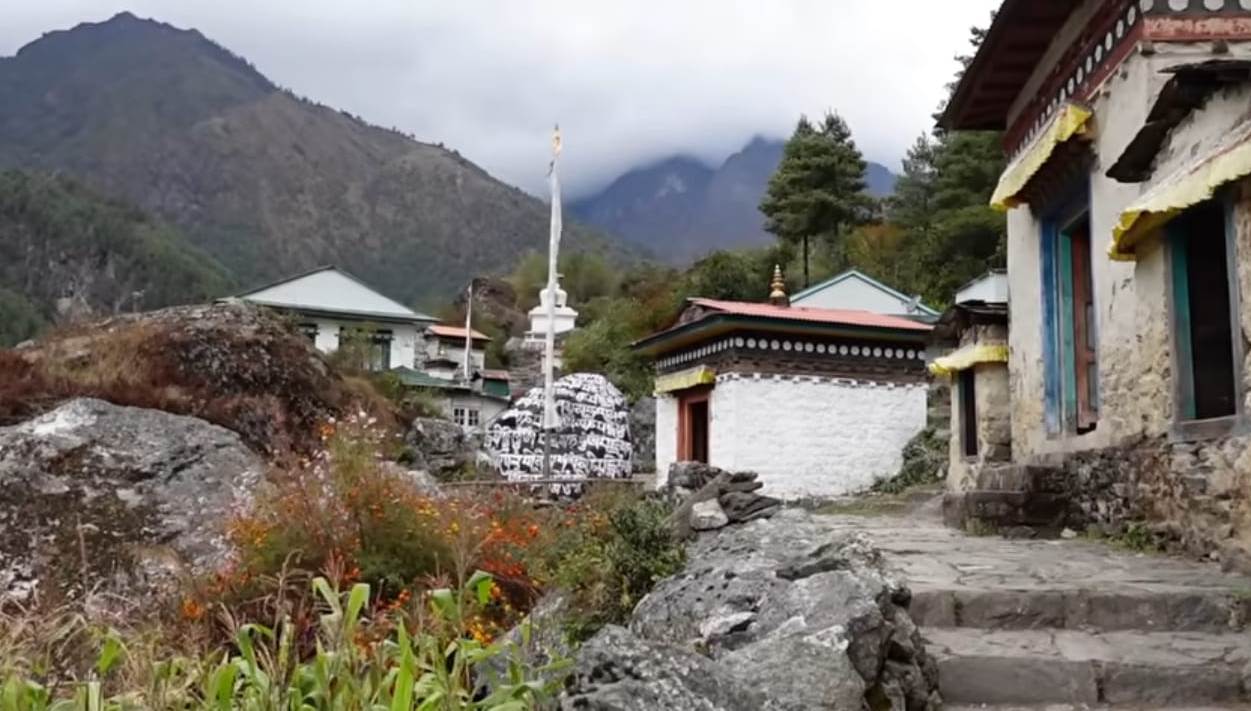
Perfectly Organized and Enjoyable Nepal Trek
A fantastic trekking experience that was very well organized from start to finish. The team was extremely friendly and professional, making the whole journey smooth and enjoyable. I’m really glad I chose this trek before my travel—it was perfectly arranged, including convenient pickup and support throughout the experience. Highly recommended for a hassle-free Himalayan adventure.
Nicklas H,
,Norwegian
Smooth and Enjoyable Trek with Great Management
We were a group of 15 people and had a truly smooth and enjoyable trekking experience. The entire journey was very well organized and managed from start to finish. Everything ran according to plan, making the trek comfortable, safe and stress-free. We are very satisfied with the service and highly recommend Best of Nepal Trek for anyone seeking a professional and well-managed Himalayan adventure.
Moeller,
,Australia
Well-Organized Trek with Great Guide Service
This was an incredible and unforgettable trekking experience. The journey was filled with stunning scenery and moments of challenge that made it even more rewarding. Our guide, Kesher, along with his team, maintained excellent organization and offered continuous support throughout the trek. Their guidance, care and professionalism ensured a safe and smooth journey, making the entire experience truly exceptional.
Moeller,
,Dutch
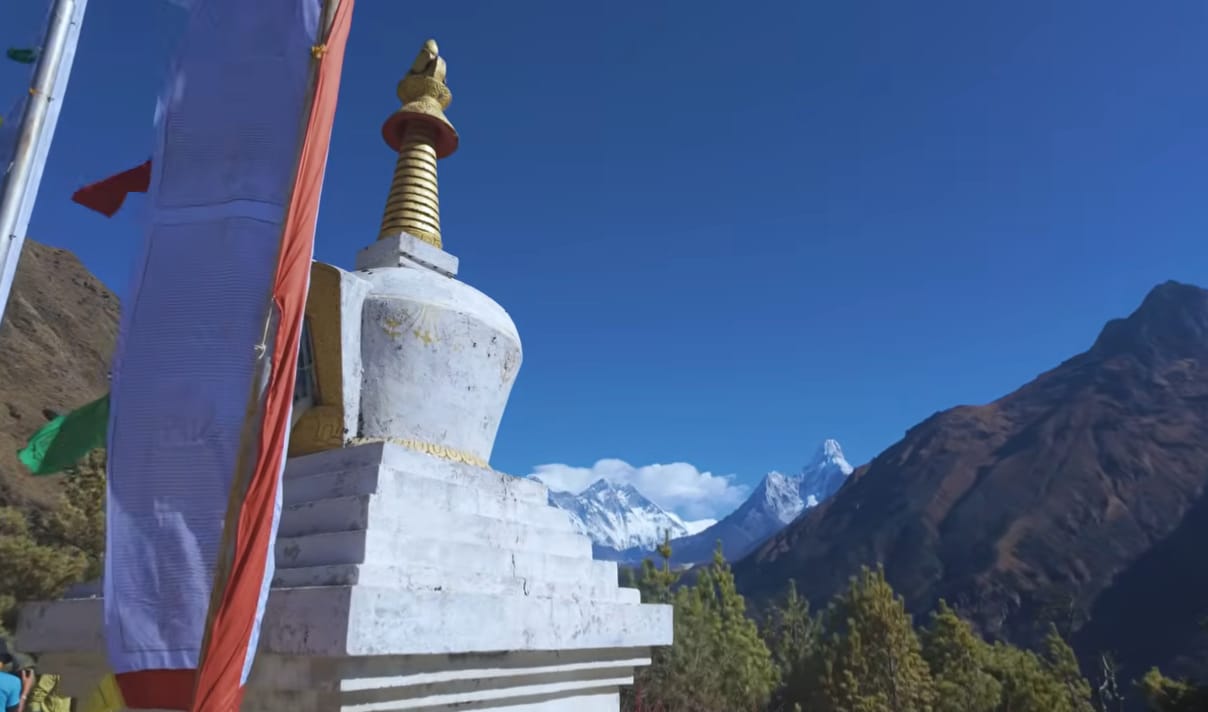
Unforgettable Journey to Everest Base Camp
Every part of the Everest Base Camp trail was truly breathtaking, with stunning mountain views at every step. The experience was both humbling and unforgettable. We greatly appreciated the care, support and professionalism provided by Best of Nepal Trek throughout the journey, making the entire adventure smooth and memorable.
Nicklas,
,UK
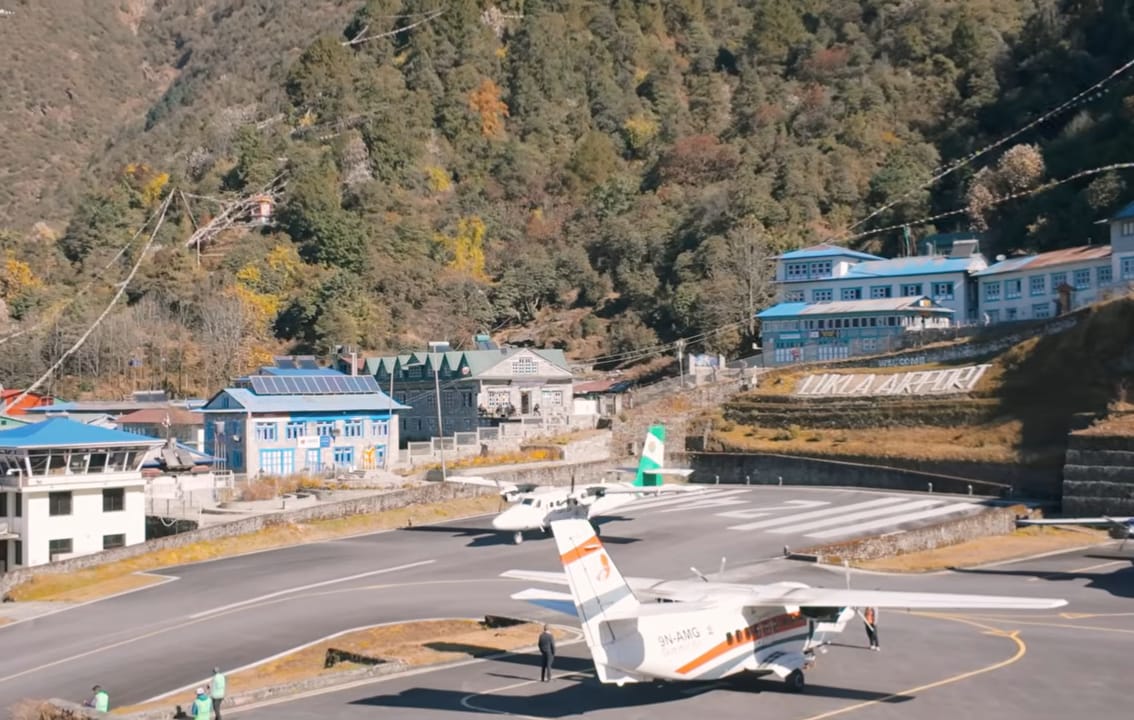
Outstanding Service on Everest Base Camp Trek 2026
We had an amazing trekking experience to Everest Base Camp in May 2026. The journey was well guided and very well managed from start to finish. Our guide, Lakpa, was highly professional, friendly and extremely supportive throughout the trek. Our assistant guide Mr. Ram was also very helpful and always attentive to our needs. Their teamwork made the whole adventure safe, enjoyable and truly unforgettable.
Simoni,
,Canada