
Trek Equipment & Travel Essentials for Your Adventure
Preparing for a trek in the Himalayas requires careful planning to ensure comfort, safety and enjoyment. From trekking gear to personal essentials, having the right equipment can make your adventure smooth and memorable. Here’s a complete guide to help you pack efficiently for your journey.
Essential Documents
- Passport: Ensure at least six months validity beyond your intended stay in Nepal.
- Passport Copies: Keep 2–3 copies in separate bags in case of loss.
- Passport Photos: Carry 4–5 for visas, permits, and trekking registration.
- Visa: Check Nepal visa requirements and obtains on arrival or pre-apply if necessary.
- Travel Insurance: Comprehensive coverage is essential, including medical emergencies, high-altitude sickness, evacuation, and trip cancellation.
- Cash & Cards: Bring USD 200–300 in small denominations for tips and expenses where cards are not accepted. Inform your bank about international travel for card usage.
Trek Equipment & Travel Essentials for Your Adventure
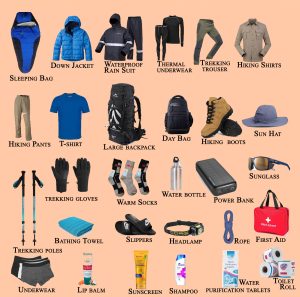
Headwear:
- Sun hat or cap for high-altitude sun protection
- Bandana or scarf for dust and sun coverage
- Warm woolen hat for cold temperatures
- Windproof hat and balaclava for chilly winds
- Headlamp with spare batteries for early mornings or power outages
- Sunglasses or goggles with UV protection
Bodywear:
- Moisture-wicking shirts (long and short sleeve, 2–3 each)
- Thermal tops (1–2) for cold weather
- Fleece or soft-shell jackets for insulation
- Down jacket for high-altitude warmth (can be rented if available)
- Waterproof jacket and pants for rain or snow
- Hiking shorts and fleece pants for versatility
- Quick-dry underwear (4 pairs)
Hand wear:
- Windproof and waterproof gloves
- Light wool or fleece gloves for extra warmth
- Footwear:
- Sturdy, waterproof hiking boots with spare laces
- Trainers or comfortable shoes for evenings at teahouses
- Flip-flops for showers or casual use
- Thin and woolen socks for layering
- Waterproof gaiters to keep snow and debris out
Trek Essentials during Your Journey
- Sleeping Bag: Warm and suitable for high-altitude camping.
- Duffle Bag (50–60L): Sturdy and waterproof; carried by porters.
- Day Pack (30–35L) with Rain Cover: For daily essentials like water, snacks, and camera.
- Trekking Poles: Adjustable poles for stability and knee support.
- Thermos & Water Bottles/Bladder (2L): Stay hydrated at all times.
- Entertainment: Books, games, or cards for downtime.
Medicine & First Aid
- Personal first-aid kit: Bandages, antiseptic wipes, pain relievers, blister care, and prescription medications.
- Consult your doctor for altitude sickness medication or antibiotics for travel.
Toiletries & Personal Care
- Quick-dry towel, biodegradable soap, toothbrush, and toothpaste
- Deodorant, nail clippers, and toilet paper
- Moisturizer and lip balm for dry, windy conditions
- Female hygiene products as needed
- Hand sanitizer and small mirror for grooming
Additional Tips for a Successful Trek
- Layer Clothing: Adapt to changing temperatures.
- Pack Light: Porters have weight limits; buy snacks or extra supplies along the way.
- Electronics: Bring camera, power bank, extra batteries, and charging cables.
- Energy Snacks: Carry bars, nuts, and dried fruits for trekking energy.
- Cash for Tipping: Tipping guides and porters is customary and appreciated.
With this comprehensive packing list, you’ll be fully prepared to tackle the challenges of the Himalayan trails, enjoy stunning landscapes and experience Nepal’s unique culture and natural beauty. Proper preparation ensures a safe, comfortable and unforgettable adventure with Best of Nepal Trek.
Renting or Buying Trekking Equipment in Kathmandu: A Complete Guide for Trekkers
Kathmandu is the ultimate gear hub for Himalayan adventures, offering trekkers a practical and affordable solution for equipment needs. Whether you’re tackling the Everest Base Camp or the Annapurna Circuit, this guide will help you navigate the city’s bustling markets to rent high-quality gear or buy reliable equipment without overpacking or overspending.
Why Rent or Buy Trekking Equipment in Kathmandu?
- Save Money & Luggage Space: Avoid expensive purchases at home. Rent bulky items like down jackets and sleeping bags for just a few dollars a day.
- Access Proven Gear: Kathmandu’s rental gear is tested on local trails. Reputable shops maintain equipment from trusted brands.
- Ultimate Convenience: Everything is available within Kathmandu’s Thamel district, making it easy to get geared up after you arrive.
What to Rent in Kathmandu (Smart & Affordable)
Renting is ideal for expensive, specialty, or bulky items you won’t use after your trek.
- Down Jackets & Sleeping Bags: The most popular rentals. Get high-quality, season-rated options without the cost or packing hassle.
- Trekking Poles: Saves space in your luggage. Essential for reducing knee strain.
- Duffel Bags: Often provided by trek agencies, but readily available for rent if needed.
- High-Altitude Gear: Crampons and ice axes for climbing seasons—always inspect carefully before renting.
What to Buy in Kathmandu (For Comfort & Hygiene)
For items where fit and personal use matter, buying is best.
- Hiking Boots: Never rent. Properly broken-in boots are critical to prevent blisters. Buy these before your trip.
- Base Layers & Socks: Purchase your own moisture-wicking thermals and wool socks for hygiene and comfort.
- Trekking Clothes: Affordable, quality fleeces, pants, and waterproof jackets are widely available if you need to supplement your wardrobe.
- Daypacks: Ensure a good fit by buying one that matches your torso length.
Where to Go: Kathmandu’s Best Gear Areas
- Thamel: The tourist epicenter. Hundreds of shops line streets like Mandala Street, offering both rentals and sales.
- Brand Outlets (Durbar Marg/Thamel): For authentic gear from The North Face, Mountain Hardwear, etc. Higher cost, guaranteed quality.
- Local Markets (Asan, Indra Chowk): Perfect for cheap accessories like gloves, beanies, and sunglasses.
Pro Tips for Renting & Buying-Trekking Equipment
- Inspect Rental Gear Thoroughly: Check zippers, seams, and insulation. Test poles and tents.
- Bargain Respectfully: Prices are often negotiable, especially when buying. For rentals, ask for a discounted weekly rate.
- Use Reputable Shops: Trusted names with well-maintained gear include Shona’s Alpine, Trekking Equipment Nepal, and Himalayan Exploration.
- Understand “Grade A” Imitations: Many shops sell high-quality counterfeit branded gear. They offer great value but are not original.
- Secure Your Deposit: Most shops require a cash deposit or your passport. Always get a detailed receipt.
Final Checklist Before Your Trek
- Inspected and packed all rented gear (jacket, sleeping bag, poles).
- Personal items (boots, base layers, socks) purchased and ready.
- All rental receipts and deposit documents stored safely.
- Travel documents (passport, insurance, permits) separate from gear paperwork.
By strategically combining rentals and purchases in Kathmandu, you can secure top-performing gear tailored to the Himalayas’ demands—letting you trek with confidence, comfort and financial savvy.
How Much Does It Cost to Hire Trekking Equipment in Kathmandu? (2024 Price Guide)
One of the most common questions for trekkers is: “How much does it cost to rent gear in Kathmandu?” Renting is a budget-friendly and practical solution, with daily rates far lower than purchasing. Prices can vary slightly by shop, season, and gear quality, but this guide provides clear, up-to-date estimates to help you plan.
Below is a detailed price table for the most commonly rented items, followed by essential tips to get the best value.
Kathmandu Trekking Equipment Rental Price Table (Daily Rates)
| Trekking Equipment | Specifications / Requirements | Approximate Cost Per Day (USD) |
|---|---|---|
| Down Jacket | Standard insulated, all sizes | $2 – $3 |
| Sleeping Bag | Rated for -10°C to -20°C | $2 – $4 |
| Trekking Poles | Adjustable, pair | $1 – $2 |
| Climbing/Hiking Boots | All sizes (Note: Not recommended) | $6 – $8 |
| Duffel Bag | 60-90L, for porter use | $1 – $2 |
| Camping Tent | 2-3 person, ridge/dome style | $6 – $10 |
| Crampons & Ice Axe | Set for high-altitude climbs | $4 – $5 |
| Headlamp | With batteries | $0.5 – $1 |
Important Tips for Renting Trekking Equipment in Kathmandu
- Weekly Discounts are Standard: Most shops offer significant discounts for weekly rentals. For example, a sleeping bag might be $3/day, but only $15 for a 7-day rental. Always ask for the weekly rate.
- Inspect Everything Before You Pay: Check for:
- Down Jackets & Sleeping Bags: Ensure zippers work and there is no significant loss of loft/insulation.
- Trekking Poles: Check locking mechanisms and grips.
- Tents: Verify all poles, pegs, and the rain fly are present.
- Negotiate Politely: Prices, especially for multiple items or longer durations, are often flexible. Polite negotiation can get you a better package deal.
- Deposit is Required: Shops will ask for either a cash deposit (refundable) or to hold your passport as collateral. We strongly advise paying a cash deposit and keeping your passport secure. Always get a detailed, stamped receipt.
- Boots are the Exception: While boots are available for rent ($6-8/day), it is highly discouraged. Ill-fitting or non-broken-in boots are the leading cause of blisters and can ruin a trek. Plan to bring your own.